Self watering pot for holiday: a safer fortnight

Choose and test a self-watering pot for a holiday, match the wick to your plant, and avoid leaving drought-tolerant roots in wet compost for weeks.
On this page
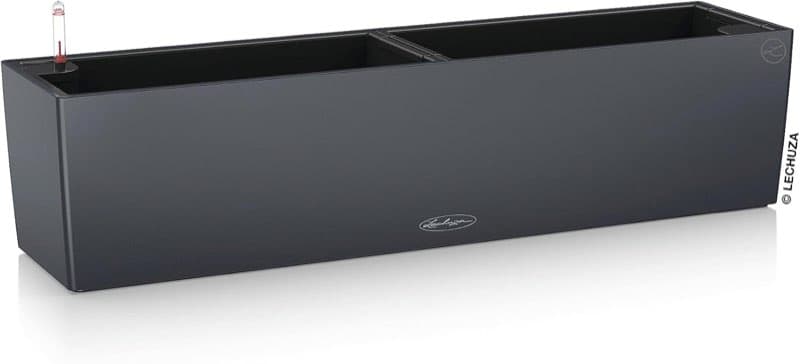
You are packing the last bag when the question arrives: what happens to the houseplants while you are away? A self watering pot for holiday use can reduce the risk of a bone-dry root ball, but filling a reservoir and walking out for 14 days is not a universal solution. The useful choice depends on how the system moves water, how quickly your room dries out and whether the plant actually prefers consistently moist compost.
In short
A wick pot, capillary tray or purpose-made holiday gel can help for several days and some products claim up to two weeks, but treat that duration as a maximum claim rather than a promise. Test the exact set-up for a full week before you travel, and avoid keeping drought-tolerant plants permanently wet just because a reservoir is available.
What self-watering usually means
“Self-watering” describes several different systems, not a pot that knows when a plant is thirsty. A typical self-watering planter has an outer reservoir and an inner growing pot. A wick or a piece of absorbent material draws water upwards by capillary action, allowing the compost to take up moisture without the whole nursery pot standing in water. Some designs integrate the wick; others require you to thread it through a drainage hole.
A self-watering tray works at a larger scale. Pots stand on capillary matting above or beside a water store, so several plants can draw moisture from one surface. The Eckman tray, for example, measures 56 by 40 by 4 cm and is marketed for up to 14 days. That may suit a collection of compatible small pots, but it does not make plants with different watering needs behave alike.
Holiday gel is a separate option. It releases moisture into the compost rather than lifting liquid from a refillable reservoir. Marshalls markets a kit for pots up to 30 cm and for up to 14 days, while explicitly excluding orchids, bonsai and cacti. Use a proprietary product exactly as directed; do not improvise the concentration or treat it as interchangeable with a wick. Whichever method you choose, ordinary drainage still matters. A decorative planter must not trap rain or overflow around the root ball.
Can it really last a fortnight?
“Up to 14 days” is a useful comparison point, but the words “up to” carry most of the meaning. POTR makes that claim for its wick-based pots, and Eckman and Marshalls use similar wording for their tray and gel systems. None of those claims can account for your south-facing window, a sudden warm week, a root-bound peace lily or a reservoir that was not completely filled.
There is some practical evidence that these systems can help. Good Housekeeping UK left a pothos and a calathea in POTR pots during two separate weeks away. The pothos was fine, while the calathea drooped; its nursery pot was also too large for the reservoir. That is a useful real-world warning, not proof that every pothos will last a fortnight or every calathea will fail. The test also included time at home between the two trips, so it should not be presented as one uninterrupted two-week guarantee.
Match the system to the plant
Start with the plant’s normal watering pattern, not the holiday duration printed on the packaging. Ferns, calatheas and other moisture-loving houseplants may benefit from a controlled capillary supply, although their relatively high water use can expose a reservoir that is too small. A leafy pothos can be forgiving, but its demand still depends on size and position. Grouping plants by similar needs makes a shared tray easier to manage.
Plants that want to dry out
Cacti and many succulents store water and generally need a drying phase. A continuously active wick can remove that phase, especially in dense, peat-heavy compost. Marshalls excludes cacti from its holiday gel, which is a product-specific rule worth respecting. Orchids and bonsai are excluded too; neither should be treated as an ordinary foliage plant simply because its pot fits.
A ZZ plant deserves similar caution for a different, independently supported reason. The RHS describes Zamioculcas zamiifolia as tolerant of neglect and suited to well-drained conditions. Leaving a ZZ plant attached to a full reservoir can work against both traits, particularly if the compost was already wet. It is often safer to water appropriately before leaving, allow free drainage and keep the plant out of harsh direct sun than to introduce a new constant supply.
Check the fit and set-up
Fit is a functional issue, not just a matter of appearance. Measure the nursery pot across its widest point, then check the height, base diameter and location of its drainage holes. The inner pot must sit at the intended level, with the wick making reliable contact with the compost and the base remaining clear of standing water unless the manufacturer expressly designs it otherwise.
The Good Housekeeping calathea example shows why this matters: the nursery pot was too large for the reservoir. Forcing an oversized pot into an outer shell can pinch the wick, raise the plant too high or leave no useful water capacity. A very small inner pot can also tilt or sit too low. If you plan to repot, do it well before the holiday rather than combining root disturbance with an unfamiliar watering regime on departure day.
Check the wick itself. It should be clean, properly threaded and in contact with moist compost; a dry wick may not start drawing effectively. At the other extreme, an oversized or highly absorbent wick can keep a small root ball wetter than expected. Fill only to the maker’s indicated level, keep any air gap the design requires and confirm that an overflow route is clear.
Run a trial week at home
The safest holiday test is deliberately boring: set everything up seven days early and continue your normal routine around it. Place the plant where it will remain while you are away. Fill the reservoir to a measured mark or photograph the starting level, note whether the compost is already damp, and check at roughly the same time each day without automatically topping it up.
Look for three outcomes. First, is water actually moving? If the reservoir level never changes and the compost becomes dry, the wick may have poor contact. Second, is the supply too strong? Persistent surface dampness, fungus gnats, yellowing leaves or a sour smell can indicate that the roots are staying wetter than they tolerate. Third, how fast is the reserve falling? A vessel that is nearly empty after four ordinary days cannot responsibly be called a 14-day solution in that position.
Prepare your plants before you leave
Two or three days before departure, inspect rather than pamper. Remove dead leaves, check for pests and make sure drainage holes are open. A pest outbreak can worsen quickly in a warm room, while fallen foliage left on wet compost encourages mould. Avoid feeding immediately before travel; fertiliser does not solve a watering problem and stressed roots do not need an extra change.
Move plants only when the new position remains suitable. Pulling them slightly back from intense summer glass can reduce heat and water loss, but a dark hallway may be too severe. Close proximity can modestly reduce airflow around a group, yet leaves should not be packed so tightly that disease spreads unnoticed. Keep plants away from radiators, hot appliances and cold draughts.
Fill a tested reservoir at the agreed time and verify that it has not leaked. For an outdoor herb planter, remember that sun and wind can consume water quickly and British rain can create the opposite problem. Ensure the container can shed excess rain, and do not trust an “up to 14 days” indoor-style claim without testing it in the exact patio position.
Leave simple instructions if somebody is checking in. Mark the correct fill line and identify which pots must not be topped up. Asking a neighbour to “water everything” can undo careful preparation, particularly for succulents and ZZ plants. A photo of each set-up and one scheduled check around the midpoint are more useful than a complicated care sheet. On your return, inspect compost moisture before adding water; an empty reservoir does not always mean a dry root ball.
Common questions
Will a self-watering pot keep a plant alive for two weeks?
Which plants should not sit in a wick pot?
What if the nursery pot does not fit the reservoir pot?
Is holiday watering gel the same as a reservoir?
Can I use a self-watering system for patio herbs?
Does a self-watering pot prevent overwatering?
Should I test a holiday watering system before travelling?

Products Compared publishes British-English buying guides based on amazon.co.uk listings and public UK sources. We do not run a lab and we do not invent test scores.
Related articles
ZZ plant low light care: keep it healthy in a dim room
Learn how to keep a ZZ plant healthy in a dim British room, including sensible watering, winter temperatures, lamp use and signs of excess water.
Tomatoes in pots UK: better patio growing
Choose the right tomato pot size, watering routine and cold-night cover for healthier patio plants in changeable UK summer weather.

Protect pots from frost UK: winter cover guide
Learn how to protect patio pots from frost, choose fleece or insulation, manage winter wet and uncover plants safely during milder British weather.