Tomatoes in pots UK: better patio growing guide
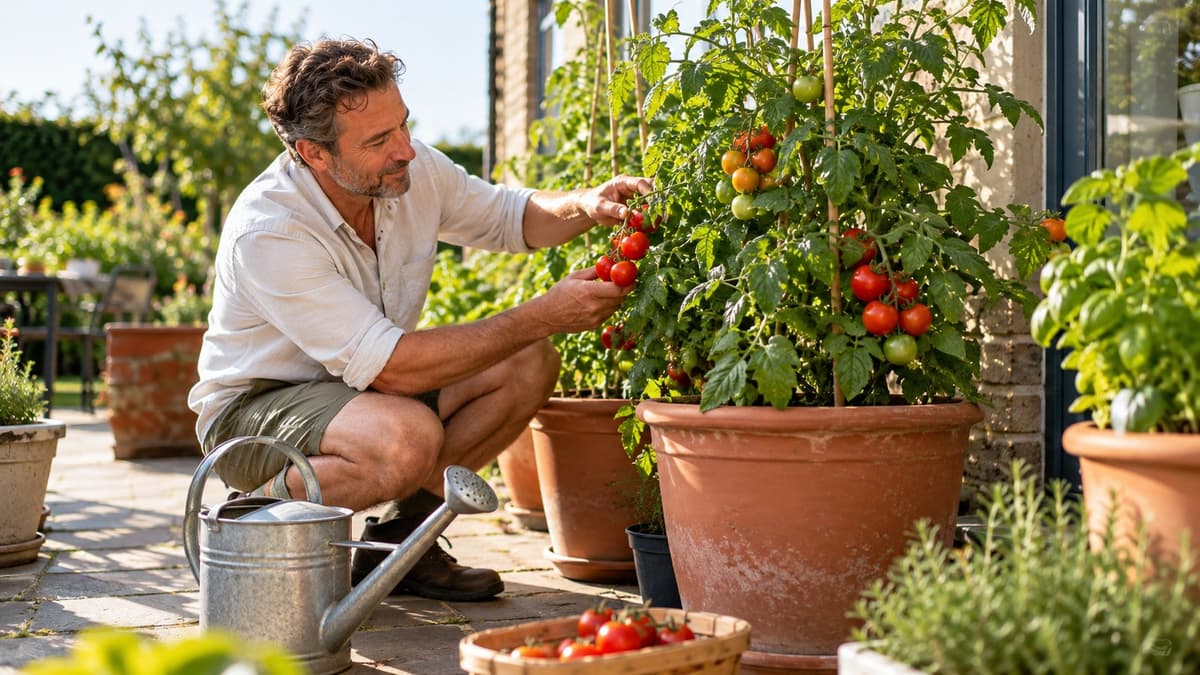
Choose the right tomato pot size, watering routine and cold-night cover for healthier patio plants in changeable UK summer weather. Start with enough compost.
On this page
Growing tomatoes in pots in the UK is less about finding a miracle feed than giving one vigorous plant enough compost, steady water and a genuinely warm position. A sunny patio can produce good fruit without a greenhouse, but a small container magnifies every dry afternoon and cold night. Start with a pot that is large enough, then build a routine around the weather rather than the calendar.
In short
Use one tomato plant in a pot at least 30 cm across, with 30–45 cm being the useful RHS range, or put two plants in a standard growing bag. Harden plants off before moving them outside, aim for a warm sheltered site once frost risk has passed, and keep moisture even: sudden swings between dry and soaked compost contribute to split fruit and blossom end rot.
The smallest pot that is still fair
A 30 cm container is the sensible lower boundary for one tomato plant, not an ambitious target to undercut. The RHS advises one plant in a pot about 30–45 cm across. Within that range, the larger option holds more compost and therefore more water, giving you extra time before the roots run dry on a bright, windy afternoon.
This matters because the foliage can hide how small the root reserve really is. A young plant may sit happily in a decorative 20 cm pot in May, then overwhelm it as stems, leaves and fruit expand. By July, that pot can demand constant attention and may still swing from dry to saturated. If you are choosing a container now, compare purpose-made tomato pots by usable volume, drainage and stability rather than by the diameter of the top rim alone.
Use fresh, suitable growing medium and make sure excess water can leave through open drainage holes. Large does not mean waterlogged: a saucer permanently full of rainwater can deprive roots of air.
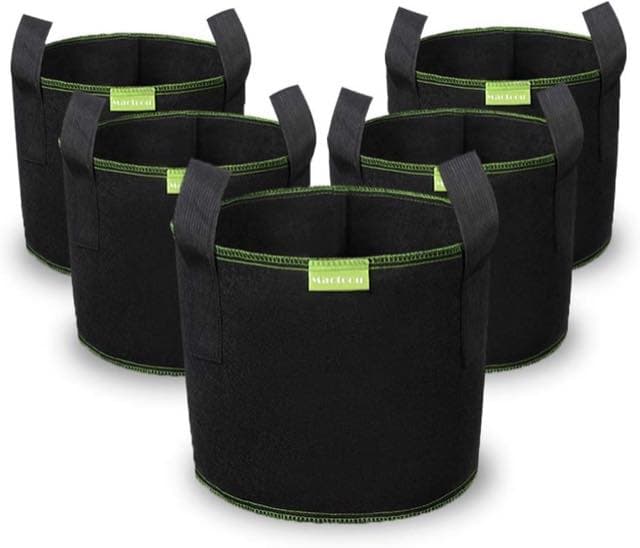
A standard growing bag is a workable alternative, with two plants rather than crowding every marked position. Set it flat before planting so water spreads through the bag instead of pooling at one low end. Plant tomatoes deeply, up to the first leaves, to support additional rooting along the buried stem.
Water before you worry about feed
The most common container problem begins with water, not a missing bottle of fertiliser. Check the compost below the surface: the RHS suggests feeling roughly a third of the way down where practical, because the top can look dry while the root zone remains moist. Conversely, a quick summer shower may darken the surface without reaching the deeper compost at all.
In warm weather, patio tomatoes may need water every day. During a hot spell, checking morning and evening is better than trying to compensate with one enormous watering after the plant has wilted. The aim is not permanently sodden compost; it is a reasonably even supply. Water slowly enough for the compost to absorb it, and return after a few minutes if the first application ran down a gap at the side.
Uneven moisture is closely linked to two familiar disappointments. Fruit can split after a dry period followed by a sudden influx of water. Blossom end rot appears as a dark, sunken patch at the base of the fruit and is associated with disrupted calcium uptake, often because the plant could not access water consistently. Adding extra feed while the root ball keeps drying does not solve that pattern.
When the patio is warm enough
Tomatoes dislike being moved straight from protected indoor conditions to a breezy patio. Harden them off gradually, increasing their outdoor time over roughly a week or two and bringing them back under cover when conditions turn cold.
There is no single safe planting date for the whole UK. Mid-May can work in a mild area, yet a late frost or exposed northern site can push the practical date later. The key conditions are that frost risk has passed and nights are reliably mild; RHS guidance notes that tomatoes do better when night temperatures remain above 10°C. Check your local forecast rather than treating a date printed on a seed packet as permission.
Choose the warmest sheltered position that still receives useful sun, but account for wind tunnels between walls and fences. A south-facing brick wall may release warmth after sunset, while an open balcony can chill and dry a plant even on a bright day. If nights turn unexpectedly cold after planting out, a tomato plant cover can offer temporary protection.
Support and a cold-night cover
Put the main support in place when you pot the tomato, before the root system fills the container. A cane pushed through established roots later can cause damage, while an unsupported plant can snap when fruit adds weight. Tie the stem loosely with soft ties and add new ties as it grows, leaving room for the stem to thicken.
The support must be stable as a complete system. A tall cane in a light pot can act like a lever in wind, so consider the container’s weight, base width and location. Secure taller supports independently where appropriate, but do not fasten them to weak guttering, loose fencing or anything that could fail under load. Bush and trailing tomatoes need less vertical training than cordon types, although heavy branches may still benefit from support.
For a cold night, create a small frame so fleece or another suitable cover sits around the plant instead of pressing down on the growing tip. Anchor it against wind without sealing the container into an airtight parcel. Remove it in the morning when temperatures recover, particularly if sunshine reaches the patio.
Buy a cover for the size of the supported plant, not the seedling you have today. The limitation remains important: warmth protection cannot make a permanently shaded, windswept patio behave like a greenhouse.
What a pot cannot fix
A bigger pot improves the root environment, but it cannot compensate for every site or disease problem. Tomatoes still need sufficient light and warmth to flower and ripen well. A container on a deeply shaded patio may grow leafy without delivering the crop you expected, while an exposed site can damage foliage and make watering erratic.
Container growing also does not prevent tomato blight. Wet UK summers can favour disease, especially where leaves stay damp and air movement is poor. Water the compost rather than routinely soaking the foliage, leave breathing room between plants and inspect them often. If suspicious patches spread rapidly through leaves and stems, consult current RHS disease guidance instead of assuming the plant is merely thirsty.
Nor can the container correct an unsuitable variety. Compact bush or trailing tomatoes often make more sense for a low pot or hanging basket; vigorous cordon varieties need stronger support and ongoing training. A hanging basket can work, but its small, exposed root volume dries quickly and the loaded basket becomes heavy. Use a secure fixing and accept that it will need closer moisture checks than a 40 cm patio pot.
A simple patio routine
Once the plant is established, a brief repeatable routine is more useful than occasional rescue work:
- Check the compost each morning. Feel below the surface and water slowly when the root zone is beginning to dry, rather than responding only after leaves wilt.
- Recheck during hot or windy weather. Pots, bags and hanging baskets can lose water quickly, so an evening check may be necessary even after morning watering.
- Look over stems, ties and leaves. Loosen tight ties, add support before a fruiting branch bends and investigate rapidly spreading marks rather than automatically adding feed.
- Use tomato food only as directed. Start once fruit has formed and follow the label’s interval and dilution.
- Watch the overnight forecast. Fit a supported cover for an unusually cold night, then remove or ventilate it when the temperature rises.
The routine takes only a few minutes, but it exposes trends early: a pot that is dry by noon, a cane beginning to lean or a cover that is now too short. If watering dominates your day, moving up to a larger tomato container is usually more practical than trying to perfect a complicated feeding schedule.
Common questions
How big should a pot be for one tomato plant?
How many tomato plants can I put in a grow bag?
How often should I water patio tomatoes?
Why are the tomatoes splitting?
What causes blossom end rot in container tomatoes?
When can tomato plants go outside in the UK?
Can I grow tomatoes in a hanging basket?
Do patio tomatoes need a cover on cold June nights?

Products Compared publishes British-English buying guides based on amazon.co.uk listings and public UK sources. We do not run a lab and we do not invent test scores.
Related articles
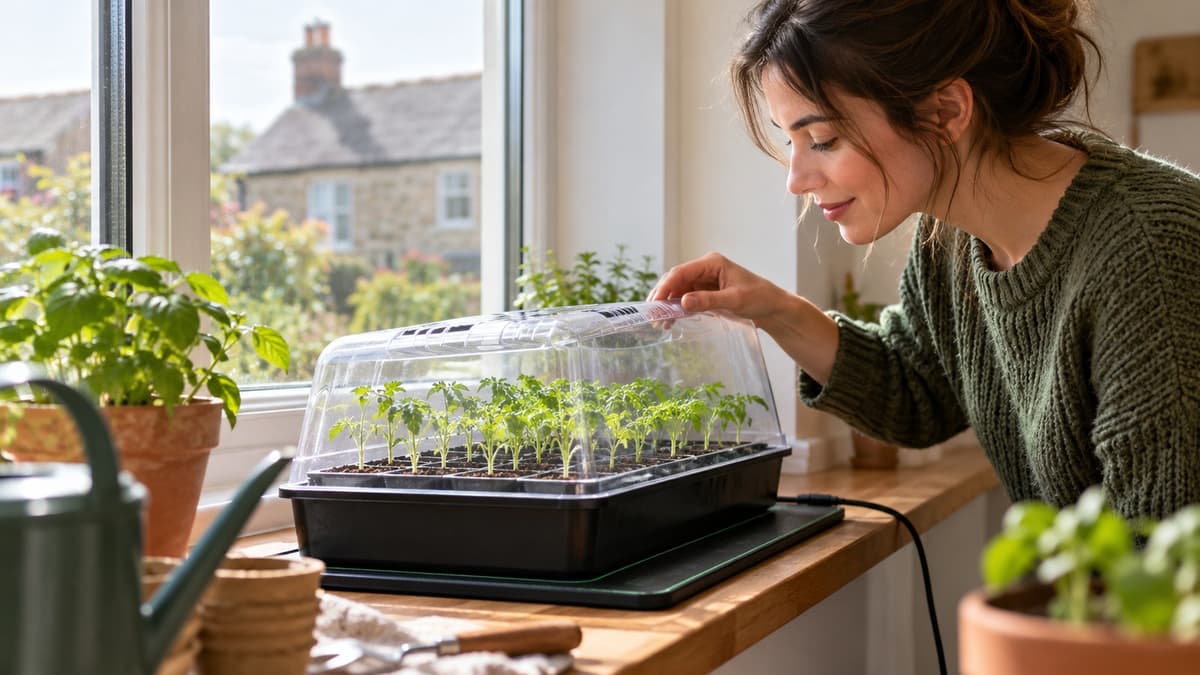
Seedling heat mat UK: start tomatoes before the last frost
Use a seedling heat mat safely on a British windowsill, choose the right compost temperature, avoid overheating and know when tomatoes can go outside.

Self watering pot for holiday: a safer fortnight
Choose and test a self-watering pot for a holiday, match the wick to your plant, and avoid leaving drought-tolerant roots in wet compost for weeks.

Protect pots from frost UK: winter cover guide
Learn how to protect patio pots from frost, choose fleece or insulation, manage winter wet and uncover plants safely during milder British weather.