Seedling heat mat UK: start tomatoes before the last frost
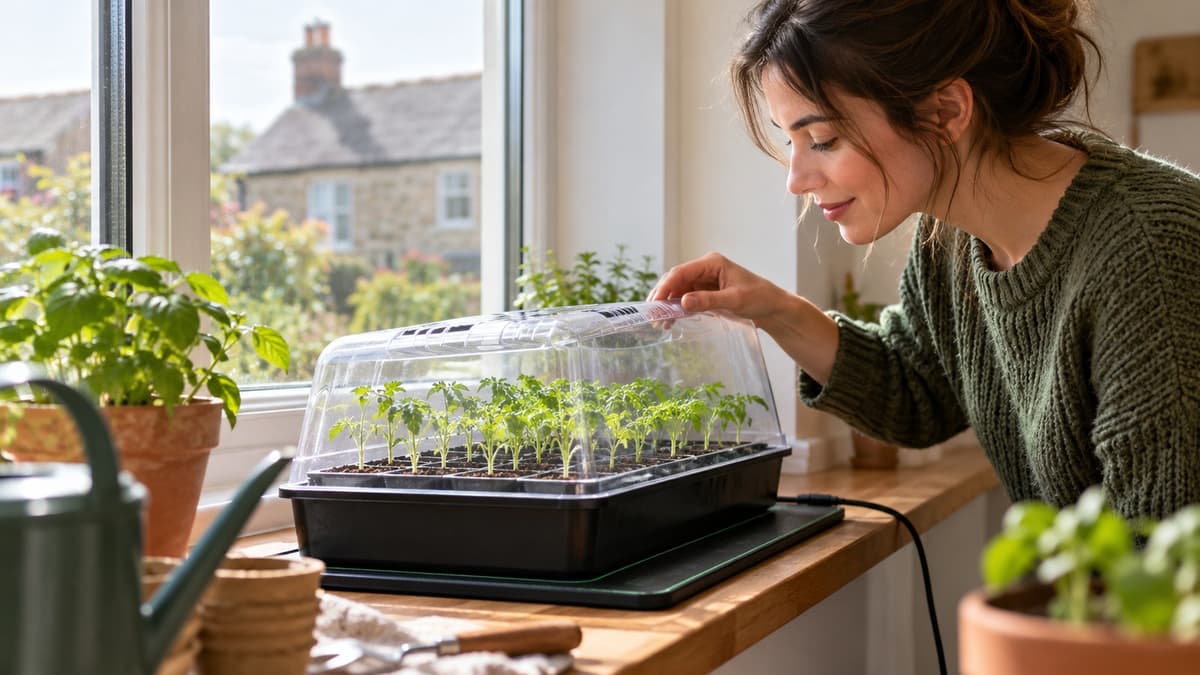
Use a seedling heat mat safely on a British windowsill, choose the right compost temperature, avoid overheating and know when tomatoes can go outside.
On this page
A seedling heat mat in the UK can solve a very British spring problem: the windowsill feels warm at lunchtime, then the compost cools sharply beside the glass overnight. Tomatoes may germinate unevenly or sit in damp compost for days. Bottom heat can make that environment steadier, but it does not bring the outdoor planting date forwards, and an uncontrolled mat can make a sunny tray too hot.
In short
Use bottom heat to keep tomato compost around 21–24°C while seeds germinate, ideally with a thermostat and a probe in the compost. Once shoots appear, light becomes the priority. Harden plants off for two to three weeks and plant outside only when your local frost risk has passed and nights are reliably mild.
What a seedling heat mat is for
A heat mat warms the root zone rather than the whole room. That distinction matters on a windowsill, where the air at head height may read 19°C while the wet compost beside a cold pane is several degrees less comfortable. Tomatoes are warmth-loving seeds, so a controlled mat can remove the overnight dips that make an early sowing slow and erratic. It is particularly useful when you want to start a modest number of plants before the house naturally becomes warm enough.
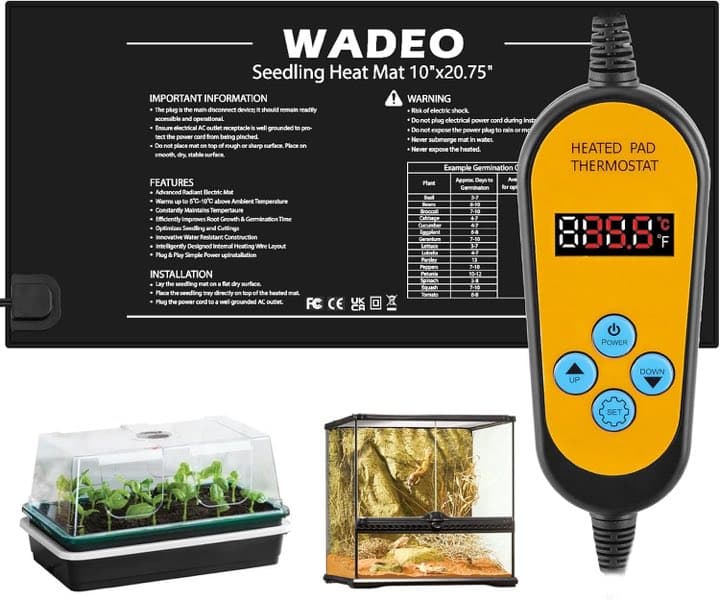
The aim is not to make the tray feel hot. It is to hold the compost in a useful band for long enough to germinate, then stop supplying unnecessary heat. A seedling heat mat comparison can help you look for a size that actually fits your trays and a control arrangement that suits your setup. If the mat is much larger than the tray, you waste space; if it is smaller, outer cells can remain cooler and emerge later.
A clear lid reduces moisture loss, but it also traps heat. That is helpful in a cool room and risky when direct sun reaches the propagator. Real Seeds specifically warns that a mat or a lidded tray in full sun can cook seed without adequate airflow. Treat the lid, sunlight and mat as three parts of one system. The limit is simple: bottom heat cannot correct stale, saturated compost, poor seed or a tray left unchecked.
Useful temperatures for tomato germination
For tomatoes, a practical target is about 21–24°C in the compost. Greenhouse Stores' compiled germination table puts the minimum around 15°C, the ideal at 21–24°C and the upper end around 30°C, with germination commonly taking five to ten days. Those figures are a working range, not a promise: variety, seed age, moisture and the accuracy of your thermometer all affect what happens.
Measure where the seed is, not on the mat's surface and not across the room. Put a probe into a spare cell filled with the same damp compost, at roughly sowing depth. Check it before breakfast, when the window area is likely to be coldest, and again when afternoon sun reaches the tray. A single midday reading can conceal both an overnight chill and a daytime spike. If your controller's display differs from the compost probe, use the compost reading to guide small adjustments.
Without a thermostat, you need more observation. Run the setup for a day with filled, watered compost before sowing, record the morning and afternoon temperatures, and move it out of direct sun if readings climb. A timer can limit running hours, but it cannot respond to an unexpectedly bright day, so it is not equivalent to thermostatic control. The boundary here is weather: yesterday's safe schedule may be wrong when cloud gives way to sunshine.
Seven warning signs on a British windowsill
The most useful checks are not complicated, but they should cover both heat and light. These seven signs tell you the setup needs changing before you lose a tray or produce weak seedlings.
- The compost is warm at night but hot by midday. Direct sun is adding heat faster than the closed tray can lose it. Move the propagator out of the beam, ventilate it and confirm the compost temperature before closing it again.
- Condensation is heavy and the surface stays sodden. A lid should conserve moisture, not create a swamp. Open the vents or lift the lid briefly, and water according to the compost rather than on a fixed daily timetable.
- Only the middle cells germinate. The mat may not heat the full tray evenly, or the outer cells may sit over an unheated edge. Reposition the tray and use more than one temperature check before blaming the seed.
- Seedlings lean hard towards the room. The shoots are seeking light, often because the window is dim or the tray has been left under a misted lid. Rotate the tray for even exposure, but do not mistake rotation for adequate light.
- Stems become long and thin soon after emergence. Warmth has continued while light is insufficient. Remove or reduce bottom heat, take off the lid as seedlings establish and improve the light with a brighter position or an appropriate plant lamp.
- Leaves touch the glass. Even when the room is warm, the pane can be cold at night and intense sun can heat leaves during the day. Keep a small gap and make sure curtains are not trapping the tray against the window after dark.
- You are using the mat to justify an earlier outdoor date. Germination equipment controls a tray indoors; it does not change frost in your garden. Keep planning the sowing, potting-on, hardening-off and planting stages separately.
The night on a British windowsill
Set the tray slightly back from cold glass and avoid putting it directly above a radiator that cycles between extremes. Fill and water the cells consistently, because a nearly dry corner and a saturated centre will respond differently. If you are testing a new heat mat, use an empty seeded-free tray of compost for 24 hours first. It costs one day and gives you a realistic minimum and maximum before valuable seed goes in.
Curtains create another trap. Closing them with the propagator on the window side can isolate the tray in a colder pocket overnight, while leaving leaves pressed near the pane. Move the tray into the room before drawing the curtains, or arrange the shelf so fabric cannot cover the vents. Keep cables and controllers away from water, follow the manufacturer's instructions and do not improvise insulation around equipment that is designed to shed heat.
What to do after germination
As soon as seedlings emerge, the job changes. Seeds needed warm, moist compost; shoots need strong light, moving air and temperatures that support compact growth. Real Seeds notes that about 18–20°C is enough after tomato germination. Once most cells are up, open the vents, then remove the lid and move the tray off the mat or turn the thermostat down rather than keeping the original germination setting indefinitely.
Do this progressively if the alternative is a very cold room. Newly emerged seedlings do not benefit from a sudden plunge from a controlled propagator to a draughty sill. Shift the tray to a bright, moderate position, observe it through the first night and keep the leaves clear of the pane. If one or two cells are late, move those pots to a warm area instead of holding the whole tray at germination temperature.
When the forecast, not the mat, decides planting out
The last frost is not one date for the whole UK, and it is not the same as a good tomato planting night. Coastal gardens, city plots, valleys and exposed inland sites can differ markedly. The RHS advises waiting until tender plants can face nights above 7°C, while tomatoes do better when nights stay above 10°C. In many places, the final air frost may therefore come two to four weeks before conditions are genuinely comfortable for tomatoes.
Before planting, harden tomatoes off over two to three weeks. Start with a sheltered period outside on a mild day, bring them in before temperatures fall, then increase exposure gradually. Wind and direct sun are part of the adjustment as well as temperature, so do not move soft windowsill plants straight into a bright, breezy garden for a full day. Watering also changes outdoors; check pots rather than assuming yesterday's routine still applies.
Common questions
What temperature should tomato compost be for germination?
Can I sow tomatoes in February on a windowsill?
Do I leave a heat mat on after germination?
Can I use a seedling heat mat without a thermostat?
When can tomato plants go outside in the UK?
Does a seedling heat mat replace a grow light?
Is a heated propagator the same as a heat mat?
Which seeds should not share a tomato heat mat?

Products Compared publishes British-English buying guides based on amazon.co.uk listings and public UK sources. We do not run a lab and we do not invent test scores.
Related articles

Tomatoes in pots UK: better patio growing
Choose the right tomato pot size, watering routine and cold-night cover for healthier patio plants in changeable UK summer weather.

USB grow light UK plug: check power before buying
Learn how to match a USB grow light to a safe UK plug, check 5 V wattage claims, estimate running costs and decide whether a power bank will work.

Protect pots from frost UK: winter cover guide
Learn how to protect patio pots from frost, choose fleece or insulation, manage winter wet and uncover plants safely during milder British weather.