Independent comparisons. We may earn from shop links. More info

How to use wasp nest powder on an entrance you reach

Updated: October 2026

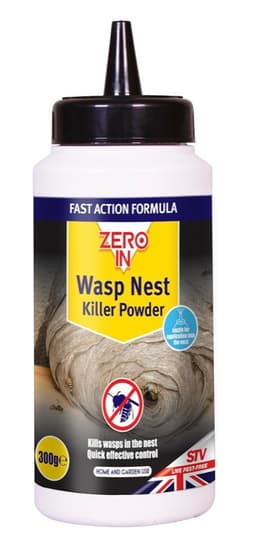
The tub is already in the house, the wasps are using one hole, and the useful question is when you apply the dust and when you leave. This is how to use wasp nest powder on an entrance you can reach from the ground, then how to read the next day without blocking the hole in a panic. It is the shared method for a permethrin puffer. It is not a product ranking, and it is not the full air-brick case. Prices stay on the [wasp killer comparison](/hub/pest-control/wasp-killer). If you have not chosen powder rather than foam, start with the [buying guide](/hub/pest-control/wasp-killer/sub/wasp-killer-buying-guide). A qualifying purchase through our links can earn us a commission at no extra cost to you.

The tub is already in the house, the wasps are using one hole, and the useful question is when you apply the dust and when you leave.

Our top picks

On this page

Before you open the tub

Confirm you are looking at wasps, not a suspected yellow-legged hornet. The National Bee Unit says not to treat a suspect nest yourself. If anyone in the household has had a serious sting reaction, stop before you shake the bottle. Check height next. Midlothian Council tells residents not to work above shoulder height and to keep both feet on the ground. If bats use the roof space, Nippon’s HSE 9219 label says consult the nature body before you treat that structure. Cover a fish tank, and do not plan a treatment that will wash into a pond or a drain. The hidden-nest page takes over if the hole is an air brick rather than a single crack.

How to apply the powder

Use the entrance at dusk or on a dull day, which is what the Nippon label and the Zero In listing both point to. Early morning is the other quiet window. The Zero In maker page tells you to wear protective clothing, shake the bottle, snip the spout and squeeze powder at cracks or a ground hole. Nippon’s label says dust into the nest or leave piles at the entrance. You will be close. A puffer is not a 4 metre jet. Put the dust where workers walk, and do not pack the hole shut while you are still standing there. They need to carry the powder in. The Zero In maker notes about 60–100 g per entrance. Nippon’s statutory line includes 20 g per square metre. When the squeeze is done, leave the area. That split with foam is on the powder versus foam page.

The next day

A few wasps the next morning do not, by themselves, mean the powder failed. Workers that were already out, or that picked up dust and are still flying, show up in the reviews. Nippon’s instruction is to stay away until activity stops. If the same heavy traffic is using the hole on the second evening, a repeat application is the pattern in the Zero In reviews. Do not dust in a downpour and do not double the pile because the first evening looked busy. Seal the hole only when the flight line has actually stopped. Blocking an air brick on the same night is the mistake Midlothian Council warns against: wasps look for another way out, including into the room.

When to stop

Stop if you would need a ladder, if the nest is large and the season is late, or if you have already had a sting and the swelling is spreading. Multiple stings, a sting in the mouth or near the eyes, or a previous serious reaction are NHS 111 situations. Trouble breathing or swelling of the face, mouth or throat is 999. A second evening of ordinary traffic, with powder already used as directed, is a reason to call a trained firm rather than to empty the rest of the tub into the brick. Suspected yellow-legged hornets stay a report, not a heavier dose. If the loft may hold bats, stop and take the Nippon warning seriously before any further dusting.

Common questions

Morning or evening?
Both windows appear on the labels in this set: late evening, early morning, or a dull day on the Nippon wording. Pick the time when fewer wasps are flying and you can still see the entrance. Dusk lowers activity. It does not remove the wasps guarding the hole.
How close do I have to get?
Close enough to put dust on the entrance or into a nest you can reach. A puffer is not the foam’s claimed stand-off. Plan the approach so you can squeeze and leave, with both feet on the ground, and do not work above shoulder height.
Do I seal the hole afterwards?
Not on the night you treat it. Workers need an open entrance to carry the powder in, and a blocked brick can push wasps indoors. Close a gap only after the flight line has stopped. Until then, leave the holes they were using.
What if wasps are still flying the next day?
A few can still appear, including wasps that are already coated in powder. That shows up in reviews and is not, on its own, a failed tub. If heavy traffic continues on the next evening, repeat when the entrance is dry, or stop if you cannot treat it safely.
What if it rains?
Do not dust a wet entrance and expect the first application to stand. Wait for a dry dusk. A repeat after rain is a claim made by at least one other brand’s instructions. Treat it as a reason to reapply lightly.
What clothing is actually named?
Zero In’s maker directions say protective clothing, then shake, snip and squeeze. They do not, in the note we used, list a full suit. Use what the label in your box requires, and do not rely on dusk as a substitute for that.
Can I use the same steps with the foam can?
No. Foam is a jet aimed at a comb you can see, late in the evening, and the reach on that can is disputed in reviews. You do not puff foam into a cavity. If you cannot see the nest, stay with the powder steps above.

Related pages

Sources

Public UK sources and the amazon.co.uk listings in this set, last checked on 16 October 2026.

  1. HSE, garden and home pesticides (retrieved 16 October 2026)
  2. HSE, COPR label guidance (retrieved 16 October 2026)
  3. BPCA, wasp control (retrieved 16 October 2026)
  4. BPCA, after bendiocarb (retrieved 16 October 2026)
  5. NHS, insect bites and stings (retrieved 16 October 2026)
  6. GOV.UK, invasive non-native species rules (retrieved 16 October 2026)
  7. National Bee Unit, Asian hornet reporting (retrieved 16 October 2026)
  8. Nippon wasp nest powder label, HSE 9219 (retrieved 16 October 2026)