Independent comparisons. We may earn from shop links. More info

Wasp nest in an air brick, soffit or a ground hole

Updated: October 2026

Wasps are using the air brick, a slot under the soffit, or a hole in the ground, and the comb is somewhere you cannot see. A wasp nest in an air brick is treated at the holes they fly through, not by opening the wall to find the paper. Foam on the face of the brick, or tape over the holes the same evening, leaves the colony alive. Listings and prices are on the [wasp killer comparison](/hub/pest-control/wasp-killer). A qualifying purchase through our links can earn us a commission at no extra cost to you.

Wasps are using the air brick, a slot under the soffit, or a hole in the ground, and the comb is somewhere you cannot see.

Our top picks

On this page

Signs the nest is in the wall or the ground

A hidden nest announces itself as traffic, not as a grey football on a rafter. Watch for a steady line of wasps entering and leaving the same holes in an air brick, a crack beside a pipe, a gap in the soffit, or a pencil-width hole in turf or under sleepers. The comb is often not sitting directly behind the brick you are staring at. Pest-control firms that publish air-brick advice say the nest may lie further along the cavity. Look for a matching flight line outside before you buy a room spray and call the problem finished. Form choice is on the powder versus foam page.

Why powder, not foam

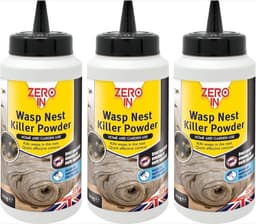
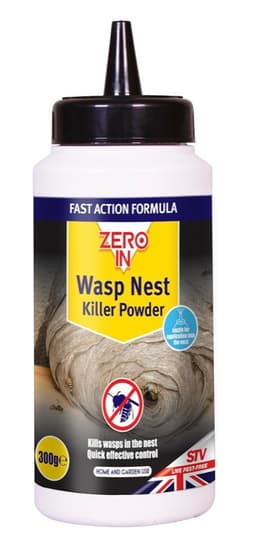
Powder is the form because workers walk across it and carry it toward a comb you will never see. Foam is a wet jet. On a brick, it stops on the brick. That is the mismatch in the UK reviews on the foam can in this set, and it matches Rentokil’s split: powder for inaccessible wall and roof nests, foam when you can see the nest. Zero In at £5.50, with 4.3 from 3,921 ratings, is the best value if the entrance is reachable from the ground. Nippon at £7.99, with 4.4 from 1,265, is the top pick if you want the public label HSE 9219, which also carries the bat warning. The foam, ZER556 at £12.94, is the can to leave on the shelf for this entrance. The best wasp nest killer page sets those powders against the foam.

What to do at the air brick

Go at dusk, with both feet on the ground, and dust every hole in that brick that the wasps are using, not only the neat one in the middle. Leave every hole open. The powder has to be carried in, and a brick taped shut on the same night is how people end up with wasps in the kitchen. If the entrance is a soffit gap you can reach without climbing, dust the slot and do not stuff it. If it is a hole in the ground or under a sleeper, dust the lip and keep the opening clear. If bats may roost in that wall or roof, the Nippon label says consult the nature body before you treat. Do not rinse the brick into a drain.

If it is high, indoors, or someone is allergic

Shoulder height is the stop line Midlothian publishes: both feet on the ground, no ladder. A soffit you can only reach by climbing is a trained visit, even if the powder in the shed is the right chemistry. Wasps appearing indoors after you have blocked the brick are a sign the colony is looking for another exit. Open the temporary seal if you made one, and leave the original holes available. A serious sting allergy, a large late-season nest, or traffic you cannot treat without standing under the entrance are reasons to hire a trained firm instead of a shop tub. New Forest’s published £120 for one nest is one council’s fee, not a national price. Call 999 if a sting causes swelling of the face, mouth or throat, or trouble breathing. The dusk steps you can still do safely are on the how to use wasp nest powder page. They do not include a ladder.

Common questions

Is the nest directly behind the air brick?
Often it is further along the cavity, not pressed against the holes you can see. That is why the treatment is the flight line, not a hunt for the comb. Dust the holes they use. Do not drill or open the wall to check.
Powder or foam for a vent?
Powder. Foam belongs on a nest you can see and wet. On a vent it sits on the outside. Council advice and the review pattern in this set agree on that split. Prefer the dusk timing on the product label.
Do I cover every hole in the brick?
You dust every hole they are using, and you do not cover those holes on the night of treatment. Leaving one busy slot untreated is how a colony keeps its entrance. Covering all of them with tape is the opposite mistake.
When can I tape or mortar the gap?
Only after wasps have stopped using it. Sealing first is the failure both the council text and the reviews describe: a new hole, or wasps indoors. If the brick is a required vent, think carefully before you close it permanently.
What if wasps appear indoors after I block it?
Treat that as the colony finding another way out. Remove the new seal if you added one, and do not answer it with a room spray aimed at the wall. A flying-insect aerosol does not clear a cavity. If they keep coming through, stop and call a trained firm.
Will one puff be enough?
Sometimes reviewers say one application quietened the hole. Sometimes they needed a second evening, and a minority still saw activity. Repeat on a dry dusk if traffic continues, and stop if you cannot do that from the ground.
When is this no longer a shop-product job?
When the entrance is above shoulder height, someone has a serious allergy, you suspect a yellow-legged hornet, the loft may hold bats, or wasps are already coming through into lived-in rooms after a blocked brick. A trained visit is the purchase.

Related pages

Sources

Public UK sources and the amazon.co.uk listings in this set, last checked on 16 October 2026.

  1. HSE, garden and home pesticides (retrieved 16 October 2026)
  2. HSE, COPR label guidance (retrieved 16 October 2026)
  3. BPCA, wasp control (retrieved 16 October 2026)
  4. BPCA, after bendiocarb (retrieved 16 October 2026)
  5. NHS, insect bites and stings (retrieved 16 October 2026)
  6. GOV.UK, invasive non-native species rules (retrieved 16 October 2026)
  7. National Bee Unit, Asian hornet reporting (retrieved 16 October 2026)
  8. Nippon wasp nest powder label, HSE 9219 (retrieved 16 October 2026)