When to call a pest controller UK: warning signs

Learn when to call a pest controller in the UK, when a shop treatment is reasonable, and which ant, wasp and rat problems need professional help.
On this page

You find droppings behind a cupboard, hear scratching inside a wall or notice tiny pale ants on the kitchen worktop. The question is whether you can identify the pest, reach the source and use an amateur treatment without spreading it. Knowing when to call a pest controller in the UK can save repeated purchases and stop a local problem becoming a building-wide one.
Peter F. edits DIY & tools at productscompared.co.uk. Station figures are the amazon.co.uk listing stored on the ant poison comparison. Links to amazon.co.uk use the tag pcuk26-21. A qualifying purchase can earn a commission at no extra cost to you.
In short
A shop product is reasonable for a small, correctly identified problem that is accessible and covered by the label. Call a professional when activity is extensive, returns after correct DIY treatment, presents a health or sting risk, sits in a wall or loft, or may involve pharaoh ants, rats or a pest that needs a coordinated plan.
When a shop product is reasonable
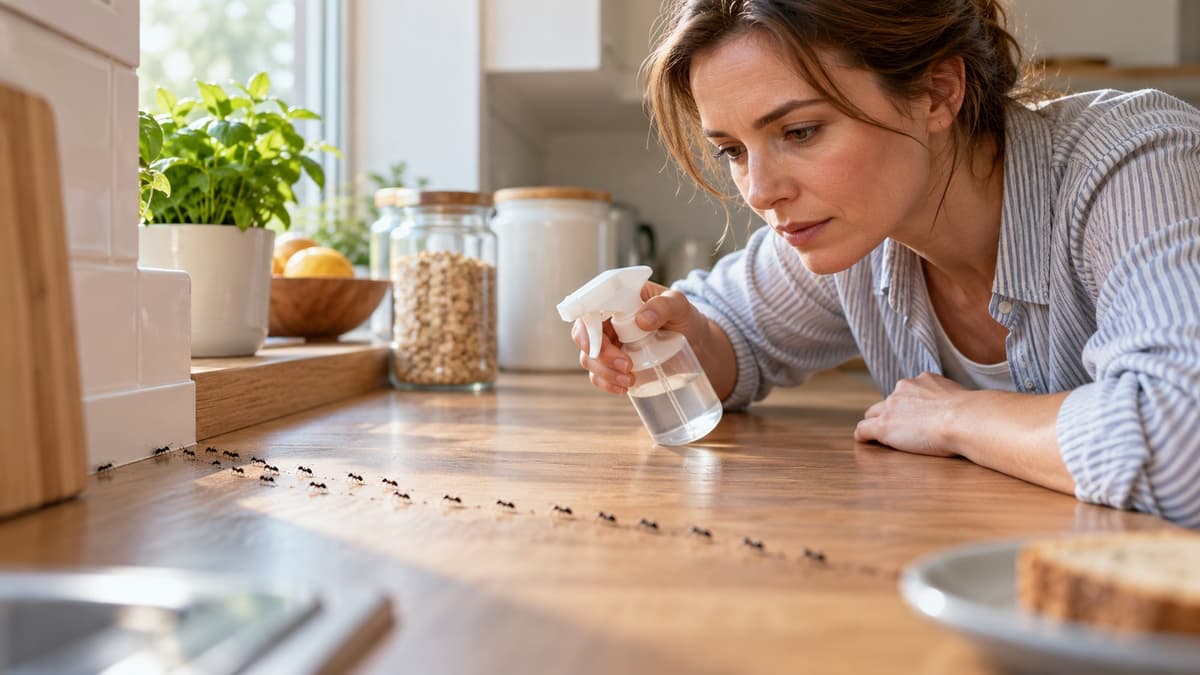
One insect does not automatically need a professional. A short summer trail of ordinary black garden ants can be approached with an amateur ant station if you keep it away from children and pets and follow the label.
Our ant poison comparison sets the formats side by side. The current top pick is the Jawell 24 x 10 ml stations, about £9.99, with 5.0 from four amazon.co.uk reviews. The listing does not name an active, and four reviews is a thin sample. A comparison cannot identify an unfamiliar species.
DIY is most defensible when you are reasonably confident what the pest is, the activity is limited, the area is safely accessible and the label covers that use. Note the date, locations and level of activity, then check whether the signs decline rather than counting dead insects beside a spray.
Do not exceed the label, combine several insecticides on the same route or buy a pack marked for professional users. Availability online does not turn a professional-use product into an amateur one. If you cannot identify the pest, pause.
Give a suitable treatment time to work
A bait is not a contact spray. Workers need to carry it back, so killing every visible ant at once can work against the method. Keep the area clean, remove competing food and follow the label's timetable. If there is no clear improvement in that period, or activity moves into more rooms, call for advice. A different formulation is not a diagnosis.
Signs that mean stop and call
Call when you have lost the source. Pests from a cavity, service duct, loft void or a space shared between flats are not dealt with by treating the few you can see. Droppings, gnawing or noises behind the fabric of the building need an inspection. Sprinkling product into an unknown void does not show what else is exposed.
Activity in several rooms, daytime as well as night sightings, several wasp entry points or signs shared with neighbouring homes mean the visible problem is only part of it. Call sooner around food preparation, vulnerable residents, pets or young children.
Stop when DIY pest control has failed despite correct use. That means one suitable label, the stated time, and fresh signs still continuing. It does not mean two days of spraying and a change of brand. Keep the packaging so a professional can see the product, the place and the date.
A rat in a kitchen, a nest entrance beside a busy doorway or signs across connected flats justify prompt contact. A serious sting reaction or possible pesticide exposure needs urgent medical help and the emergency information on the label. Pest-control advice is not medical advice.
How different pests change the decision
A method that suits black garden ants can be counterproductive for pharaoh ants. A wasp nest can sometimes be left alone. Decide on species, position and risk.
Small yellow ants in a block of flats
Tiny yellowish ants in a warm building are a stop sign, especially if more than one flat is affected. Pharaoh ants can form linked colonies and need coordinated baiting. The British Pest Control Association advises baiting rather than residual spraying, because unsuitable insecticide can split or move colonies.
Do not assume every pale ant is a pharaoh ant, and do not test that with a general spray. Photograph the routes and contact the landlord, managing agent or a pest controller. Treatment in one flat can fail if the colony uses ducts, pipes or neighbouring units.
Wasps near people
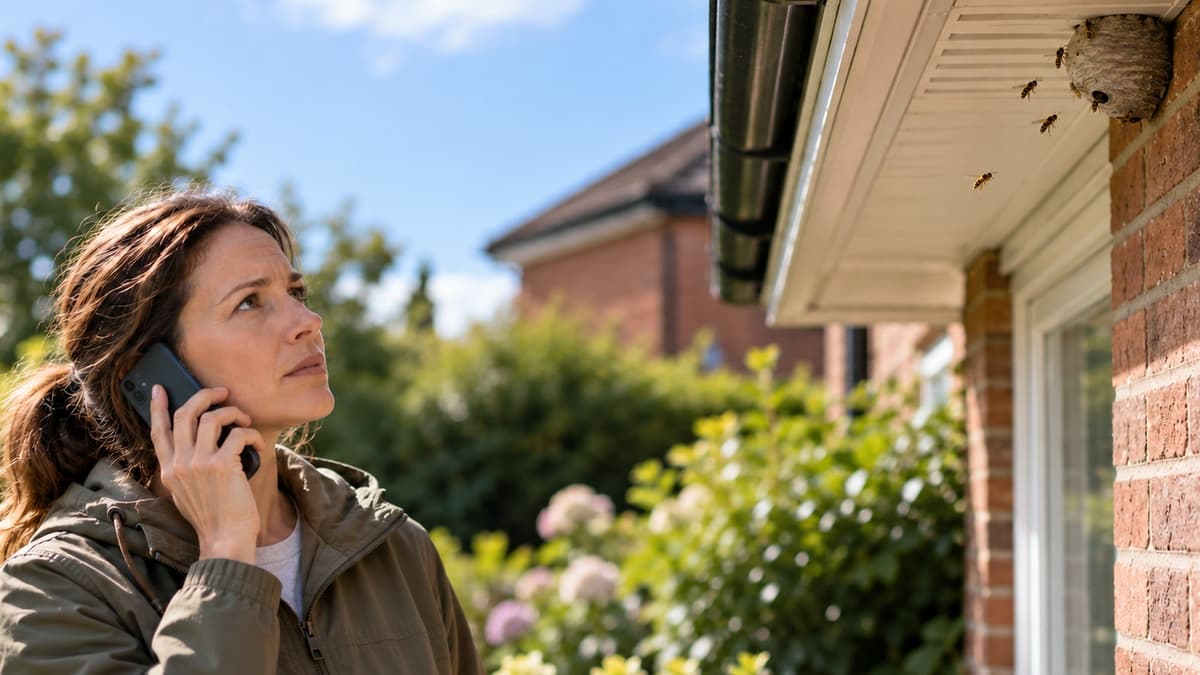
Not every wasp nest has to be destroyed. A nest remote from people can be left undisturbed. The decision changes when wasps cross a doorway, the entrance is near a play space, the nest is inside an occupied room or someone nearby is especially vulnerable to stings.
Never block a nest entrance. Wasps may then search through the building and emerge indoors. A professional can assess access and, where treatment is justified, apply an insecticide at the entrance with protective equipment. See our wasp spray comparison for amateur formats. A long-range can is not a reason to tackle a high-risk nest.
Rats and inaccessible spaces
One rat sighting deserves investigation because the route matters as much as the animal. Look for droppings, gnawing, greasy marks and gaps around drains, doors or pipes without opening unsafe areas. If activity is in a cavity, under fixed units or across a shared building, call a controller or ask the council.
Do not place loose bait where children, pets or wildlife could reach it, and do not leave bait out permanently. Killing a rat without closing the entry route invites another. Killing it in an unreachable void can leave an odour. Our rat poison comparison covers consumer options. The product is only one part of control.
Choosing who to call
Homeowners can contact a private company or check the council's current service. Tenants should tell the landlord or managing agent where defects, communal areas or neighbouring homes may be involved. Councils differ in pests, charges and eligibility. There is no blanket promise that ant, wasp or rat treatment will be free.
BPCA or National Pest Technicians Association membership can narrow the field. BPCA says member companies meet requirements including training and insurance and work to BS EN 16636. That is a standards check, not a substitute for discussing the job.
Ask what the pest is thought to be, what evidence supports that, and whether inspection comes before treatment. Ask about method, risks, preparation, visits and follow-up. Be cautious of complete eradication promised from a phone description, or routine chemical treatment offered without questions about children, pets, access or products already used.
Get the charge and scope in writing, including proofing, disposal, return visits and connected areas. The cheapest visit is poor value if the source cannot be reached. More chemicals do not make a larger quote better.
What to do before the visit
Photograph droppings, damage, insects and entry points before you clean for hygiene. Record rooms, dates and times. Note whether noises are in daylight or overnight. Keep containers and receipts so the technician can see what was applied.
Clear clutter under sinks and beside skirtings, but do not open a wall, climb a roof or enter a cramped loft without safe access. Secure pets and mention aquariums, children, allergies and anyone who cannot leave easily.
Do not spray just before the appointment. Fresh residue can kill specimens, change movement and interfere with baiting. Do not seal an active wasp hole or every rodent gap before the controller has looked. Exclusion in the wrong order can trap animals indoors.
Ask afterwards for a written record of what was used and where, plus re-entry, cleaning and monitoring instructions. Do not add a shop product on top. Sanitation, proofing and monitoring sit alongside treatment. Chemicals do not repair a drain fault or coordinate several flats.
Common questions
Can I still use a shop ant station?
When are pale ants a professional job?
Should every wasp nest be destroyed?
What if rats are inside a wall or cavity?
What does BPCA membership mean?
Is the council obliged to treat ants?
What should I do if I have already sprayed?

Peter F. is the editor for DIY & tools at productscompared.co.uk. Comparisons in this category are checked against amazon.co.uk listings, review evidence and public UK sources.
Related articles

What pest control costs in the UK
Compare the role of council and private pest services with the limits of shop treatments.
Wasp nest: DIY or a professional
Decide whether a wasp nest can be left alone or needs a trained pest controller.
Black garden ants in the house
Identify a typical summer ant trail and choose sensible first steps without making it worse.