Pest control cost UK: guide prices and exclusions

Compare UK pest control costs for ants, wasps, rats and mice, with council fees, private guide ranges, visit counts and what a quote often excludes.
On this page

You spot droppings behind a kitchen unit, a stream of ants beside the skirting board, or wasps disappearing under the roof tiles. The immediate question is usually the same: what does pest control cost in the UK? Published private guide ranges are roughly £100–£230 for ant removal, £75–£200 for a wasp nest and £120–£240 for rats or mice. Those are not fixed national prices. A council service can be cheaper, dearer or unavailable where you live.
A packet of bait and a technician’s visit are different jobs. A qualifying purchase through our links can earn us a commission at no extra cost to you. Shelf prices and council tariffs move, so treat the figures below as the published examples we used.
In short
Compare like with like. Visits, the pest, the treatment area, follow-up and exclusions matter more than one headline price. A low-cost bait or trap can suit a small, correctly identified problem. It is not the same as diagnosis, treatment and proofing by a professional.
Published pest control costs
Checkatrade’s April 2026 cost guide gives broad trade averages of about £100–£230 for ants, £75–£200 for a wasp nest and £120–£240 for rats or mice. Use that as a first budgeting range. It does not say what a company will find at your home, how many visits it will recommend, or whether the quote includes filling entry points.
Council tariffs show how far local prices can move. For 1 April 2026 to 31 March 2027, Cherwell District Council publishes prices excluding VAT of £73.50 for rats and mice, £80 for wasps and £92.50 for insects including ants. Wandsworth’s prices from 1 April 2026 are £71 for garden ants, £86 for wasps and £214 for rats and mice, with two visits specified for the rodent service. Neither list is a national benchmark.
Write down the pest, the number of rooms or nests, the visit count and any follow-up. A £90 single treatment and a £180 service with two visits and monitoring are not a simple double.
Why council prices differ
Environmental health is organised locally. Councils choose which pests they cover, who qualifies and what to charge. One authority may subsidise rats and charge the full cost for insects. Another may outsource treatments, limit appointments or exclude moles. Even neighbouring areas can publish different prices for jobs that look similar on a form.
Ant labels are easy to misread. Wandsworth lists garden ants at £71 and tropical ants at £214. Hounslow publishes £165 for garden ants entering the premises and £210 for pharaoh ants with two visits. Cherwell groups insects, including ants, at £92.50 excluding VAT. Species, method, visit count, VAT and service boundaries differ.
Enter your postcode on your own council’s website. Check VAT, whether rented homes are covered, and any reduced charges. If the council does not treat that pest, environmental health may still explain local responsibilities or point you towards qualified contractors.
Why tropical ants can cost more
Garden ants at a doorway may need a straightforward targeted treatment. Pharaoh ants and some other tropical species can live in several connected nests inside heated buildings. A poorly chosen spray may disturb the colony and spread it, so identification and a controlled baiting programme matter more. Repeat visits and monitoring across rooms or flats are why those published fees sit higher. If tiny ants appear year-round around warm service ducts, do not buy on price before the species has been considered.
A shop product or a professional visit?
A few pounds of bait stations and a pest controller’s visit solve different parts of a problem. The product is the material and the instructions. The visit may add identification, a survey, controlled application, advice and follow-up. The product is cheaper because you supply the time, the judgement and the access, and you carry the risk of treating the wrong place.
A short trail of common garden ants through one obvious gap can be a proportionate first step. The ant poison comparison sets formats and intended uses side by side. Persistent ants in several rooms, suspected pharaoh ants, or activity across flats need professional advice rather than another spray.
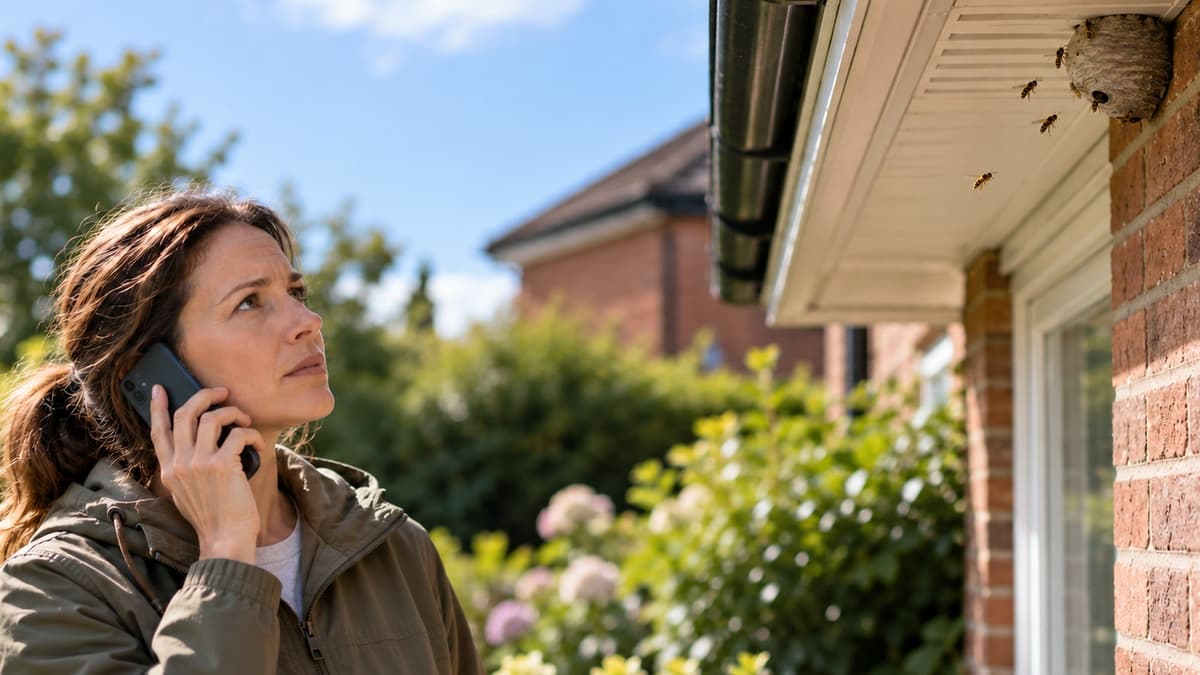
An aerosol or powder does not make a high wasp nest reachable, and a ladder adds a fall to the sting risk. The wasp killer guide compares shop options. Use a professional when the entrance is under roof tiles, inside a wall, beside a busy doorway, or hard to reach safely.
Killing individual rats or mice does not close the hole, remove contaminated material or find a drain fault. The rat poison comparison explains consumer options. Ongoing noise, repeated droppings, pets or children in the area, or doubt about legal and safe use are reasons to ask for a survey.
What your quote should cover
A useful quotation describes the work, not only a total. Ask whether a pest control call-out fee is separate, whether treatment is in the first visit, and what happens if the technician finds a different pest. For rodents, confirm how many visits and how far apart. For insects, ask whether every affected room is included.
For wasps, ask whether the price is one nest. Hounslow’s published £87.50 fee is for one nest and states that removal costs extra. A treated nest may stay in place if removal is unnecessary, inaccessible or would damage the building.
Nest treatment does not automatically mean physical nest removal.
Ask these questions before you book:
- Confirm whether the price includes VAT, travel and the initial inspection.
- Ask how many visits are included and what triggers an extra charge.
- Request the proposed treatment method and any preparation you must complete.
- Check whether proofing, carcass removal, cleaning or nest removal is included.
- Ask what follow-up or guarantee applies, including its conditions and time limit.
- Explain access problems, pets, children, allergies and neighbouring properties in advance.
Proofing is a frequent extra. Gaps around pipes, air bricks, doors or drains may be quoted separately. Droppings, damaged insulation, dead rodents and stored goods can sit outside the treatment price. A lower quote can still be good value once you know which jobs you will arrange afterwards.
What changes the final cost
Access and distribution change the bill as much as the species. A ground-floor wasp entrance is a different job from a nest under a three-storey roof. Garden rats are different from rodents in a faulty drain or a block of flats. A loft full of stored belongings, and the need to coordinate with neighbours, both add time.
One room with recent signs may need less investigation than similar signs across a kitchen, loft and extension. Repeat visits are common where bait must be checked, replenished or removed. Out-of-hours attendance can cost more, so ask whether a normal appointment changes the fee when there is no immediate safety issue. Location affects private quotations through labour, parking and travel, while council boundaries decide which public service you can use. Give each provider the same description, then compare the scope rather than the lowest total on its own.
Choosing a pest controller
Ask how the company identified the likely pest, and whether that will be confirmed on site. A credible contractor can explain the method, the precautions and why follow-up is or is not needed. Be cautious when someone promises permanent eradication before inspecting a recurring rodent problem or identifying an insect.
The British Pest Control Association says its members are audited to BS EN 16636 and must carry at least £2 million in liability insurance. The BPCA does not set prices, so the logo does not mean one rate or one scope. Ask for the business name, a written price and a treatment record. If chemicals will be used, ask what you need to do before and after application, and how long people or pets should stay away from the area. In a rented property, tell the landlord or managing agent promptly, because responsibility can depend on the cause, the tenancy and the condition of the building.
Rodent activity around food, chewed wiring, a suspected drain fault or an aggressive wasp nest beside an entrance deserves prompt assessment. Still check the visit count, the exclusions and the credentials before you book. That short check is what keeps a quoted price attached to a complete service.
Common questions
How much does a pest controller charge in the UK?
Is council pest control cheaper than a private firm?
How much does ant removal cost?
How much is wasp nest treatment?
Does wasp treatment include removing the nest?
Why do tropical ants cost more to treat?
Does choosing a BPCA member fix the price?

Peter F. is the editor for DIY & tools at productscompared.co.uk. Comparisons in this category are checked against amazon.co.uk listings, review evidence and public UK sources.
Related articles

When to call a pest controller
Recognise the point at which an infestation needs trained assessment rather than another shop treatment.
Wasp nest: DIY or a professional
Decide whether a wasp nest can be left alone or needs a trained pest controller.

Amateur rat poison rules UK
What an amateur may buy, and why permanent baiting belongs with a professional controller.