Wasp nest treatment UK: DIY or call a professional?
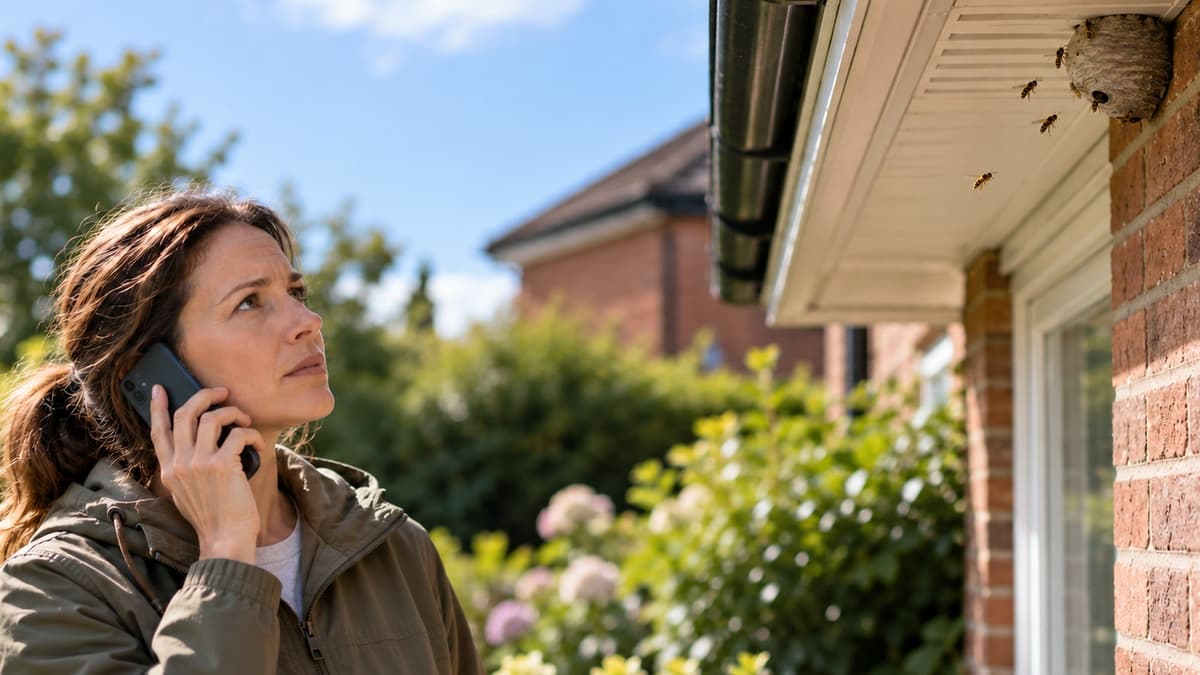
Wasp nest treatment in the UK: leave a low-risk nest, use a shop product only when it is small and visible, or call a professional for lofts and soffits.
On this page

A line of wasps disappearing beneath a soffit can make a £10 shop aerosol look like the quickest answer. The right choice for wasp nest treatment in the UK may be to leave the nest alone, use a product only on a small and safely accessible early nest, or call a trained controller. Risk, access and colony size decide it, not how urgently you want the insects gone.
Peter F. edits DIY & tools at productscompared.co.uk. Figures come from amazon.co.uk listings in the wasp killer and wasp spray comparisons, and the decision lines follow British Pest Control Association advice plus the limits on amateur labels. We did not treat a nest or run a lab test. A qualifying purchase through our links can earn a commission at no extra cost to you.
In short
Leave a low-traffic nest alone if it poses no meaningful risk. The colony dies out as the season ends, and old nests are not normally reused. Never seal an active entrance. Choose professional treatment when the nest is established, concealed, high up, inside a loft, or close to people who could be stung.
First decide whether treatment is needed
Finding a nest does not mean it should be destroyed. The British Pest Control Association advises that treatment is appropriate where wasps create a risk to people, while a nest away from doors, paths and working areas may be left undisturbed. A colony at the bottom of a large garden is a different case from one beside a nursery window, a loft hatch or the front door.
Watch from a safe distance and follow the flight line rather than approaching the entrance. Note whether people or pets must cross it, whether wasps enter living space, and whether anyone nearby has a known serious allergy. Do not strike the structure, shine a work light into a loft nest, or stand under the entrance for a photograph.
A small spring nest founded by a queen is not a mature late-summer colony. If an undisturbed nest is tolerable, decline in autumn may solve it without insecticide. Cold weather does not prove at once that every wasp has gone, so postpone nearby repair until activity has clearly ceased. Leaving a nest makes sense only while people can avoid it. If children play beside it, a tradesperson must work near it, or wasps are appearing indoors, watching from a distance is no longer enough.
Why you should not block the entrance
Do not fill a wasp entry hole with foam, mortar, tape or sealant while the colony is active. The hole you can see is a route to the nest, not necessarily the nest itself. Closing it can force returning and trapped wasps to search for another way out, including towards the inside of the building.
This matters with a wasp nest in the soffit or a wall void. Wasps confined beside plasterboard may chew at the surrounding material, and a new route can open into a bedroom, bathroom or loft landing. You have turned a predictable outdoor flight path into an indoor problem without dealing with the colony.
Mark the location from a distance if a controller will need to find it, and keep nearby windows shut where practical. Sealing gaps is useful after the nest is inactive. It is a later repair, not the treatment. If building work cannot wait, tell the contractor where the nest is before the visit. Ordinary DIY protective kit does not turn a householder or a general tradesperson into a trained pest controller.
When DIY wasp nest treatment is reasonable
DIY treatment has a narrow use: a small, early, fully visible nest you can reach from stable ground without entering the flight path. The label sets the method, distance, protection and re-entry advice. A product sold online is not automatically suitable for a loft, a cavity or every species.
A product for a visible nest is not automatically right for an unseen cavity. A long-range aerosol still leaves wind, poor aim, nearby people, pets and open windows. Our wasp spray comparison sets out foam and indoor aerosols. The label remains the authority for use.
Do not combine insecticides, decant them into an unlabelled container, or raise the dose because the first application was not instant. Keep other people away for the period on the label. If the job needs a ladder, crawling across joists, moving insulation, or standing between the nest and the exit, it is no longer sensible DIY.
The top pick in our wasp killer comparison is Nippon wasp nest powder, ASIN B004FJ5C3W, about £7.99, rated 4.4 from 1,265 amazon.co.uk reviews on 16 October 2026. Public label HSE 9219 names permethrin in this 300 g dust, for the nest or for piles at the entrance, applied without stirring the colony. Use it only where you can reach that entrance at close range. Ignore the listing line that says 300 gallons. Some reviews still reported wasps flying the next day. See Nippon wasp nest powder on amazon.co.uk.
When to call a professional
Call a professional for a large or busy nest, a concealed colony, uncertain access, or any place where retreat would be difficult. That includes many nests in wall cavities, roof voids and occupied lofts, and entrances above a comfortable reach from the ground. The same applies when wasps enter living rooms, the flight path crosses a doorway, or a vulnerable person could be exposed.
A trained controller can identify the insect, find the usable entrance and apply a treatment that is not sold for amateur use. BPCA guidance describes insecticide at the nest entrance as a professional method. Treatment does not always mean removing the papery nest, especially inside a void. Controlling the active colony is the immediate job.
Ask whether the fee includes VAT, a return visit, access equipment and removal of an accessible old nest, and what happens if no active wasp nest is found. A low headline price can leave out the access problem that made you call. Council treatment is not uniform: a paid service, a contractor, or nothing for homes. Check current terms. What pest control costs in the UK sets published ranges beside those local differences. Describe the height, access and activity before you book.
Clear clutter only if you can stay well away from the flight path, unlock the gate, and mention children, pets and open windows. Do not pull insulation or open a soffit to be helpful. Foragers may still return, and larvae can emerge later. Follow the exclusion period, and use the callback if activity lasts longer than the provider said it should.
Lofts, soffits and sheds
A wasp spray in a loft is more than an insect problem. Boards may be incomplete, headroom is tight, and the hatch can be your only way out. Insulation may hide the nest, and spraying from the hatch can miss it and treat surfaces that were not meant to be treated. An established loft nest is usually a professional job.
Wasps at the eaves do not show where the nest hangs. A soffit hole may lead along a void, and opening it before control can expose the colony. Photograph the entry from well away, and say whether the loft is boarded.
A shed is lower risk only when the nest is small, visible and avoidable. Stop using the building, keep the door shut if that does not trap anyone or disturb the nest, and keep children away. Do not shift boxes or lining to expose a hidden colony. After activity has ended, seal suitable gaps before the next season. Remove an old nest only if you can reach it without hazardous climbing and you are sure it is inactive. Old nests are not normally reused.
Bees need a different response
Confirm the insects are wasps before treatment. Wasps usually look smooth and narrow-waisted, while many bees look hairier, but a roofline is a poor place to be sure. A clustered mass of honey bees on a branch may be a temporary swarm rather than a wasp nest.
Do not spray first and identify later. Note whether the insects form a hanging cluster, and photograph them only from a safe distance. The British Beekeepers Association can point people towards local support for honey-bee swarms. Other bees may simply need to be left alone. If you are unsure, tell the controller and expect them to identify the insect before treating.
Common questions
Should I block the entrance to a wasp nest?
Can I spray a wasp nest in the loft?
Do I have to remove an old wasp nest?
What if the insects are bees rather than wasps?
When is a shop wasp product enough?
Will my council treat a wasp nest?
How quickly does professional wasp treatment work?

Peter F. is the editor for DIY & tools at productscompared.co.uk. Comparisons in this category are checked against amazon.co.uk listings, review evidence and public UK sources.
Related articles

Pest control cost UK: what you could pay
Compare the scope of council and private pest-control visits with the limits of shop products.

When to call a pest controller UK: warning signs
Recognise the point at which an infestation needs trained assessment rather than another shop treatment.

Biocide label UK: what to check before use
Understand approved uses, application limits and the safety wording on an amateur pest-control product.