Biocide label UK: what to check before you buy

Learn how to read a biocide label in the UK: who may use the product, where the active and HSE number sit, and what a blank listing leaves out.
On this page

You have found a pest-control product that promises a quick answer, but the useful information is on the back, not in the large type on the front. A biocide label UK shoppers can rely on should tell you who may use the product, what active substance it contains, where and how it may be applied, and which precautions matter. Reading those details before checkout can stop you buying a professional-only pack, using a bait in the wrong place, or trusting an advert that plays down risk.
The Jawell 24 x 10 ml stations are the top pick on the ant poison comparison: about £9.99, with 5.0 from four amazon.co.uk reviews in October 2026. The listing does not name the active. This is not a laboratory test. A qualifying purchase can earn us a commission at no extra cost to you.
In short
Buy only a product authorised for your type of user and follow its label exactly. Check the active substance, concentration, HSE or other relevant authorisation details, target pest, application rate, restrictions and disposal instructions. If an online listing does not let you verify them, do not fill the gaps with assumptions.
Who is allowed to use the product?
The first question is whether the label permits you to use it. UK products may be for the general public, often called amateur users, or restricted to professional users. Pack size does not settle it. A small syringe of gel can still be professional-only, and a larger bait-station pack may be authorised for household use. For professional use only is a limit. Training, workplace controls or protective equipment may be assumed, and an online basket does not change who may use it.
An amateur product still demands care. General-public authorisation means there are directions for that user group and that purpose. It does not mean the product is harmless or suitable around every pet. If the job needs inaccessible placements or a professional-only method, compare an amateur option with a pest-control service.
Find the active substance and HSE number
A proper label names each active substance and its concentration. That is what produces the effect, not the brand name. It also stops you treating two packs with the same active as unrelated alternatives. Gel, bait station and powder are formats. They do not name the active.
Read the concentration with the formulation and the directions. A larger number is not automatically a better household choice, because dose, delivery, target pest and placement all matter. A contained bait is used differently from a surface spray. Compare formats in our ant poison guide, then let the label decide. The Jawell 24-pack shows the gap: the listing has a price and a star line, and it does not print the active.
Under the Control of Pesticides Regulations route, the statutory label includes the HSE approval number. Other products may sit under the biocidal products regime. The identifier connects the pack with defined conditions. It is not a recommendation from HSE. Check that it is legible and belongs to this exact product, not a brand family on the listing. Great Britain uses its own biocidal products regime. EU biocides rules continue to apply in Northern Ireland. Use the official information for the nation where the product is supplied and used.
Read the directions as limits
Directions are boundaries. Approval for ants does not cover wasps, and a rodenticide is not an answer to every animal in a garden. Check the authorised location: indoors, outdoors, in and around buildings, or inside a bait station. Similar packs can have different permitted placements.
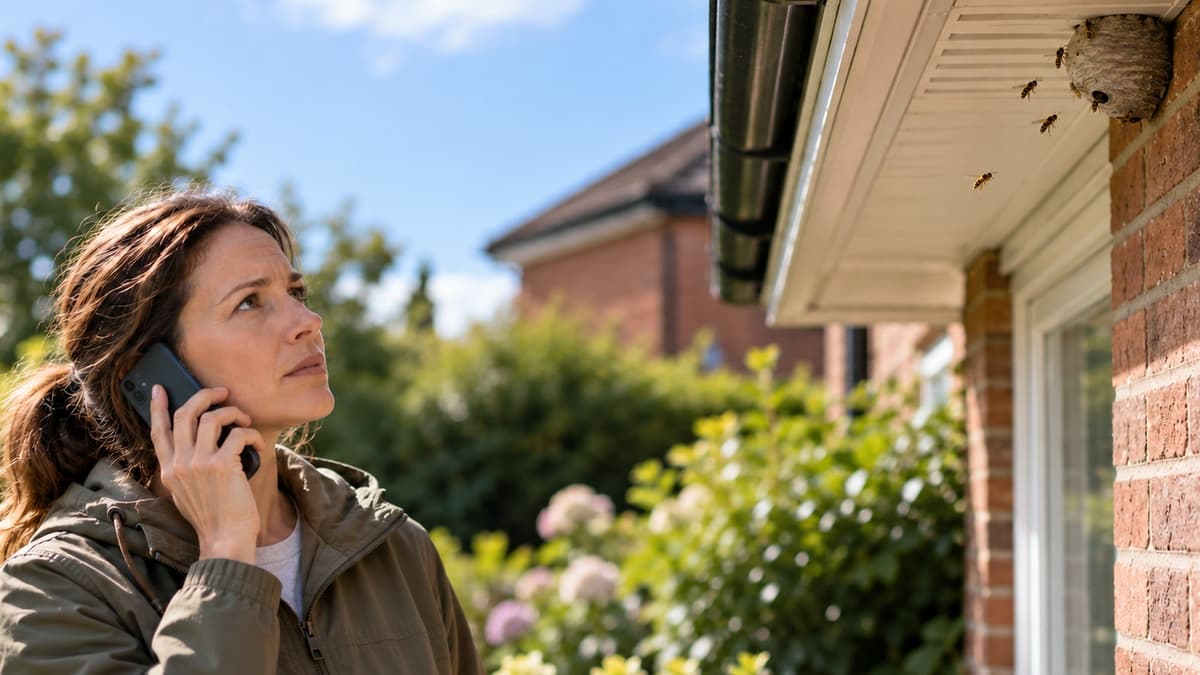
Find the dose, rate and frequency. More product is not a quicker result. Over-application can increase exposure and breach the instructions. Note bait points, food-preparation surfaces, ventilation, and how long children and animals must be kept away. A wasp treatment may require distance, protective clothing or a particular time, and the nest position may make domestic treatment unwise. Our wasp spray comparison compares formats. It cannot make an unsafe nest safe. For rats, use the rat poison guide to narrow options, then follow the selected pack.
Read storage and disposal before you open the container. Keep unused product in its original pack, and plan for the empty pack, spent bait or dead rodents where the label requires it. Do not decant a biocide into an unlabelled bottle or a food container. Once the label is gone, the identity, dose and emergency information go with it.
Claims a biocide advert should not make
UK rules do not allow biocide advertising to mislead people about risks to human health, animal health or the environment. Non-toxic, harmless, natural, environmentally friendly, animal friendly and similar claims are inappropriate when they imply reduced or absent risk. A plant-derived ingredient or a low-odour station is still a biocidal product.
Use biocides safely. Always read the label and product information before use.
The advert should carry that sentence, clearly distinguishable from the sales copy. It prompts you to read the label. It does not replace the label. Safe around pets may omit placement conditions, and chemical-free can hide the active. If the advert contradicts the pack, the pack governs use. HSE approved means the product may be sold and used on specified conditions. It does not mean the regulator chose it as a top pick or guaranteed a result in your home.
What to do with a blank online listing
Many listings lead with pack count and delivery and leave the back label unreadable. A missing active in the bullets is a reason to look further, not a reason to guess. Inspect every image for a sharp photograph of the full current label, then the manufacturer's page for the exact name and pack. Verify the user category, target pest, each active and its concentration, the authorisation identifier, the dose and the main precautions. A review photograph can show an older formulation.
If that fails, choose a listing that shows the information. Two offers can share a hero image and still differ in pack wording. A few pounds saved is poor value if you cannot tell whether the product is for amateur use. A review that describes extra bait, a spray on an unauthorised surface or a professional pack at home has not created an authorised method.
A two-minute check before you buy
You can reject most unsuitable products without becoming a regulatory specialist. Keep the product page open and work through these points against a readable label.
- Confirm the user group. Amateur or general-public use must be permitted if you are treating your own home.
- Match the pest and the place. The exact pest and the indoor or outdoor location must be authorised.
- Identify the formulation. Record every active substance and its concentration, not the brand or words such as power and max.
- Find the authorisation details. The HSE or other identifier must belong to this precise product.
- Read the dose and the restrictions. Check quantity, frequency, protection, ventilation, children, pets, food and water.
- Plan storage and disposal. Keep the product in its original pack and follow the disposal directions.
Stop if one of the first four points cannot be verified. Contacting the manufacturer or choosing a clearer product is quicker than trying to reconstruct statutory information after delivery. When the pack arrives, repeat the check, because listing images can be outdated. Do not use it if the physical label differs materially from what you assessed.
Common questions
What is an amateur biocide?
Where is the active substance shown?
What does an HSE number mean?
Can a biocide advert call a product non-toxic?
Can I use a professional ant gel at home?
What if an Amazon listing omits the active substance?
Do Great Britain and Northern Ireland use the same biocide rules?

Peter F. is the editor for DIY & tools at productscompared.co.uk. Comparisons in this category are checked against amazon.co.uk listings, review evidence and public UK sources.
Related articles

Amateur rat poison rules UK: what you may buy
What an amateur may buy, and why permanent baiting stays a professional practice.

When to call a pest controller UK: warning signs
Pharaoh ants, a large wasp nest, rats and pests inside a wall leave a shop pack.
Wasp nest treatment UK: DIY or call a professional?
When a small spring nest is a shop spray, and when blocking the hole makes it worse.