Clothes moth prevention UK: stop damage before it spreads

Practical clothes moth prevention for UK homes: identify damage, vacuum hidden areas, clean stored wool, freeze affected items and avoid weak fixes.
On this page
Clothes moth prevention in a UK home starts the same way whether you have found a hole or a small moth beside the wardrobe. Work out where the insects are developing, and remove the conditions that let larvae feed unnoticed. A spray can come later. It cannot clean soiled wool or replace a proper look.
The freeze time, the monthly shake and the limit of lavender are English Heritage guidance. The top pick and prices are amazon.co.uk listings from our moth protection comparison, checked in October 2026. We did not run a lab test. A purchase through our links can earn a commission at no extra cost to you.
In short
Clothes moth prevention is disturbance, cleaning and careful storage. Larvae make the holes. Adults are a warning to inspect wool, cashmere, carpets and other animal fibres. Vacuum hidden edges, clean textiles before storage, and freeze suitable bagged items at minus 18°C for at least two weeks.
Recognise clothes moth damage
Two species in UK conservation guidance are the webbing clothes moth, Tineola bisselliella, and the case-bearing clothes moth, Tinea pellionella. The larval stage feeds on vulnerable material. Adults do not chew holes in your clothes, so an adult is a prompt to search for a breeding site.
Inspect animal fibres first: wool, cashmere, felt, fur, feathers and wool-rich carpet, especially where perspiration, food marks, hair or skin debris remain. Damage often starts beneath a collar, along a fold, under furniture or at a carpet edge. Look for irregular holes, grazed fibres, silk webbing, small cases and gritty debris. Carpet beetle larvae and ordinary wear can look similar, so one hole is incomplete identification.
Use a bright torch over a pale surface and check both sides, including seams, cuffs, pockets and the shelf itself. Keep suspect textiles apart from clean ones. Eggs are tiny, so fresh damage is not cleared by the absence of an obvious caterpillar.
Find the source, not just the moth
Start in the room where damage or adults appeared, and look beyond the wardrobe. Larvae favour quiet animal fibre and debris: the back of a drawer, the underside of a chair, a roll of wool, piano felt, the strip beneath a bookcase, or the gap where fitted carpet meets the skirting.
Empty the storage methodically. Keep clean-looking items separate, and bag suspect items until you can clean or treat them. Check baskets and shelf cracks before you wipe. Move heavy furniture only when nearby damage or repeated sightings justify it.
Activity near a chimney, loft hatch or eaves needs a separate check. Old bird nests can hold feathers that textile pests use. Leave an active nest alone until you have checked the legal position, because wild birds and active nests may be protected. Cleaning the house will not solve an inaccessible building source.
A pheromone trap can show whether adult male webbing clothes moths are present, and where. It does not catch larvae, eggs or every adult. Date each trap and compare catches over time. One moth on the board is not the size of the infestation, and a clothes-moth lure is the wrong tool for a pantry moth.
Vacuum and disturb hidden areas
Vacuum carpet edges, skirting, floor cracks, the space under movable furniture, and the inside and feet of an emptied wardrobe. Move the crevice tool slowly enough to lift fluff, hair and loose insect material. On delicate wool or a historic textile, follow the maker's care advice. Hard suction or a rotating brush can damage the pile.
Empty the canister or bag outside, and seal the waste before it goes in the outdoor bin. A cleaner left full under the stairs has only moved the debris to another dark place. Wipe the attachments and wash your hands.
Take hanging clothes out, shake them and look along shoulders, folds and hems. English Heritage advises shaking wardrobe clothes monthly. Current damage needs more frequent checks. Keep suspect wool covered as you carry it. A vacuum clears accessible debris. It does not treat every fold, and one pass does not prove the insects have gone.
Clean, store and freeze textiles
Clean clothing before long storage, even when it looks unmarked. Larvae favour textiles that carry perspiration or food residue. Follow the care label, whether that is a wash, dry cleaning or a specialist cleaner, and let the item dry fully. Sealing damp fabric invites mould.
Once it is clean and dry, use a container or garment bag that actually closes. Storage fails if you seal an untreated larva in with its food. A loosely tied carrier bag is not isolation. Moth protection for wardrobes and drawers separates a rail from a carpet edge.
Freezing suits many small textiles that washing cannot deal with, if the material can tolerate it. Bag the dry item, press out excess air without crushing decoration, and confirm the freezer holds the temperature. English Heritage's guidance is minus 18°C for at least two weeks. An overfilled compartment, or a door that opens often, may not.
Bag the dry item, hold it at minus 18°C for at least two weeks, and leave the bag sealed until it returns to room temperature so condensation stays on the bag.
Then inspect it and move it into clean storage. One frozen jumper leaves the carpet edge and neighbouring wool untreated. A historic textile, or cloth already weakened by feeding, may need a conservator.
Know what repellents cannot do
Lavender sachets and cedar rings smell pleasant and stay dry. English Heritage notes that lavender does not kill larvae. Cedar loses aroma over time. Neither shows that an infested drawer is safe.
Older moth-ball formulas may contain substances that are banned or not recommended. Naphthalene supply in pesticides has been prohibited since 2008. An unlabelled ball from a cupboard has no reliable instructions. Use a product around children, pets or clothing only when the current label allows that use. A stronger smell is not stronger protection.
A labelled spray can be one part of control. It cannot replace untreated clothes, hidden lint or an outside source. Leave clothing, bedding, toys and food-contact surfaces unsprayed unless the label allows them, and follow any ventilation or re-entry instruction.
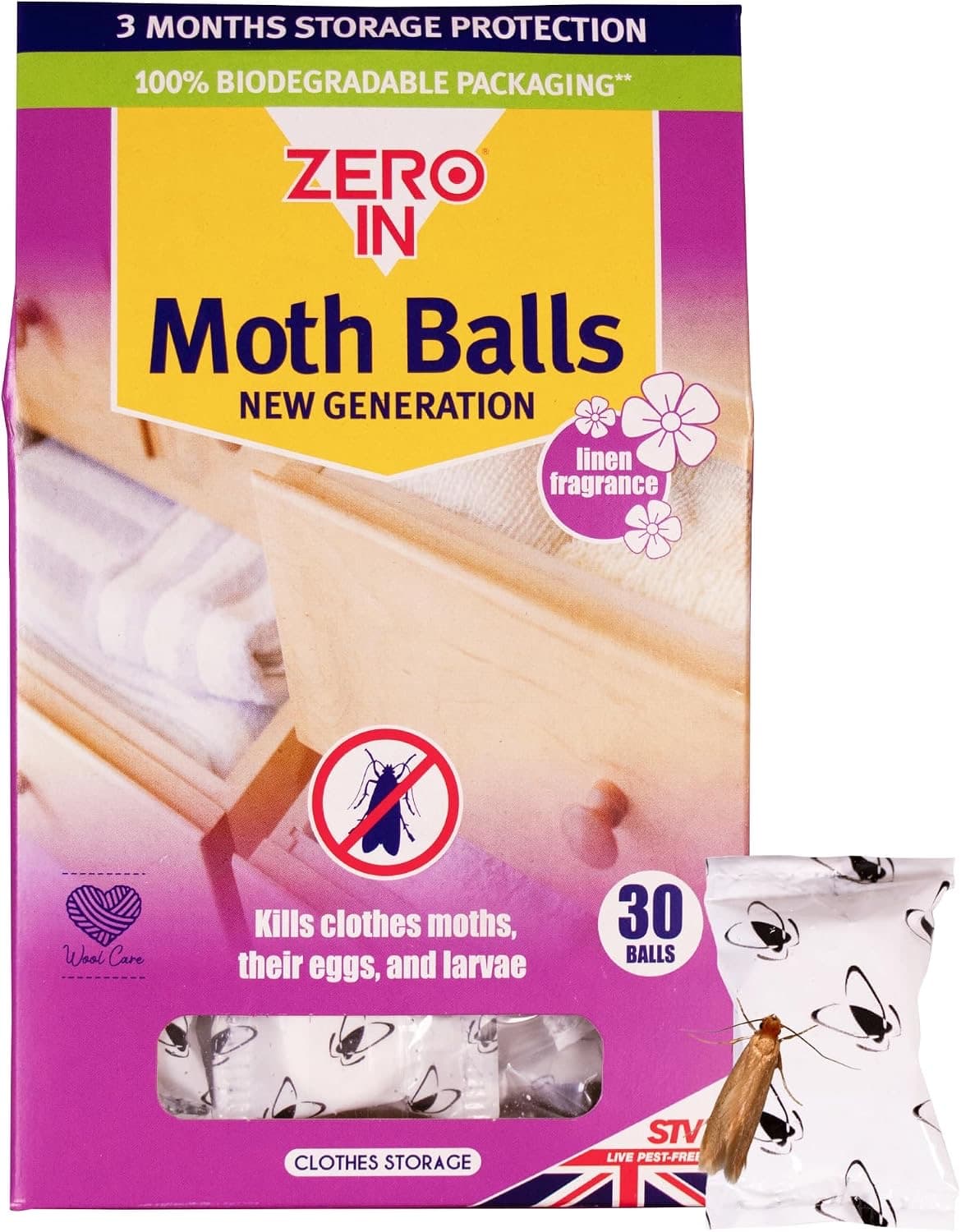
A trap monitors adults, a closed bag isolates clean clothing, and a labelled treatment covers a defined area. Our moth protection comparison sets those jobs side by side. The top pick is the Zero In transfluthrin moth balls, about £8.90, with 4.4 from 601 reviews, for enclosed wardrobes, drawers and bags. The balls stay in their sachets, and they do not replace cleaning.
Build a prevention routine
Once a month, shake less-worn natural-fibre clothes, inspect shelves and check carpet edges. Before winter knitwear goes away, clean it, dry it and pack it in a marked container you can open without searching the whole house.
If signs are active, date what you see: fresh holes, larvae, cases and trap catches mean different things. Vacuum, isolate and treat, then look again. Adults after cleaning can be an earlier generation. Watch the trend, and watch for fresh larval damage.
Use this order when you find a new hole:
- Isolate the damaged item in a sealed bag and inspect nearby animal-fibre textiles.
- Check folds, seams, carpet edges, furniture undersides and the storage space with a bright torch.
- Vacuum accessible harbourages and empty the cleaner outside immediately afterwards.
- Clean each textile according to its care label, or use an appropriate freezing method.
- Return only clean, dry and inspected items to cleaned storage.
- Monitor the room, and investigate a building source if signs persist.
Call in help when you cannot reach the area, damage continues across rooms, or the source sits under fixed flooring or inside the building. Chemical use without source control is an incomplete plan. The order of work is in how to get rid of clothes moths.
Keep wool less quiet, less dirty and harder to reach. Inspection, vacuuming, clean storage and a proportionate treatment make fresh damage easier to spot.
Common questions
The usual questions are what causes the holes, whether scent works, and how to treat knitwear safely. Deal with larvae and their hiding places, and add cleaning or specialist help when a method cannot reach the source.
Common questions
What is eating holes in my wool clothes?
Are the flying moths causing the damage?
How do I freeze a jumper to kill clothes moths?
Does lavender kill clothes moth larvae?
Do moth balls still work in the UK?
Where should I vacuum for clothes moths?
Can a bird nest cause a clothes moth problem?
Which products can help with clothes moth control?

Peter F. is the editor for DIY & tools at productscompared.co.uk. Comparisons in this category are checked against amazon.co.uk listings, review evidence and public UK sources.
Related articles

Biocide label UK: what to check before use
How to read a UK biocide label, who may use it, and where the active and the HSE number sit.

When to call a pest controller UK: warning signs
When a shop treatment is still reasonable, and which ant, wasp and rat problems need a professional.

Do ultrasonic pest repellers work? What evidence says
What trials and UK advertising rules allow, and why a plug-in device is not a clearance.