Do ultrasonic pest repellers work? What evidence says

Do ultrasonic pest repellers work? See what trials and UK advertising rules say, why effects fade, and which practical pest controls to use instead.
On this page
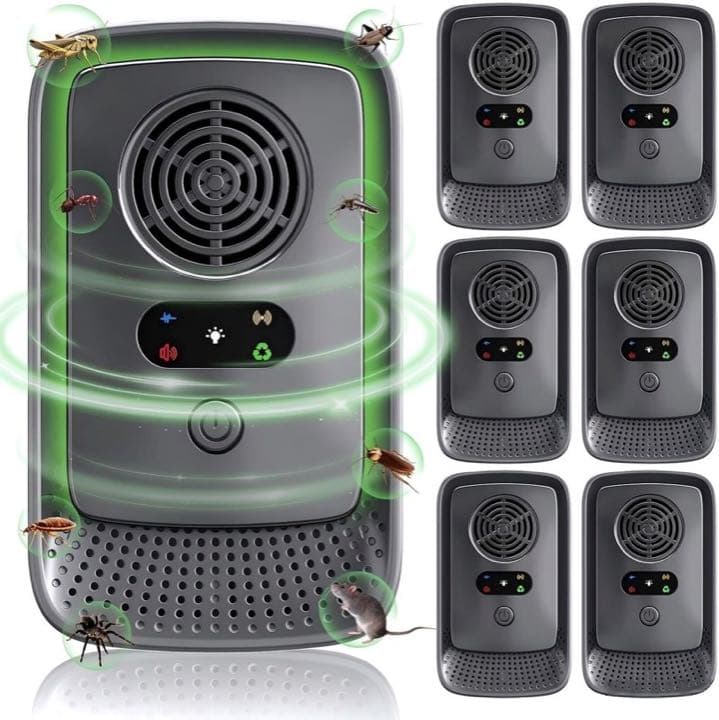
You notice scratching behind a kitchen unit, find droppings by the skirting board and see a plug-in device promising an easy, poison-free answer. Do ultrasonic pest repellers work? The available evidence does not show that domestic ultrasonic gadgets provide reliable, lasting control of rats, mice or insects. A pest may react to a new sound for a short time, but that is very different from leaving a property and staying away.
In short
Ultrasonic pest repellers should not be your main response to an infestation. Reviews and public pest-control guidance repeatedly point to limited range, obstruction by solid objects and habituation, while the UK's Advertising Standards Authority says it has not accepted efficacy claims for pest-repellent devices. Identify the pest, remove what supports it, block access where appropriate and use a control method with evidence for that species.
What ultrasonic repellers claim to do
A plug-in pest repeller usually claims to emit high-frequency sound beyond or near the upper edge of human hearing. The sales argument is simple: the sound supposedly makes a room uncomfortable for rodents or insects, so they leave without traps, bait or chemicals. Some products add electromagnetic or variable-frequency claims, but extra modes do not themselves show better pest control.
Two questions stay separate. Does the device produce a signal, and does that signal reduce the pest in an occupied UK home for a meaningful period? A light, a click or a changing indicator shows power. It does not show control. An animal that startles in a laboratory, or moves away for a few minutes, is not proof that an infestation has been cleared.
Whole-house language needs caution. Ultrasound is directional, and walls, doors, cupboards and appliances interrupt it. Intensity also falls with distance. A unit in the hall cannot be assumed to reach a mouse behind a cabinet, a rat under the floorboards and moth larvae in a wardrobe.
Rodents, crawling insects, flying insects and spiders do not share one sensory system or one predictable response. If a listing says one small plug controls all of them, the breadth of the promise calls for more evidence, not less. You can compare the designs sold as ultrasonic pest repellers, but a feature comparison should not be mistaken for proof of efficacy.
What the evidence actually shows
The evidence cited in public reviews is not a sound basis for depending on ultrasonic devices. A review of commercial electronic rodent products found effects that were generally weak and short-lived, with rodents becoming accustomed to the signal within days. That process, called habituation, matters because a repellent that changes behaviour briefly, then becomes part of the background, has not solved the infestation.
A Hong Kong Food and Environmental Hygiene Department note makes the same practical point: ultrasound falls quickly with distance, objects create sound shadows and rodents habituate. A brief reaction is not clearance of a habitat.
Adverts that add insects do not make the evidence stronger. In one controlled choice test indexed by PubMed, ultrasonic pest controllers did not alter the distribution of fleas and ticks. University of Arizona extension guidance also says residential sonic devices have not been shown to work in studies. Those results do not cover every product sold. They do undermine ultrasound as a general solution.
This is an evidence review, not a laboratory test of a named plug. We will not claim that every unit is fraudulent or that no animal ever responds. The evidence for this product type does not justify relying on it to remove or control an established pest problem.
Why results can look convincing at first
Ultrasonic repellers can seem to work because pest activity varies. A mouse may feed in a different place the next night, moths emerge in cycles, and outdoor animals change route with weather and food. Plug the device in at the same moment and the timing invites you to credit it, even with no controlled comparison.
People often change several things on the same day: crumbs wiped, pet food sealed, a gap filled, and the repeller plugged in. Activity then falls because food and access changed, while the gadget takes the credit. Those housekeeping steps are useful. Together they make a testimonial poor evidence for the device.
A startled rodent can avoid a newly noisy area, then return once the sound predicts no danger. Silence for 24 or 48 hours is not control. Check fresh droppings, gnawing, tracks, damaged packaging and recurring noise over a longer period.
Outdoor products for birds or garden animals may use audible sound, ultrasound, flashing light or vibration, so they are not one technology. Comparisons of ultrasonic bird repellers and solar animal repellers help you inspect features and limits. No feature list guarantees that an animal will leave an established food source or shelter.
What UK advertising rules allow
In the UK, an advert must be able to substantiate objective claims. The Advertising Standards Authority's advice on pest repellents says it has not accepted efficacy claims for these devices and explains that marketers should hold robust evidence, including relevant trials conducted in the UK. Testimonials and anecdotal customer experiences are not enough.
The wording of the claim controls what evidence is needed. "Emits ultrasonic sound" is a technical statement about output. "Drives rats from your home", "protects the whole house" and "works on mice, mosquitoes, moths and spiders" are efficacy claims with much larger consequences. Evidence for one pest, one room or a short test cannot automatically support all-species, all-property or permanent-protection wording.
Phrases such as "results may vary" do not repair an unsupported headline promise, and frequency graphics do not show that pest numbers fell. A long list of customer reviews can help you judge plug quality, noise or ease of use. It cannot replace a controlled efficacy trial. "Chemical-free" may accurately describe a device while saying nothing about whether it works.
Be careful with "proven" and "tested". Ask what was tested, against which species, in what setting and for how long. A factory electrical check is not a pest-control trial, and a momentary behavioural response is not proof of clearance. If the report is unavailable, or does not match the model and the claim, treat the marketing as unresolved. Buy on substantiated outcomes, not on the number of modes or pest icons on the listing.
What to do instead
Start with identification. Mouse droppings, rat activity, carpet moth damage and insect bites need different responses, and guessing can waste days. Photograph signs, note where and when they appear, and check likely food, water and shelter. If identification is uncertain, a reputable pest professional can stop you treating the wrong species.
For rodents, store food in sealed containers, clean spills and keep waste closed. Inspect pipes, doors, air bricks and service entries, but do not seal an active route if that could trap an animal inside. Durable proofing of the full opening matters more than a cosmetic patch.
Choose control by species and setting. Suitable traps can give a measurable result when they are checked. A rodenticide or insecticide must be authorised for that use and followed exactly as its UK label directs, including limits around children, pets and wildlife. Do not improvise bait or place a product where non-target animals can reach it.
For moths and stored-product insects, remove the affected food or fabric, clean around it and use monitoring traps only for the species stated. For mosquitoes, deal with standing water where lawful, and use a physical barrier or a labelled repellent rather than expecting sound to clear a room.
Record signs before treatment, then check the same places again. If fresh activity continues, if rats are in living spaces, if wiring may be damaged or if the source is in a void you cannot reach, bring in a competent pest controller who can explain the species, the access, the treatment and the follow-up.
If you already own a unit, one household does not prove or disprove the category. Keep it only if it is safe and not distressing a pet, and do not let it delay proofing or labelled treatment. The costly outcome is an infestation that continues while you wait.
Common questions
The questions below follow the public reviews and UK advertising guidance above. A star rating on amazon.co.uk is not a household trial.
Common questions
Do plug-in ultrasonic repellers drive rats out?
Will one ultrasonic repeller cover a whole house?
Do ultrasonic pest repellers work on mice, moths or mosquitoes?
Can an ultrasonic pest repeller advert say it is proven?
Do sonic mole repellers make moles leave?
Is ultrasound from a pest repeller harmful to pets?
What should I use instead for rats?
Are ultrasonic pest repellers a scam?

Peter F. is the editor for DIY & tools at productscompared.co.uk. Comparisons in this category are checked against amazon.co.uk listings, review evidence and public UK sources.
Related articles

Moles in the lawn UK: what you can do
Fresh molehills on a British lawn, what a simple repair can do, and the legal limits on traps and sonic gadgets.

Amateur rat poison rules UK: what you may buy
What an amateur may buy as rat poison in the UK, and why permanent baiting stays a professional practice.

Mosquitoes in the garden UK: stop them breeding
Where mosquitoes breed in a UK garden, why standing water comes first, and what a patio device cannot do.