Independent comparisons. We may earn from shop links. More info

Knots bleeding through paint: resin, tannin and the right blocker

Updated: October 2026

Yellow or brown marks returning through freshly painted pine are usually not a sign that the white paint needed one more ordinary coat. Knots bleeding through paint are commonly caused by resin in softwood, while diffuse brown staining on oak and other hardwoods can be tannin carried into a pale coating. None of the six tins in our [wood primer comparison](/hub/paints-and-varnishes/wood-primer) claims to be a dedicated knot or tannin blocker. One Dulux UK review already reports yellow-brown bleed, so opacity alone is not enough evidence. Treat the stain source with a compatible blocker first, then use primer undercoat and topcoat as the chosen system directs.

Yellow or brown marks returning through freshly painted pine are usually not a sign that the white paint needed one more ordinary coat.

Our top picks

On this page

Resin and tannin create different stains

Softwood knots are dense areas where branches joined the trunk. Resin and extractives within them can migrate through a coating, creating localised yellow or brown circles that reappear after repainting. Ordinary primer may make the area white temporarily without isolating what is underneath. Tannin staining is more often associated with oak and other extractive-rich hardwoods. Moisture can carry these compounds into water-based coatings, producing broader brown discolouration near joints and end grain. A small shellac spot over one visible mark does not necessarily protect a whole oak door. The blocker is not the finished surface. The wood primer undercoat buying guide explains how those later layers differ.

Choose a blocker that matches the paint system

Traditional knotting solution is often shellac dissolved in alcohol. Rustins states that its knotting should not be coated directly with water-based paint; an oil-based primer must separate it from that finish. Applying it beneath a Johnstone's water-based primer simply because both products mention wood would ignore this compatibility restriction. Ronseal Knot Block is described for interior wood, with two coats, touch-dry in about 30 minutes and overcoating after four hours according to its published instructions. Zinsser's UK guidance recommends spot-priming knots with an appropriate B-I-N product before priming the whole surface. These timings belong to those blockers, not to the Dulux or Johnstone's tins. After the blocker is ready, prime the broader surface using the sequence in our guide to how to prime bare wood.

What the six compared tins do not claim

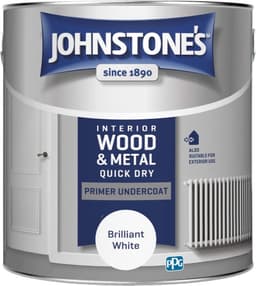
Dulux Primer & Undercoat for Wood 750 ml is an ordinary primer undercoat in this shortlist, but the listing does not call it a knot block. Dulux Trade's quick-dry sheet instructs decorators to treat knots with knotting solution before applying primer undercoat. A UK review of the retail ASIN describes yellow-brown bleed from the wood. The Johnstone's sizes likewise do not state that they stop knots or tannin. White colour and a high shared review count cannot substitute for that claim. Berger's binder is given as oil-based or water-based, with one rating and no captured review text. Ronseal's cited Knot Block is an interior product, while external oak can require a joinery-specific stain-inhibiting system.

If the stain has already come through

Do not immediately add another coat of the same white paint. Mark the affected areas, investigate moisture and allow the surface to dry. On modern coatings over otherwise sound interior wood, you may be able to abrade the failed area back for a compatible stain-blocking primer, then rebuild the decorative coats. Some knotting products are intended for bare wood rather than painted surfaces. If resin is active, scraping or heat can worsen the problem. Older painted woodwork changes the risk. HSE guidance warns that older coatings, particularly those dating from before the 1980s, may contain lead. Avoid uncontrolled dry sanding that creates airborne dust. Persistent brown staining can also indicate water ingress. No blocker will remain a reliable repair while moisture continues to move through the timber.

Common questions

Why do yellow spots appear on white woodwork?
On pine and other softwoods, resin or extractives can migrate from knots through ordinary primer and topcoat. The marks are often localised and yellow-brown. A compatible knot blocker applied before the full primer system is usually needed; more ordinary white paint may only hide the stain temporarily.
Is tannin bleed the same as knot bleed?
No. Knot bleed is usually local resin from softwood, while tannin can produce broader brown staining from oak and other hardwoods, often assisted by moisture. Products overlap in some applications, but choose a blocker that explicitly covers the actual stain and timber.
Will Dulux or Johnstone's primer stop knots?
None of the six compared listings claims dedicated knot blocking. Dulux Trade guidance says to treat knots before primer undercoat, and one retail Dulux reviewer reports bleed-through. Johnstone's white colour and water-based formula do not establish a stain-blocking claim either.
Can traditional knotting sit under water-based primer?
Not always. Rustins says its shellac knotting should not be coated directly with water-based paint unless an oil-based primer separates them. Check the exact knotting product rather than applying a general rule. A purpose-made water-based knot blocker may be simpler for a fully water-based system.
What if a knot has bled through existing paint?
Investigate moisture, then use a repair method approved for the existing coating. Traditional knotting often wants bare wood, whereas some stain-blocking primers can be used over prepared painted surfaces. Avoid repeatedly adding the same topcoat without isolating the stain source.
Do I still need a topcoat after knot block?
Yes. A blocker controls staining but is not normally the decorative wearing finish. Apply compatible primer or undercoat where the system requires it, followed by the specified gloss, satin or other topcoat. Respect every drying interval between different products.
Does exterior oak need a different primer?
It may need an exterior, tannin-resistant joinery system rather than an interior spot knot blocker. Moisture exposure and factory coating specifications matter. Check the door or window manufacturer's documents, and obtain professional advice for valuable hardwood or repeated staining.

Related pages

Sources

Public UK sources used for the VOC, lead-paint and preparation points on this page. Prices, stars and review counts are from the amazon.co.uk listings on 16 October 2026.

  1. VOC in Paints Regulations 2012 (retrieved 16 October 2026)
  2. HSE CIS79 — old lead paint (retrieved 16 October 2026)
  3. GOV.UK — lead information for the public (retrieved 16 October 2026)
  4. Dulux — Primer and undercoat for wood (retrieved 16 October 2026)
  5. Dulux Trade — quick-dry wood primer undercoat sheet (retrieved 16 October 2026)
  6. Johnstone's — primers (retrieved 16 October 2026)
  7. Screwfix — primer and undercoat (retrieved 16 October 2026)
  8. BS EN 927-1:2013 — exterior wood coatings (retrieved 16 October 2026)