Independent comparisons. We may earn from shop links. More info

Danish oil vs linseed oil: which should you choose?

Updated: October 2026

When choosing Danish oil vs linseed oil for a table, door or garden chair, you are not comparing two equally fixed substances. Linseed oil comes from flaxseed and is sold raw or processed for faster drying; Danish oil is a manufacturer’s blend whose resin, varnish, solvent and oil content can vary. Choose Danish oil when you want the specified satin blended finish and quicker schedule of that tin. Choose linseed when you deliberately want a straight drying-oil family, then check whether it is raw or boiled. Our [wood oil comparison](/hub/paints-and-varnishes/wood-oil) shows the current UK products side by side.

When choosing Danish oil vs linseed oil for a table, door or garden chair, you are not comparing two equally fixed substances.

Our top picks

On this page

Danish oil is a blend, linseed oil is linseed

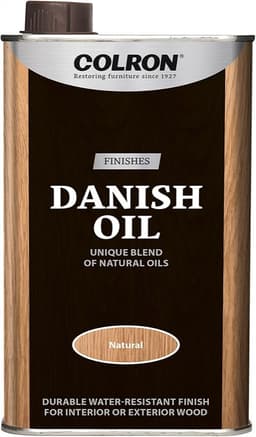
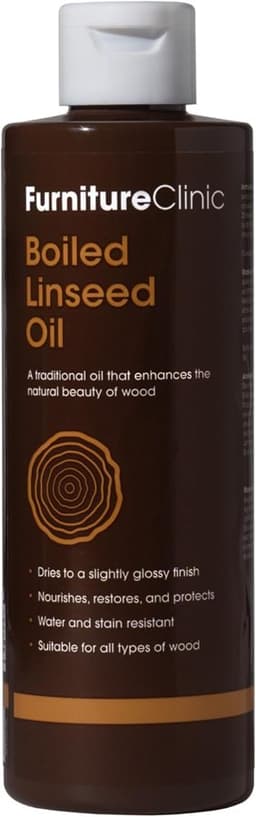
Ronseal Colron represents the Danish side in this comparison. It is listed as an oil-based finish for interior and exterior timber, producing a satin, low-sheen appearance. “Danish oil” describes a style of blended finish rather than one universal formulation. Linseed oil still splits into different products. Raw linseed is the slowest and attracts buyers who want fewer processing additions. Boiled linseed is processed to speed drying and may use added driers; it is not simply raw oil boiled in a pan. Furniture Clinic says its boiled linseed is hot-air treated, while Bartoline explicitly refers to drying additives. If your project is not ordinary furniture or joinery, start with the wider wood oil buying guide.

Dry time and sheen

Danish oil is usually selected for a practical furniture schedule and a built-up satin result, but the clock remains brand-specific. Ronseal Trade gives six hours and three coats for its Danish oil. Liberon gives at least five hours for its own product, while another technical sheet specifies 16 hours. None of those numbers should be silently transferred to Ronseal Colron if its current tin says something different. Boiled linseed commonly needs longer between coats. Bartoline’s listing calls for two or three coats with 24 hours between them. Materialix lists about 18 hours to dry but 5–10 days to harden. Raw linseed can take several days. Ronseal Colron is explicitly satin and low sheen. Furniture Clinic boiled linseed is described as slightly glossy. Either finish can stay sticky when applied too heavily. The shared wipe-off method is covered in our how to apply wood oil guide.

Food contact and exterior oak are not in the name

Neither “Danish” nor “boiled” answers whether a product is suitable for a food-contact surface. Rustins states that its own Danish oil meets named food-contact requirements. Those claims belong to that brand; Ronseal Colron in this comparison makes no food-contact claim. Materialix boiled linseed cites testing to Regulation (EC) No 1935/2004. GRAIN GUARD raw linseed says food safe and cites DIN EN 71-3 for toys, which is not itself a food-contact regulation. Furniture Clinic and Bartoline boiled linseed make no food-use claim in the captured evidence. “Boiled” can involve driers, so it must never be used as shorthand for food safe. For a board washed every day, a food-grade mineral oil is the more straightforward renewable option in this set. See the chopping board oil guide rather than extending a dining-table claim to a knife-marked board. Furniture Clinic excludes its boiled linseed from exterior oak because the timber can remain wet and develop mould.

Which tins match each side?

Choose Ronseal Colron Danish oil, 500 ml, when you want a satin finish on interior or suitable exterior furniture and do not need a food-contact statement. It costs £13.80 in the captured amazon.co.uk listing. Choose Furniture Clinic boiled linseed, 250 ml, for a small non-food furniture project where its slightly glossy finish and 9,272-review history appeal. Exterior oak is explicitly excluded. Choose Materialix boiled linseed, 1 L, when project size and value per litre matter. It costs £13.95 and makes the most specific food-contact claim among the linseed products. The clear recommendation is Danish oil for an indoor satin furniture finish when the chosen blend’s label meets your needs, and boiled linseed for a traditional oil treatment when you accept its sheen and timber exclusions.

Common questions

Which dries faster, Danish oil or linseed oil?
Danish oil and boiled linseed are both formulated for faster use than raw linseed, but there is no single winner across brands. Danish examples specify roughly five to 16 hours between coats, while boiled-linseed examples often use about 18–24 hours. The current label overrides those examples.
Does boiled linseed mean it was boiled in water?
No. Modern “boiled” linseed is processed to dry faster and may use heat, air or added driers depending on the manufacturer. Furniture Clinic describes hot-air treatment, while Bartoline mentions drying additives. Read the formulation and safety information for the particular bottle.
Will Danish oil look more like varnish?
Often, because Danish oils are blends and can build a satin film-like appearance. Ronseal Colron is listed as satin and low sheen. Boiled linseed in this set ranges from natural sheen to slightly glossy, so a test patch is more reliable than assuming all linseed looks flat.
Can I use either oil on a chopping board?
Only when that exact product has an appropriate food-contact claim and you observe its cure instructions. Ronseal Colron and Furniture Clinic boiled linseed do not make that claim in the extracted listings. Food-grade mineral oil is the simpler renewable board option here.
What about exterior oak?
Do not apply a general linseed rule. Furniture Clinic explicitly excludes exterior oak, and similar warnings appear for other boiled-linseed products. Choose a finish whose current technical information specifically allows exterior oak, even if that means selecting a different Danish, tung or exterior-oil system.
Can I put Danish oil over linseed oil?
Only if the Danish-oil manufacturer allows application over a fully cured linseed finish and the surfaces are compatible. Applying over oil that is still soft can trap it and create persistent tackiness. Test a discreet area, and avoid mixing systems when the existing finish cannot be identified.

Related pages

Sources

Public UK sources used for the food-contact, VOC and cloth-safety points on this page. Prices, stars and review counts are from the amazon.co.uk listings in the mid-October 2026 extracts.

  1. SI 2012/1715 — VOC in paints, varnishes and vehicle refinishing products (retrieved 17 October 2026)
  2. GOV.UK — Food contact materials regulations (retrieved 17 October 2026)
  3. SI 2012/2619 — Materials and Articles in Contact with Food (England) Regulations 2012 (retrieved 17 October 2026)
  4. East Sussex Fire and Rescue Service — The fire hazards of linseed oil (retrieved 17 October 2026)
  5. Northamptonshire Fire and Rescue Service — Oil-cloth combustion warning, 2020 (retrieved 17 October 2026)
  6. Bartoline boiled linseed oil safety data sheet (retrieved 17 October 2026)
  7. Furniture Clinic — Tung oil vs Danish oil (retrieved 17 October 2026)
  8. Ronseal Trade Danish Oil technical data sheet (retrieved 17 October 2026)