Independent comparisons. We may earn from shop links. More info

Choosing a lubricant for wooden drawers

Updated: October 2026

A lubricant for wooden drawers helps when dry timber rubs on dry timber, but the same product cannot shrink a swollen side or rebuild a worn rail. Before you reach for wax, notice whether the drawer squeaks, binds only in damp weather or twists sideways as it moves. The [main wood lubricant comparison](/hub/paints-and-varnishes/wood-lubricant) covers sticks and pastes for the genuine friction case. This guide helps you decide whether lubrication is the right move at all.

A lubricant for wooden drawers helps when dry timber rubs on dry timber, but the same product cannot shrink a swollen side or rebuild a worn rail.

Our top picks

On this page

What kind of sticking you have

A drawer that squeaks yet travels through its full range is the clearest candidate for wax. Remove it and look for smooth, shiny contact lines on the wooden edges or runners. Those polished marks show repeated wood-on-wood rubbing. If dust is present, clean it away first; lubricant over grit can create a dirty paste rather than a smooth film. Seasonal binding behaves differently. A drawer that moves normally in winter but tightens during humid summer weather is likely responding to moisture in the timber. Furniture Medic and Neptune both describe humidity or seasonal movement as a cause of sticking. Wax may reduce friction once the drawer can move, but it does not pull moisture out of the wood or return swollen parts to their earlier dimensions. Racking is a third symptom. If one side advances while the other catches, the box may be out of square, a guide may be missing or a runner may be worn unevenly. Look for a dropped corner, split timber, loose joints or a rail that no longer supports the drawer. Adding wax can make one contact temporarily easier without restoring alignment.

Wax for a dry wooden runner

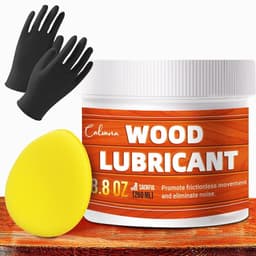
A stick is convenient for a narrow rail or groove. The Atkinson listing names wooden drawers and comes as two 4 g lipstick-style wax tubes, while AGS Door-Ease is a broader general-purpose stick described in many reviews. A paste such as Calvana, ninesung or AstraVox is easier to spread across a broad face but also easier to over-apply. The wood lubricant buying guide compares those form and price trade-offs. Apply wax only to the matching faces that touch. A light pass should leave a dry film, not a visible bank of material. Open and close the drawer several times to distribute it, then wipe away excess at the edges. The detailed guide to lubricating wooden drawers takes you through cleaning, application and correction if the first slide feels tacky. Wax is also not a reason to treat the whole piece. The visible front, veneered side and polished top are decorative surfaces, not sliding contacts. On an antique, keep treatment confined to stable hidden runners. If the finish flakes or lifts, stop and ask a conservator rather than testing another product.

Summer swelling

Wood exchanges moisture with the room, so a close-fitting drawer can tighten as conditions become damper. The pattern is more informative than any single humidity reading: if the drawer repeatedly binds in damp periods and eases when the room dries, seasonal movement is a more plausible cause than lack of lubricant. None of the sources provides a percentage at which every drawer starts to stick. Be particularly cautious with sanding or planing. Material removed at the swollen point does not grow back when the air dries, so an August adjustment can become a loose, rattling fit in winter. A joiner can judge where the interference lies and whether the construction allows a permanent adjustment. That assessment is preferable to cutting every surface that happens to show a rub mark.

When a lubricant will not do

A missing, split or badly hollowed runner needs repair. Wax cannot replace timber or hold a loose joint square. If a drawer drops, twists or needs lifting to close, continued use may enlarge the worn area. A furniture restorer or joiner can add or rebuild the guide while preserving the fit of the box.

Common questions

What should I put on a squeaking wooden drawer?
Use a thin film of paraffin, beeswax or a wood-runner wax on the clean contact faces. UK furniture sources also allow plain unscented candle wax. Rub or spread it sparingly, cycle the drawer and wipe away excess rather than coating the whole box.
Why does the drawer stick only in summer?
Seasonal humidity can make timber expand enough to tighten a close fit. Wax does not shrink it. Let the room and furniture stabilise, avoid forcing the drawer and seek joinery advice before sanding or planing a fit that may loosen again in drier weather.
Will wax fix a drawer that racks sideways?
No. Sideways racking suggests misalignment, a missing guide, a loose joint or uneven runner wear. Wax can reduce friction at one point but cannot restore the geometry. Inspect the structure and ask a joiner or furniture restorer to repair damaged parts.
Is a bar of soap all right?
Some UK furniture and sash guidance mentions soap, while other practitioners prefer hard wax. Paraffin, beeswax or unscented candle wax provides a straightforward dry-film option without resolving that debate. Whatever you use, keep the application thin and local.
Should I sand the side that rubs?
Not until you know why it rubs. Seasonal swelling may recede, and sanding at peak humidity can leave a loose drawer later. A persistent high spot or damaged fit may justify adjustment, but a joiner should assess close-fitting or valuable furniture.
Does a kitchen drawer with metal slides use the same product?
Usually not. The box may be timber, but the moving contact is metal bearings, rollers or plastic components. Clean and inspect that hardware, tighten fixings and follow its maker’s lubricant guidance instead of putting wood paste into the slide.
How do I know a wooden runner is worn out?
Look for a deep hollow, split edge, missing guide, dropped corner or a drawer that needs lifting and steering. If smooth movement depends on holding the box at an angle, the runner needs structural attention rather than another coat of wax.

Related pages

Sources

Public UK sources used for the labelling and care points on this page. Prices, stars and review counts are from the amazon.co.uk listings on 15 October 2026.

  1. HSE — The GB CLP Regulation (retrieved 15 October 2026)
  2. GOV.UK — Aerosol Dispensers Regulations 2009 (retrieved 15 October 2026)
  3. RoSPA — Aerosol safety advice (retrieved 15 October 2026)
  4. SPAB — Sash window maintenance (retrieved 15 October 2026)
  5. Icon — Furniture (retrieved 15 October 2026)
  6. Neptune — Care guides, timber (retrieved 15 October 2026)
  7. CAP Code section 11 (retrieved 15 October 2026)
  8. Consumer Rights Act 2015, section 22 (retrieved 15 October 2026)