Independent comparisons. We may earn from shop links. More info

How to apply roof coating safely and evenly

Updated: October 2026

Knowing how to apply roof coating starts before you open the tin. On a small felt shed or garage roof, success depends on a sound, dry surface, safe access and the exact temperature and drying clock printed for your product. The products in our [roof coating comparison](/hub/paints-and-varnishes/roof-coating) do not share one universal method: one allows a second coat after six hours, another claims immediate rain resistance, and a clear repair pot may need 48–72 hours. Use this guide to organise the job, then follow the current label and technical sheet for your chosen tin. Stop if the deck is soft, the covering may contain asbestos or you cannot reach the work without stepping onto a fragile surface.

Knowing how to apply roof coating starts before you open the tin.

Our top picks

On this page

Make the felt sound and dry first

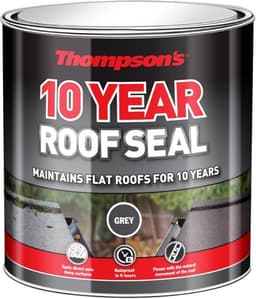
Begin with inspection, not washing. From a safe position, look for loose chippings, dirt, open seams, blisters, splits and standing water. A coating can bridge limited surface defects when its maker permits that use, but it cannot restore rotten boards or hold down felt that is lifting across the roof. Thompson’s instructions say to scrub the roof, cut blisters, dry ponds and tack loose felt before applying its 10 Year Roof Seal. A blister traps air or moisture; covering it intact can leave a weak pocket beneath the new film. Make only the repair described by your product system. Old profiled cement sheets may contain asbestos and must not be scraped or pressure-washed as a routine DIY preparation. If the roof feels soft, leaks keep moving or widespread felt has failed, switch to the felt roof coating repair-or-replace guide rather than trying to compensate with a thicker coat.

Use the weather and drying clock on your tin

Choose a dry window that covers preparation, application and the product’s vulnerable curing period. Temperature applies to the air and often the surface, including overnight conditions. Thompson’s asks for a dry day above 10 °C and gives six hours before its second coat. Bond It’s Bitubond leaflet also gives roughly six hours, whereas a separate Bostik brushable waterproofer specifies +5 °C to +30 °C and 24 hours between coats. The Bostik figures belong to that Bostik product, not every black roof coating. Nassboards says its coating resists rain immediately and dries in 24 hours. BSCPAM says above 10 °C and allows 48–72 hours. “Rainproof”, “ready for another coat” and “fully cured” are different stages, so identify which one the stated time describes before planning around a forecast. Dry every hollow, but coating it does not create a drainage fall. If repeated standing water is the reason for the job, check chemistry and documentation in the roof coating buying guide. Postpone the work if the maker’s minimum temperature or rain window cannot be maintained.

Apply the specified coats and keep products separate

Stir the coating as directed, paying attention to material settled at the bottom, then use the tool and loading rate specified by the maker. Keep the film even rather than leaving thin holidays around laps or piling material into a depression. Stretching a tin beyond its stated area reduces film build. Bond It calls for at least two coats and says not to thin its Bitubond. Thompson’s also uses a second coat, after its stated six-hour interval. These similarities do not make the products interchangeable. Check whether the first coat must be fully dry or merely ready to recoat. Wear the gloves and protective equipment on the safety information. Solvent bitumen requires ventilation, ignition control and the maker’s solvent clean-up; do not wash it into a drain. Thompson’s specifies warm-water clean-up for its own water-cleanable coating. Never use one product’s easy clean-up method on another chemistry.

Stop if the roof or access is fragile

HSE guidance treats falls through fragile roofs as a major construction risk. Felt over a deteriorated deck, rooflights and old cement sheets can fail without much warning. If you cannot perform the job from a safe place, a competent roofer should take over. Do not scrape, sand, drill or pressure-wash an uncertain cement sheet. DIY coating is for a small, sound, safely accessible compatible roof.

Common questions

How do you apply roof coating on felt?
Confirm the felt is bonded over a firm, dry deck, remove loose dirt safely and repair blisters or laps exactly as the chosen system directs. Stir the coating, apply the specified coverage and coat count, and observe its temperature and recoat times. Do not walk on suspect felt or substitute another brand’s instructions.
What should you do with blisters first?
Do not simply paint over a raised pocket. Thompson’s tells users to cut blisters as part of preparation, and professional guidance may require failed felt to be opened or removed and re-bonded. The exact repair depends on the system, so follow its detail rather than inventing a cut on otherwise sound material.
How long should you leave between coats?
There is no universal interval. Thompson’s and Bond It each state about six hours in their own instructions, while Bostik gives 24 hours for a different brushable waterproofer. Weather and substrate can extend these periods. Use the current label and distinguish recoat time from full cure and rain resistance.
Can you apply bitumen paint at 5 °C?
Only if that specific product permits it and the surface and overnight temperatures remain within its range. Barrettine gives a 5 °C minimum for its own black bitumen paint, but Thompson’s and several listings in this set use 10 °C. Do not transfer one manufacturer’s minimum to another tin.
Can you pressure-wash an old cement roof?
Not as a default DIY step. Old cement sheets may be fragile and may contain asbestos; pressure washing or scraping can damage material and spread contamination. Keep off the roof and arrange an appropriate assessment if its composition or condition is uncertain.
When should a professional take over?
Use a competent professional when the deck is soft, the roof is fragile, asbestos cement is possible, access lacks proper protection, or a house roof needs re-covering. Recurring leaks, widespread failure and saturated layers also need diagnosis. A thicker coat does not resolve structural defects or make unsafe access acceptable.

Related pages

Sources

Public UK sources used for the coverage, drainage and safety points on this page. Prices, stars and review counts are from the amazon.co.uk listings on 16 October 2026.

  1. Thompson's — 10 Year Roof Seal (retrieved 16 October 2026)
  2. Sika — Black Jack 905 product data sheet (retrieved 16 October 2026)
  3. Bond It — bitumen paint technical data sheet (retrieved 16 October 2026)
  4. HSE — Asbestos cement (a16) (retrieved 16 October 2026)
  5. HSE — Paints and solvents (retrieved 16 October 2026)
  6. LRWA — Guidance Note 7 (retrieved 16 October 2026)
  7. Manual to the Building Regulations (retrieved 16 October 2026)
  8. amazon.co.uk — Thompson's 10 Year Roof Seal listing (retrieved 16 October 2026)