Chopping board oil on decking: choose the right finish
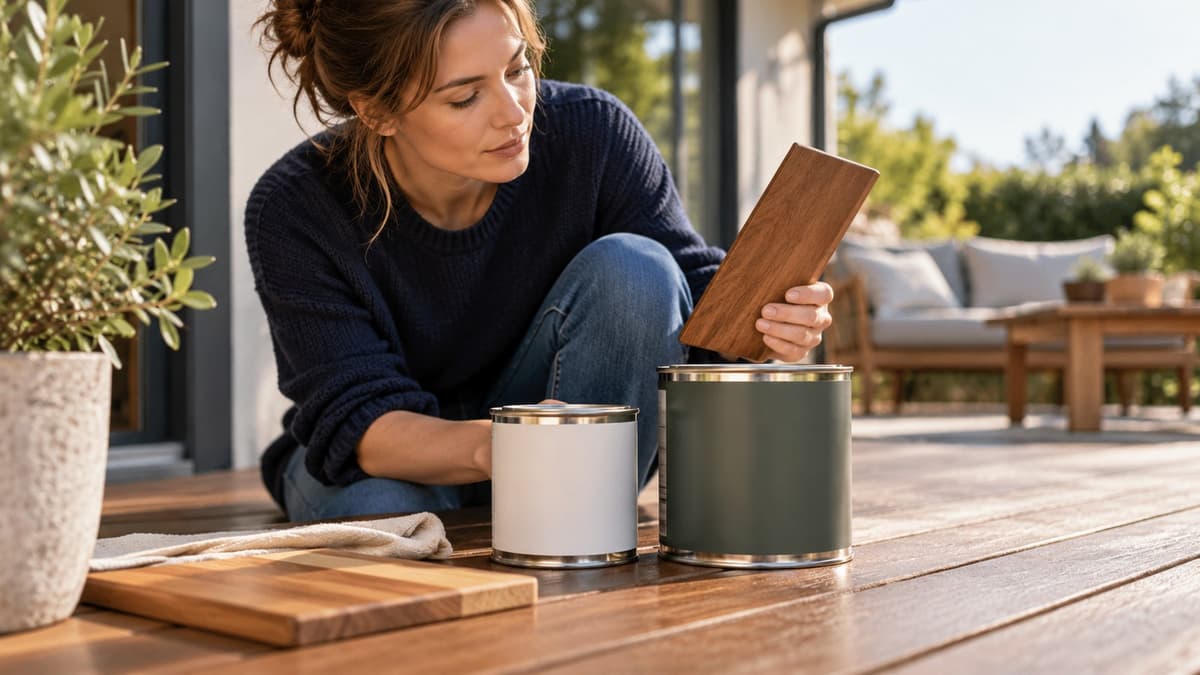
Chopping board oil is not a durable decking finish. Learn how to recognise the wrong tin, choose the right hardwood deck oil and avoid costly mistakes.
On this page

You search for chopping board oil on decking, and the results look reassuring: food-safe mineral oil, attractive timber photographs and promises to nourish wood. A kitchen oil and an exterior deck finish solve different problems. Keep board oil for food-preparation surfaces and choose a purpose-made exterior oil that matches your decking timber, colour goal and maintenance expectations. A qualifying purchase through our links can earn a commission at no extra cost to you. We did not test these oils in a lab.
In short
Food-safe does not mean weather-resistant. Chopping-board oil is normally designed for small indoor surfaces that can be wiped and renewed easily, whereas decking oil must cope with rain, sunlight, dirt and shoes. Check the intended use and product code on the tin, not merely the wood species or colour word in a marketplace title.
Why the search returns a kitchen tin
Online searches often treat every wood oil as a variation of the same product. Type in bangkirai oil, and a marketplace may return board oils, teak-coloured products and finishes intended for garapa or thermowood. They share words such as wood, natural, oil or teak, but those words do not make their uses interchangeable.
Use a simple wrong-tin test before you read reviews. If the front or the description says chopping board, butcher block, food preparation, utensils or worktops, it is not the product for a deck. A food-safe claim answers a contact question. It says nothing by itself about ultraviolet exposure, standing water, abrasion or algae-prone outdoor conditions.
Start with the manufacturer's exterior range, then compare sellers for the exact name and code. Our bangkirai oil comparison is useful when that is your timber or colour target. Timber names in finish ranges can denote a shade as much as a strict species match, so test the selected product on your actual boards.
What chopping board oil actually does
Most dedicated board oils are made for unfinished food-preparation timber. Food-grade mineral oil is common because it is neutral, does not become rancid like some culinary oils and can be reapplied without building a brittle film. On a dry chopping board, it reduces the thirsty look of the wood and helps limit rapid moisture uptake during ordinary washing.
A deck is harsher. Horizontal boards stay wet longer than a vertical fence, collect grit and take repeated abrasion in walking lines. Exposed areas may bake in summer sun while shaded sections stay damp. An oil built for easy renewal on an indoor board is not automatically formulated for those stresses.
Food-safe can be true and still be irrelevant to the buying decision. It does not prove weather resistance, slower colour loss or a match to a particular hardwood. An exterior decking oil is not a chopping-board finish unless its manufacturer explicitly approves direct food-contact use.
Why mineral oil is a poor deck finish
Mineral oil can make an outdoor plank look richer immediately after application. That darkening is easy to mistake for lasting protection, particularly during a quick patch test. Later, a non-drying board oil can be displaced by rain and washing, attract grime while surplus sits on the surface, and need impractically frequent renewal across a full deck.
It is not an answer to ultraviolet weathering. Clear oil does not supply the coloured pigments normally used to help a deck retain a brown appearance. If your aim is to delay greying, a suitable pigmented exterior finish and timely maintenance matter more than whether the oil is acceptable around food.
If the tin says chopping board, butcher block or food preparation, it is the wrong product for a deck. Food-safe answers a contact question, not a weather question.
Do not add board oil over an unknown old coating. Water beading, shiny patches or uneven colour can show that the previous finish is still affecting absorption. Identify that coating if you can, follow the new manufacturer's preparation instructions, and trial a small area before you coat the whole deck.
How to read deck-oil names and codes
Read the colour or variant code before you trust the largest word in the listing. In the Osmo decking-oil range relevant to this search, 006 and 016 are the bangkirai options. Code 007 is clear teak, 010 is thermowood, and 013 is garapa. These numbers identify different finishes, not alternative pack sizes.
Teak oil is slippery language. It can mean a finish marketed for teak, a generic oil blend, or simply a teak-like colour. It does not guarantee the right shade for bangkirai. The teak oil comparison covers that related but distinct search.
Code 007 needs particular care if colour retention is your priority. It is a clear teak decking oil, and the maker states that clear natural finishes provide little protection against greying compared with pigmented versions. Choose it because you accept that trade-off, not because a search placed teak next to your hardwood query.
Before ordering, verify four details on the current manufacturer page and the physical tin:
- Confirm that the product is intended for exterior horizontal decking, not boards, utensils or indoor worktops.
- Match the full product name and numerical code rather than the seller's shortened title.
- Check whether the finish is clear or pigmented and decide whether natural greying is acceptable.
- Review the stated preparation, coverage, coat count and drying conditions for your timber.
A code check takes a minute; correcting a mismatched colour across a deck can take days. Screen colours and old weathered boards make an exact match impossible. Buy enough for a discreet offcut or hidden-board trial before you commit to the visible area.
Choosing and applying the right oil
Begin with the timber and the result you want, not with a general claim such as natural or nourishing. Identify whether the boards are bangkirai, teak, garapa, thermowood or another material, then choose a compatible exterior decking product. If you cannot identify the timber confidently, ask the installer or supplier rather than assigning a species from colour alone. Age and previous coatings can substantially alter appearance.
For a brown bangkirai-style result, compare the documented 006 and 016 options and test them. The top pick in that comparison is Osmo 006 Bangkirai Satin in 2.5 litres, listed at about £72.31, with a stated coverage of up to 24 m² per litre and a 12-hour drying time. For a more natural weathering path, look at clear 007 while accepting its limited help against greying. Do not substitute 010 or 013 merely because thermowood or garapa sits beside a similar brown swatch. The trial area remains the final colour check.
Preparation determines whether the correct tin performs evenly. The deck should be clean, dry and free from loose, incompatible finish. Pay attention to grooves and board ends, where dirt and moisture persist. New dense hardwood may also need the maker's specified weathering period before treatment. Oil applied too soon can leave poor absorption and a sticky surplus.
Work to the label's temperature and drying guidance, and avoid a forecast that puts rain onto uncured oil. Stir pigmented products so colour does not settle in the tin. Apply thinly in the grain direction, and follow the stated coverage. Heavy application commonly produces glossy, slow-drying patches and footprints. If you prefer lower maintenance and accept silvering, do not apply a random oil simply to darken the timber for one weekend.
What to do if you used board oil
Do not panic if you have already wiped food-grade mineral oil onto a few boards. It is unlikely to behave like a hard film that must always be stripped, but you should not immediately cover the wet surface with decking oil. Remove any unabsorbed surplus with clean cloths and handle oily materials according to the oil maker's disposal guidance.
Let the area weather and dry, then compare it with untreated boards for grease, darkness or water beading. How you prepare it before recoating depends on the quantity used, the elapsed time, the timber and the deck product. Ask that product's technical team about compatibility rather than guessing with solvent or pressure washing.
On a whole deck, clean a discreet section, apply the intended finish and wait for the full cure. Check adhesion, colour, tackiness and rain response before you extend the treatment. If the mineral oil went on heavily or repeatedly, professional sanding or specialist cleaning may cost less than experimenting across the entire surface.
Common questions
Can I use chopping board oil on decking?
Is food-grade mineral oil a deck oil?
Will mineral oil stop decking from turning grey?
Is teak oil the right colour for bangkirai decking?
What do Osmo decking oil codes 006, 007, 010 and 013 mean?
Can I use chopping board oil on a garden table?
Does safe for plants once dry mean food-safe?
Why does Amazon show chopping-board oil for a decking search?

Peter F. is the editor for DIY & tools at productscompared.co.uk. Comparisons in this category are checked against amazon.co.uk listings, review evidence and public UK sources.
Related articles

Hardwood decking turning grey: what it means
Silver boards are usually a surface colour change. Check that the timber is firm and well drained before you treat greying as rot.

How long to leave new decking before oiling
Dense tropical hardwood can still hold ingredients that interfere with oil. The wait depends on the species and the finish maker.

Decking oil or varnish: choose the right finish
A finish that suits a window can fail on a flat deck that takes rain, standing water and foot traffic.