Hardwood decking turning grey: what the colour means

Learn why hardwood decking turns grey in the UK, when silvering is harmless, how pigmented oil changes the process, and which warning signs need action.
On this page

Your yellow balau deck looked honey-brown when it was laid, but the boards facing the afternoon sun are now silver. That change can look alarming, especially when sheltered boards still resemble the original timber. In most cases, hardwood decking turning grey is a surface colour change, not proof that the deck has rotted. The useful question is whether the timber is firm, well drained and sound around its fixings.
In short
Outdoor hardwood greys because light and weather alter the exposed surface. Untreated yellow balau and bangkirai naturally move towards silver. Pigmented decking oil can slow the visible change, but it creates an ongoing maintenance job and cannot guarantee permanent colour. Check softness, trapped moisture, movement and damage separately. Colour alone is a poor test of structural condition.
Why hardwood decking turns grey
Freshly machined hardwood shows colour compounds and the grain beneath a clean surface. Outdoors, ultraviolet light acts on lignin, one of wood's structural components, near that surface. Rain and foot traffic then help remove or redistribute altered material, gradually leaving the familiar pale or silver-grey look. The visible change is shallow, even when it spreads across every board.
Yellow balau is often sold from yellowish brown to a deeper warm brown. A south- or west-facing run can receive stronger light than boards under furniture, next to a wall or beneath an overhang, so a patchwork look during the transition is common. That pattern does not, by itself, show inconsistent timber quality.
Silvering itself is not decay, and it is not a lifetime warranty for the whole deck. Surface colour tells you little about hidden end grain, contact points, ventilation below the boards or water held around debris. Treat greying as an appearance issue first, then check the timber's condition separately.
Why a shaded board can stay brown
Shade reduces direct ultraviolet exposure, and shelter can reduce washing by rain. A board under a planter may stay browner than the uncovered timber around it, although trapped damp beneath that planter is a different problem. Move objects periodically, clear debris and compare firmness rather than judging the board by colour.
What decking oil can slow
Decking oil changes how quickly the original colour appears to fade, and the type of oil matters. Pigment helps screen the timber from light, so a coloured product usually slows visible greying better than a clear one. Osmo's UK guidance identifies its 006 shade for bangkirai and balau and states that darker colours slow greying. Its clear 007 option allows natural greying, so oiled does not automatically mean kept brown.
No maintenance plan can promise a fixed number of years before the colour changes. Exposure, orientation, application, wear and local weather all affect the result. High-traffic routes and exposed board ends may change before sheltered areas. Inspect the finish, and follow the instructions on preparation, drying and coat quantity, rather than recoating only because a date has come round. When to recoat hardwood decking is about those wear signs.
Oil does not cure poor construction. It cannot ventilate enclosed boards, drain a bad detail, replace pre-drilling in dense hardwood or repair a loose fixing. Do not treat an exterior colour finish as protection against insects or rot unless the manufacturer expressly claims that. The tin manages the exposed finish. The deck's design remains separate.
If you are comparing products, start with the intended timber and the appearance you want in our bangkirai oil comparison. Check whether the product is clear or pigmented, whether it is specified for horizontal decking, and what preparation it requires. A clear UV-protection product intended for vertical woodwork is not automatically suitable for a deck merely because both surfaces are timber.
Why darker is not always the better choice
More pigment may slow greying, and it also covers more of the natural colour. The finished shade depends on the timber, any previous coating and how thickly you apply it. A balau code can still look darker than you expect. Test an offcut or an inconspicuous board and let it dry fully before you commit.
Choosing between silver and warm brown
There is no technical requirement to keep a hardwood deck golden-brown because it arrived that way. If you like an even silver finish, accepting natural weathering avoids the repeated work of a pigmented colour. You still clean the deck, inspect it and repair defects. Untreated should never mean unobserved. Pots, furniture and shade can keep the transition uneven for a while.
If you prefer the warmer appearance, decide early and choose a compatible pigmented decking oil. New hardwood may need to season before coating. How long to leave new decking before oiling explains that wait.
Already-grey boards need a different approach. Warm brown oil over loose, weathered fibres can emphasise differences rather than restore a new-timber look. Clean the surface, use the reviver the system specifies, let it dry and test a patch. Oil over grey decking explains why that grey layer has to come off first. On grooved boards, uneven sanding can change the profile without making the surface slip-proof.
Set your tolerance for maintenance before you buy the finish. Silvering means accepting colour change. Keeping the brown means inspecting and refreshing a coating. If you cannot keep a coloured finish consistent, natural greying can look more deliberate than bands of fresh oil beside worn timber.
What durability class does not promise
Yellow balau is commonly described as a durable hardwood, but durability and colour retention answer different questions. The Brooks decking information lists it as durability class 2 and gives a density of about 980 kg/m³. Those figures do not guarantee that a board will remain brown, nor do they tell you how long an applied finish will retain its shade. A dense, durable board can still turn grey at the surface.
Some supplier sheets describe yellow balau differently or attach long year counts. Species grouping, the test context and how the deck was built may not match. Drainage, airflow, fixings, end grain and maintenance matter more on your deck than the most optimistic number on a sales sheet. No durability rating compensates for permanently trapped water.
Hard, dense boards usually need suitable drilling and fixings rather than forceful fastening. That is a build point, not a reason to coat them heavily. Grooves do not make wet decking slip-proof. Clear leaves and organic film, and treat slipping as a cleaning problem.
Durability class describes resistance to biological attack. Greying describes exposed colour. A silver board may be sound, and a brown board can still conceal a local defect.
When grey is the wrong diagnosis
Sometimes the grey is only the most visible part of the problem. Walk the deck when it is dry and look for boards that flex, risen fixings, opening splits, and water or debris that stays trapped. Probe suspect timber with a blunt tool and compare it with a sound area. Soft or crumbling fibres need attention. Do not decide from colour, and do not cut into sound boards.
Dark staining, green growth and a silver surface are different observations. Algae or grime can affect grip and may mark a damp, shaded area. Iron marks around fixings can discolour a small patch. Clean with a method approved for the timber and any existing finish. Heavy pressure washing can roughen fibres and leave the surface pale for the wrong reason.
Check door thresholds, board ends, steps, edges beside soil and the ground under large containers. These places combine poor airflow with repeated wetting. If a board stays soft after drying, moves at the fixing or shows substantial fungal damage, investigate and repair it. A darker coat of oil changes what you see and leaves the defect underneath.
Uneven but firm boards are an appearance decision. Note which areas get sun and rain, and what was applied before, then test the cleaner and the finish on both a pale section and a brown one.
Common questions
Is grey hardwood decking rotten?
Why does yellow balau turn grey?
Does decking oil stop yellow balau going grey?
Is darker decking oil better at preventing greying?
Can I oil a deck that has already gone grey?
Why is only one side of my deck grey?
Does durability class 2 mean the colour will last?
Should I leave hardwood decking untreated?

Peter F. is the editor for DIY & tools at productscompared.co.uk. Comparisons in this category are checked against amazon.co.uk listings, review evidence and public UK sources.
Related articles
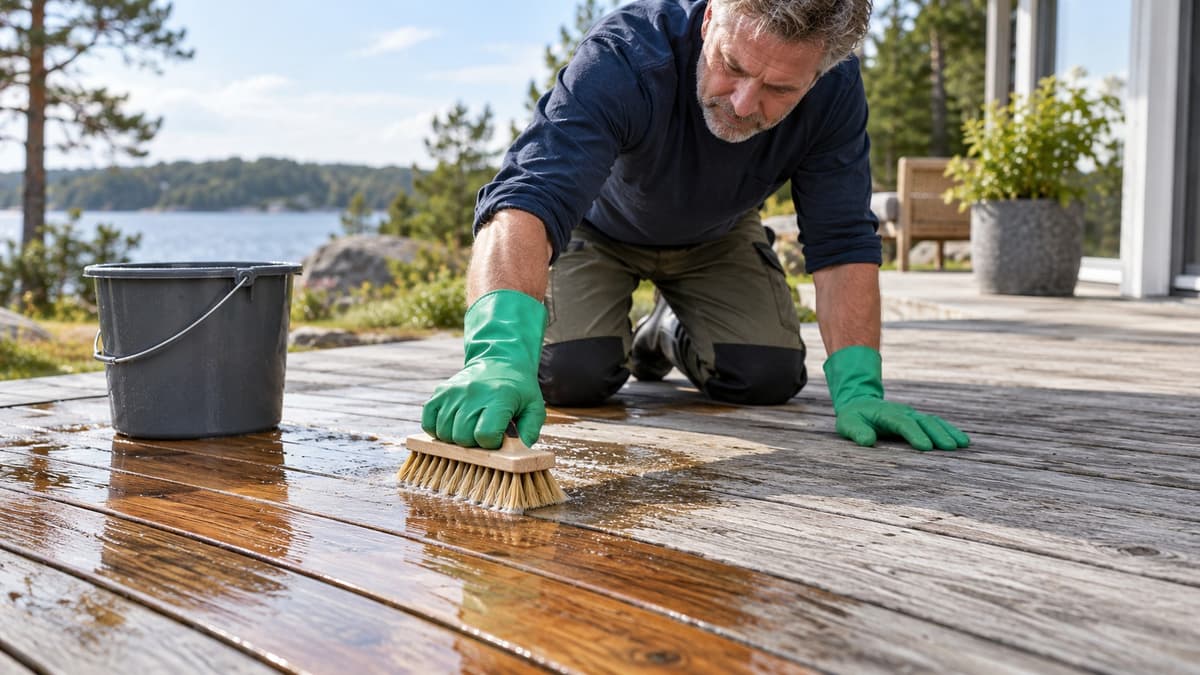
Oil over grey decking: restore the wood first
Do not apply oil over grey decking. Remove weathered fibres, let the boards dry, then oil the refreshed timber.
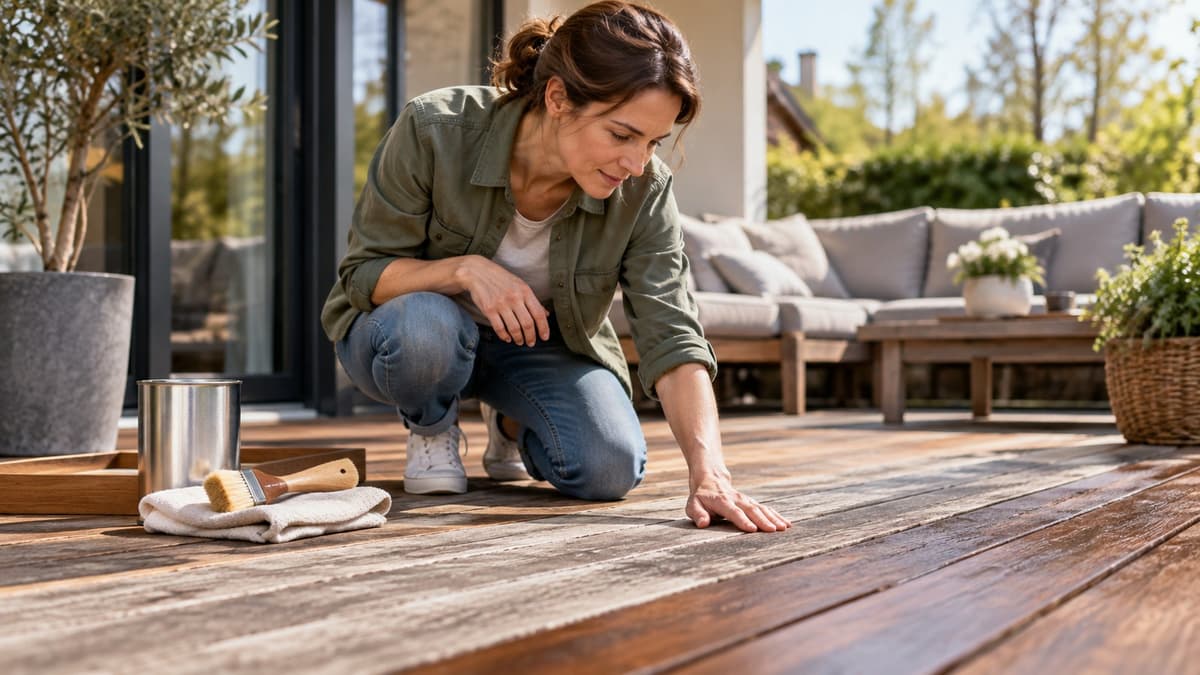
How often to oil hardwood decking: check wear first
Which signs mean a hardwood deck needs one coat, and when grey or damaged boards need more than a routine recoat.

How long to leave new decking before oiling
Why new hardwood decking needs to weather before oiling, and how to prepare the boards properly.