Oil over grey decking: restore the wood first
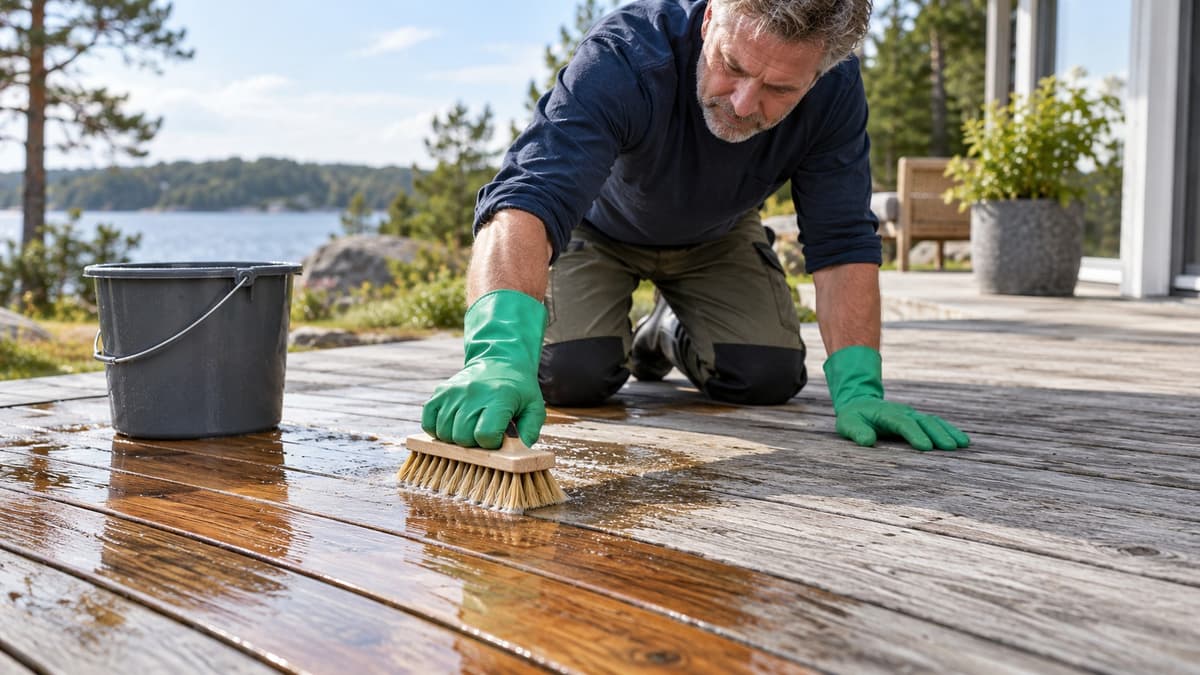
Do not oil over grey decking. Remove weathered fibres, rinse without a pressure washer, dry to 20% moisture, then apply two thin coats of pigmented oil.
On this page

A silver deck can look attractively weathered from the garden, but putting oil over grey decking rarely gives the rich, even finish you expect. The grey layer is weathered surface fibre, not a clean base waiting to absorb oil. Restore that surface first, let the boards dry properly and only then apply a compatible pigmented decking oil.
In short
Do not seal grey fibres beneath fresh oil. On sound, bare timber, use a wood reviver, scrub the loosened surface and rinse it with ordinary water rather than a pressure washer. Allow roughly two to three drying days, check that moisture is no more than 20%, then apply two thin coats in suitable weather.
Why oil over grey decking goes wrong
Deck boards turn grey because sunlight and weather alter the exposed surface. Rain then washes away some of the affected material, leaving a silver layer that can feel dry and fibrous. This is especially obvious on hardwoods such as yellow balau, sometimes sold as bangkirai, but greying alone does not prove that the deck is rotten. What that silver layer means is set out in hardwood decking turning grey.
The problem is that this layer is not consistent. Some boards may be uniformly silver, while sheltered areas beneath furniture remain brown and sections beside a wall weather more slowly. If you brush oil directly onto all of it, the sounder patches and weathered fibres absorb at different rates. The result can be blotchy colour, reduced coverage and a finish that does not perform as intended.
More oil is not the cure. A heavy coat can stay tacky, collect dirt and exaggerate dark patches without turning loose surface fibre back into sound wood. Grey is a surface description, not a structural diagnosis. Soft, deeply split or moving boards need more than a bottle of reviver.
Check the deck before you start
Begin by identifying what is actually on the boards. Wood reviver works best on bare, untreated timber. If water sits in beads everywhere, a previous oil may still be active. If a shiny layer flakes at the edges, you may be dealing with varnish, paint or another film-forming coating. A reviver cannot work evenly through an intact coating. How those finishes differ is covered in decking oil or varnish.
Choose an inconspicuous board and test the proposed sequence from cleaning through to oil. This matters if you do not know the deck's history, and it is particularly useful on grey bangkirai or yellow balau because the final colour can vary naturally from board to board. Let the test patch dry and oil it before deciding whether the appearance is right for the whole deck.
Inspect fixings, joints and the ends of boards while the deck is empty. Deep splits around screws, springy boards or fasteners that no longer grip need attention first. Also look for green or slippery deposits. Grey weathering and biological growth are different problems. A wood reviver is not a biocide, so use a suitable treatment for contamination according to its own label.
Protect nearby plants and metal while the reviver is in use, and follow the product instructions for personal protection. A rushed sequence can leave cleaner in joints or trap moisture beneath the finish.
How to degrey decking before oiling
The practical sequence is simple, but each stage has a purpose. Osmo's UK guidance pairs its Wood Reviver Power-Gel with weathered decking that is to receive Decking-Oil. Other systems may differ, so keep cleaner, reviver and finish compatible and follow the instructions for the products you actually use.
- Clear and dry-brush the area. Remove furniture, pots, loose dirt and leaves, including debris lodged between boards. Work on a manageable section so the reviver does not dry before you can scrub it.
- Trial the reviver on the test area at the stated coverage. If an old coating blocks the reaction or the timber responds unevenly, stop and resolve that before treating the complete deck.
- Apply and allow it to work. Osmo describes an application period of about 20 minutes for its gel. Keep to the label rather than extending the dwell time, and do not let the treated area dry out unexpectedly.
- Scrub the boards along the grain with a stiff decking brush. The mechanical action lifts the loosened grey material. Extremely weathered timber may need a second treatment, but assess the first pass after rinsing rather than applying excessive force.
- Rinse with plenty of ordinary water, directing residue away from plants, ponds and unprotected metal. Do not use a pressure-washer lance. Rinse until the surface and gaps are free from loosened material and product residue.
- Let the timber dry fully. Osmo's UK Wood Reviver page gives approximately two to three days before oiling, while its Knowledge and Advice document describes about 48 hours. Shade, cool weather, dense hardwood and water held in the gaps can all extend drying.
- Measure rather than guess. Check several boards with a moisture meter, including shaded sections and board ends. UK guidance sets a maximum timber moisture content of 20% before the oil goes on.
A dry-looking top face does not prove the deck is ready. Oil only when readings across the boards are no more than 20% moisture.
Once dry, the refreshed wood may look pale or washed out. That is expected: the oil supplies much of the final depth and colour. Vacuum or brush away any dry residue, then complete another small oil trial if needed. For bare refreshed decking, the stated system is two thin coats of pigmented decking oil, not one thick coat.
For product selection, compare the intended colour, species suitability and maintenance requirements in our bangkirai oil comparison. Stir pigmented oil thoroughly before and during use because colour solids can settle. Apply thinly along the grain, deal with end grain carefully and respect the finish manufacturer's drying times between coats.
What not to use instead
A pressure washer seems faster because it visibly strips dirt from a board, but a narrow jet can tear softer fibres, leave ridges and make the surface more absorbent. That can cut oil coverage and leave dark bands where the lance moved slowly. Osmo's UK advice specifically says not to jet-wash decking in this sequence. If the deck has already been jet-washed, let it dry and inspect the raised grain before oiling. Sanding may sometimes be necessary, but it can reveal fresh colour unevenly if only isolated strips are treated.
Household bleach is not a substitute for a formulated wood reviver. It may affect plants, fixings and timber colour. Patio cleaner may shift dirt or biological deposits without removing the weathered wood layer. Use a product intended for the substrate and the problem you have identified.
Do not confuse reviver with the final finish. The gel prepares weathered bare wood; it does not provide water resistance, pigment or ongoing protection. Decking oil is not a cleaner. Oiling at the end of a damp day because the board faces look dry can trap excess moisture. If rain arrives during the drying period, allow more time and measure again rather than counting the original 48 hours.
When restoration is not enough
A reviver cannot replace wood that has lost strength. Softness, crumbling fibres, a hollow feel, major movement or fixings pulling through are reasons to stop. Replace individual boards where the damage is isolated. If movement or decay may involve the joists, ask a competent deck builder to assess the deck before any finish goes on.
Peeling varnish has to come off by a method that suits the timber, or the result is a patchwork. A revived hardwood deck will not return to one uniform factory colour. Pigmented oil is a translucent treatment. A sample taken through every stage is the reliable preview.
Once restored, keep gaps clear and deal with wear before the deck is heavily silvered again. Follow the oil maker's maintenance schedule instead of adding another coat every spring. How to judge that is covered in how often to oil hardwood decking. If the surface still repels water and looks sound, extra oil can build up rather than soak in.
Common questions
Can I oil straight over silver deck boards?
What does wood reviver remove?
How long after wood reviver can I oil decking?
Can I jet-wash grey decking before oiling?
Can I use wood reviver over varnish?
Will revived decking look dark before oiling?
Is green growth the same as grey weathering?
When is a grey deck too damaged to restore?

Peter F. is the editor for DIY & tools at productscompared.co.uk. Comparisons in this category are checked against amazon.co.uk listings, review evidence and public UK sources.
Related articles

Hardwood decking turning grey: what it means
Why hardwood decking turns grey, when silvering is harmless, and which warning signs need action.

How often to oil hardwood decking: check wear first
Which wear signs mean one coat, and when grey or damaged boards need more than routine maintenance.

Decking oil or varnish: choose the right finish
Why penetrating oil suits horizontal timber, and when an old film has to come off before you oil.