Independent comparisons. We may earn from shop links. More info

Lava rocks vs fire glass

Updated: 21 October 2026

You are choosing what to put on a gas fire table, and one title says lava rocks while the description says tempered fire glass. Lava rocks vs fire glass is porous volcanic stone against a glass bead made for a flame. Ordinary glass, river pebbles and gravel are out. None of the four bags on the [lava rocks comparison](/hub/outdoor-fire-pits/lava-rocks) is fire glass. Peter F. checked UK supplier guides and those listings on 20 October 2026. We did not measure heat output. A qualifying purchase can earn a commission at no extra cost to you. If the pit manual names one media, follow it.

You are choosing what to put on a gas fire table, and one title says lava rocks while the description says tempered fire glass. Lava rocks vs fire glass is porous volcanic stone against a glass bead made for a flame.

Our top picks

On this page

What each one is

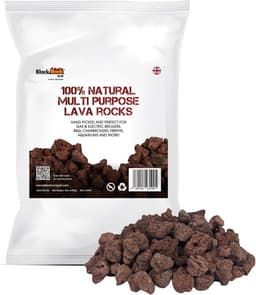
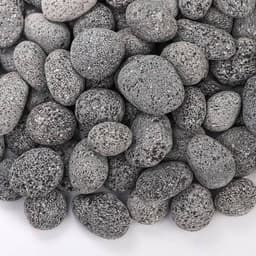
Lava here is the porous stone in the four bags: 1–2 in and 2–3 in pebbles, 4–8 cm lumps, and a fine chip. Tempered fire glass is glass processed for a flame, often sold with a no-soot line. Debenhams has listed Teamson Home 4 kg lava rocks whose description says tempered fire glass, around £19.99 to £24.99, claimed to 600°C. Read that as glass under a lava title. Ordinary glass, river rock and gravel are out. Solus Decor warns that ordinary real stone can crack. The stone picks are on best lava rocks for a gas fire pit.

Heat, soot and cleaning

Flamecrafters says lava is for heat and glass is for looks, that glass costs more, and that glass rinses clean. Solus Decor says lava absorbs and radiates, while tempered fire glass reflects. That is qualitative, not a measurement that one media is hotter in your garden. A US claim of three to four times the heat is not in the UK sources used here. Lava holds soot. Glass is sold as easier to rinse, and sooty lava will mark glass beads beside it, so choose one media. Neither makes a wood fire smokeless. Stored stone prices run from £7.62 to £19.50. Brightstar’s 5 kg at £14.40 can undercut the tumbled bags on that one shop.

Propane depth and water

Propane is heavier than air. Solus Decor says keep the topping shallow, because gas can sit under a deep bed. That is supplier guidance, not a new law. If the manual is silent, one layer you can see past is the cautious reading, with the pilot clear. Harbour Lifestyle says both media should be fully dry, with at least 24 hours after rain, and that glass can crack if moisture is trapped. Fire glass is not safer because it does not pop. Brightstar says its burner was tested with lava and not to swap media. Drying is on how to use lava rocks in a gas fire pit.

When to stay with lava

Stay with lava when the manual names it, when you want a natural bed, and when you will wash soot. In this set that is the 1–2 in bag for a fire table, the 2–3 in bag for a coarser chunk, Black Rock Grill’s 4–8 cm lumps for a lava tray, and HENDI only on a grate that holds small chips. Switch to tempered fire glass when the manual allows it and you will still keep propane shallow. Reject a title that says lava and tempered glass at once if you needed stone. Neither choice removes a wet-media wait or a clear pilot.

Common questions

Which one actually holds heat?
UK guides describe lava as absorbing and radiating heat, and tempered fire glass as reflecting it, which suits a natural bed on one side and a brighter look on the other. Flamecrafters puts lava with heat and glass with looks, and notes that glass costs more and rinses more easily. That is qualitative. A US claim that glass radiates three to four times more than lava is not a result we are using. We did not measure either media. A 600°C line on a glass title is not a test of these lava bags.
Is fire glass safer because it does not pop?
No. Wet lava can throw chips because it is porous, and Harbour Lifestyle says fire glass can crack or shatter if moisture is trapped. Both need to be fully dry. The guide suggests at least 24 hours after rain or washing, because a dry-looking surface can still hold water. There is no pop rate for lava and no shatter rate for glass in these sources. Tempered fire glass is still not ordinary bottle glass, which does not belong on the burner at all.
Can I put fire glass on a propane fire table?
Only if that pit’s manual allows fire glass. Solus Decor says keep the topping shallow on propane, because propane is heavier than air and can sit under a deep bed. That is supplier guidance for the depth, not a new regulation, and it applies whether the topping is glass or stone. Brightstar says its burner was tested with lava rock and not to swap in something else. A shallow layer that leaves the pilot clear beats a full-looking bed that hides it.
Why does a listing say lava rocks and tempered glass?
Because some shops use lava rocks as the search name and then describe tempered fire glass in the body. Debenhams has done that with a Teamson Home 4 kg title, around £19.99 to £24.99, claimed to 600°C. Treat the glass words as the product. It is not one of the four stone ASINs on the comparison, and the temperature claim is not evidence about SOUJOY, HENDI or Black Rock Grill. If you needed porous stone, that listing is the wrong bag.
Can I pour ordinary glass or river pebbles in?
No. Ordinary glass, river rock and gravel are outside this choice. Solus Decor warns that ordinary real stone can crack. Aquarium gravel and horticultural grit are not fire-pit media either, even if a lava listing mentions fish tanks or soil. Use tempered fire glass only when the manual allows that glass, and use lava only when the manual allows that stone. A similar colour is not a match.

Related pages

Sources

Public UK sources from the research digest, plus the amazon.co.uk listing facts in the display file. Shelf prices and star lines are those stored UK figures. No bag here is treated as certified or laboratory tested.

  1. GOV.UK: smoke control areas, the rules (retrieved 21 October 2026)
  2. GOV.UK: garden bonfires, the rules (retrieved 21 October 2026)
  3. GOV.UK: smoke control enforcement in England (retrieved 21 October 2026)
  4. Defra: reducing air pollution from outdoor burning (retrieved 21 October 2026)
  5. Gas Safe Register: barbecue safety (retrieved 21 October 2026)
  6. Brightstar Fires: 5 kg lava rock (retrieved 21 October 2026)
  7. Mid and West Wales Fire and Rescue: firepit safety (retrieved 21 October 2026)
  8. Calor technical note: LPG barbecues, EN 498, outdoor only (retrieved 21 October 2026)
  9. Weber: lava rocks or ceramic briquettes in a Weber gas grill (retrieved 21 October 2026)