How to use lava rocks in a gas fire pit
You already have a bag of lava and a gas fire pit, and the risk is dust on the jets, rain in the pores, or a pilot you can no longer see. How to use lava rocks in a gas fire pit comes down to dry stone, one layer the manual allows, a clear pilot, and a wash only when the pit is cold. The ranked bags are on the [lava rocks comparison](/hub/outdoor-fire-pits/lava-rocks). Peter F. checked Brightstar Fires, FirePit.co.uk and Harbour Lifestyle on 20 October 2026. There was no lab, and there is no pop rate. A qualifying purchase can earn a commission at no extra cost to you. If the pit manual disagrees with a bag bullet, follow the pit.
You already have a bag of lava and a gas fire pit, and the risk is dust on the jets, rain in the pores, or a pilot you can no longer see.
You already have a bag of lava and a gas fire pit, and the risk is dust on the jets, rain in the pores, or a pilot you can no longer see. How to use lava rocks in a gas fire pit comes down to dry stone, one layer the manual allows, a clear pilot, and a wash only when the pit is cold. The ranked bags are on the lava rocks comparison. Peter F. checked Brightstar Fires, FirePit.co.uk and Harbour Lifestyle on 20 October 2026. There was no lab, and there is no pop rate. A qualifying purchase can earn a commission at no extra cost to you. If the pit manual disagrees with a bag bullet, follow the pit.
Our top picks
| Badge | Product | Piece size | Finish | Stated use | Note | Price | Offer |
|---|---|---|---|---|---|---|---|
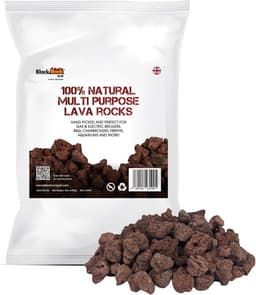
| Best overall |  Black Rock Grill Black Rock Grill 4 kg, 4–8 cm | 4–8 cm | Unfinished | BBQ, fire pit, aquarium, garden | 9.4 | about £19.50 | View offer |
 SOUJOY SOUJOY 1–2 in, 10 lb | 1–2 in | Tumbled | Gas, propane, wood and electric pits | 9.4 | about £15.99 | View offer | |
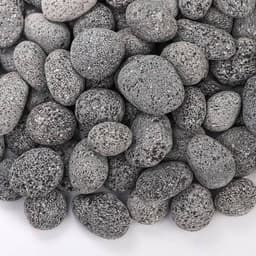
| Best value |  SOUJOY SOUJOY 2–3 in, 10 lb | 2–3 in | Tumbled | Gas, propane, wood and electric pits | 8.6 | about £15.99 | View offer |

On this page
Dry the bag before it goes near a flame
Place it by hand
Light, then leave it alone if it ticks
Wash, cover, replace
Common questions
Can I pour the bag straight onto the burner?
How deep should the layer be?
What if the rocks got rained on?
Will wet lava explode, and is that a known rate?
When do I replace the rocks rather than wash them?
Related pages
Sources
Public UK sources from the research digest, plus the amazon.co.uk listing facts in the display file. Shelf prices and star lines are those stored UK figures. No bag here is treated as certified or laboratory tested.
- GOV.UK: smoke control areas, the rules (retrieved 21 October 2026)
- GOV.UK: garden bonfires, the rules (retrieved 21 October 2026)
- GOV.UK: smoke control enforcement in England (retrieved 21 October 2026)
- Defra: reducing air pollution from outdoor burning (retrieved 21 October 2026)
- Gas Safe Register: barbecue safety (retrieved 21 October 2026)
- Brightstar Fires: 5 kg lava rock (retrieved 21 October 2026)
- Mid and West Wales Fire and Rescue: firepit safety (retrieved 21 October 2026)
- Calor technical note: LPG barbecues, EN 498, outdoor only (retrieved 21 October 2026)
- Weber: lava rocks or ceramic briquettes in a Weber gas grill (retrieved 21 October 2026)