What not to burn in a fire pit: the waste to leave out
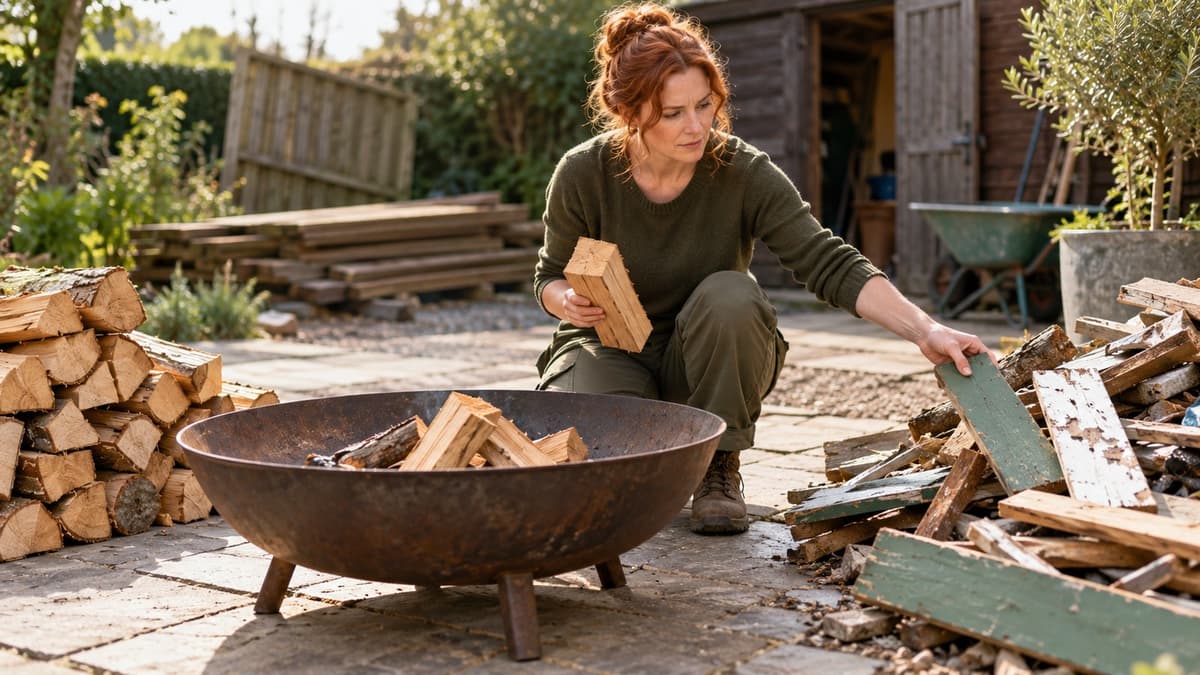
What not to burn in a fire pit: treated timber, painted wood, and household rubbish. Dry untreated wood is the fuel; charcoal only if the listing names it.
On this page

The fence came down last spring, the decking is in a pile by the shed, and the new fire bowl is on the patio. It is tempting to treat that pile as free fuel. What not to burn in a fire pit is mostly that pile: treated timber, painted offcuts, household rubbish, and wet garden waste. A metal bowl does not turn that waste into fuel you are allowed to burn. Dry untreated wood is what these bowls are sold for, and charcoal only when that listing names it.
These notes are from Peter F., editor for DIY & tools at productscompared.co.uk, in October 2026. They follow Defra's outdoor-burning note, GOV.UK's garden bonfire rules, Mid and West Wales Fire and Rescue, London Fire Brigade bonfire advice, and the Ready to Burn rules for wood sold in England. Prices and fuels come from the amazon.co.uk listings in our fire bowl comparison, recorded on 19 October 2026. There is no lab fire behind this page. A qualifying purchase through those links can earn a commission at no extra cost to you.
In short
What not to burn in a fire pit is household rubbish, plastic, treated or painted wood, old decking, and wet garden waste. Defra's outdoor-burning note treats that material as polluting waste. Burn a small load of dry untreated wood, and add charcoal only when your own listing names it.
Waste the law already rules out
GOV.UK's garden bonfire guidance says there is no general ban on a garden fire. It also says you must not get rid of household waste if that will cause pollution or harm people's health. Defra's outdoor-burning note names plastics, treated wood, and household rubbish, and it links that burning to the waste offence in section 33 of the Environmental Protection Act 1990. A fire bowl on paving is still outdoors.
Plastic packaging, rubber, foam, and food trays belong in the bin or the recycling. London Fire Brigade bonfire advice also names aerosols, paint, foam, and batteries. An aerosol in a hot bowl can rupture. Paint tins and oily rags are waste with a flame risk, not fuel.
Smoke across a road is a separate problem. GOV.UK warns that you can be fined if smoke drifts across the road and endangers traffic, under section 161A of the Highways Act 1980. A small load is the point of how to light a fire bowl. A smoke control area does not rewrite the waste rule. GOV.UK allows outdoor barbecues, chimineas, and similar garden fires there. Persistent smoke can still be a statutory nuisance, and councils in England can serve an abatement notice.
Wood that looks harmless and is not
Treated timber is the load people argue about, because a dismantled fence looks like firewood. Pressure-treated panels, a green or brown tint in the end grain, and old decking are the examples Defra gives. The colour fades long before the treatment has gone. If you cannot say how the board was preserved, it stays out. Mid and West Wales Fire and Rescue says the same for fire pits: no painted wood and no pressure-treated wood.
Paint, varnish, and stain are finished timber, not logs. A cupboard door or a glossed skirting board stays out even if you scrape one patch. MDF, chipboard, and plywood are glued sheets. Kitchen offcuts and a flat-pack carcass belong with the waste wood at the household recycling centre.
Pallet wood fails because you rarely know the treatment or the spills. A stamp is not a fuel certificate. Oil and nails stay in the grain and the ash. Unless every piece is plainly untreated, unpainted, and clean, it goes with the waste wood. The bowl will burn a pallet. That is not permission to light it.
Untreated softwood or hardwood that was never painted, preserved, or used as packaging can be fuel once it is dry. A leftover from a job you did yourself can meet that test. A mystery board from a skip cannot. The buying guide is where the listing's fuel line sits before you pay.
Wet garden waste and smoke
Fresh prunings, grass cuttings, and a sack of wet leaves are full of water. Defra notes that dry wood smokes less. Wet fuel smoulders and takes longer to burn down. Mid and West Wales Fire and Rescue points fire pits toward kiln-dried wood. A few dry sticks from an untreated shrub are kindling, not the whole crown. If the cuttings bend, weep sap, or still carry leaves, compost them or use the council garden-waste collection.
In England, wood sold in volumes under 2 cubic metres has to meet the Ready to Burn limit of 20 per cent moisture or less. That duty sits on the seller. It does not certify a bag left open in the rain. Store logs under cover, off the soil. A split that hisses, with a dark cut face, is too wet for this bowl.
A heap of green branches smoulders after you have gone in. Scottish Fire and Rescue advice is at least three feet, about 90 cm, from fences, sheds, trees, and other combustibles. That is service advice, not a single UK statute. Smoke from clean dry wood can still be a nuisance under the Environmental Protection Act 1990. Wind toward a neighbour's open window is a reason to leave the bowl unlit.
What these bowls name as fuel
The bowls in this set do not share one fuel line. Our top pick for a heavy solid bowl is the Esschert FF44, ASIN B000V031H8, at £64.99 on amazon.co.uk. It weighs 11.6 kg, with 4.4 from 396 reviews. The fuel field says wood. The title says 59 cm on one axis and the dimensions field says 21 x 59 x 44 cm. The stand is not stated. One review says the iron base can scorch earth or wood unless the surface is heatproof.
Charcoal appears only where a listing names it. The Nicoman 70 cm, at £129.99 and 15 kg, says wood and charcoal in both the bullets and the fuel field. The Yaheetech 54 cm, the best value in the set, is £33.24 and 3.3 kg and names charcoal and firewood. The HYCHIKA, at £37.99, has bullets that name wood, charcoal, or briquettes. The Harbour 60 cm, at £89.98 and 18.3 kg, lists wood. The Nicoman 91 cm, at £149.99, says wood and charcoal in the bullets and wood in the fuel field. Use wood until both lines agree.
House coal is a different fuel. The British Ironwork Centre's care note for Kadai bowls says they would not use house coal in those burners. That is a maker's instruction for that ironware, not a statute, and these listings are not Kadai bowls. Smokeless briquettes sold for a closed stove stay with the stove. Petrol, lighter fluid, paraffin, and white spirit stay out. London Fire Brigade and Mid and West Wales Fire and Rescue both rule those accelerants out. Nothing in this set is smokeless or Defra-exempt. A gas fire pit is a different appliance, with its own fuel and siting rules.
Where the waste should go
Sort the pile while the boards are cold. Plain, dry, untreated wood can sit beside the bowl. Green prunings, leaves, and grass go to compost or the council garden-waste bin, where one exists. Painted wood, pressure-treated panels, old decking, MDF, chipboard, and plywood go as waste wood to the household recycling centre. The board at the gate is the rule for your county. Some sites refuse MDF. Plastics, aerosols, and batteries follow the recycling points your council already publishes.
Pallets and skip wood follow that route unless you bought the timber untreated, never painted it, and nothing oily has soaked in. On the prices in this set, the Esschert top pick is £64.99 and the Yaheetech best value is £33.24.
Ash from dry untreated wood, fully cold, can go in the residual bin. Ash from treated wood, paint, coal, or plastic stays with the waste, off the vegetable bed. Empty the bowl only when the metal is cold. Wet ash left in iron or steel is how these pits rust. A cover goes on after the metal is cold. If the fire reaches a fence, a shed, or a roof, call 999. If the argument next door is already about smoke, talk to the council's environmental health team.
Common questions
Can I burn prunings in a fire bowl?
Can I burn pallet wood in a fire pit?
Can I burn coal in a fire bowl?
Are firelighters allowed in a fire pit?
Why is wet wood worse in a fire bowl?
Can charcoal go in every fire bowl?
Can I burn cardboard in a fire bowl?
Should garden waste go to recycling instead of the fire?

Peter F. is the editor for DIY & tools at productscompared.co.uk. Comparisons in this category are checked against amazon.co.uk listings, review evidence and public UK sources.
Related articles
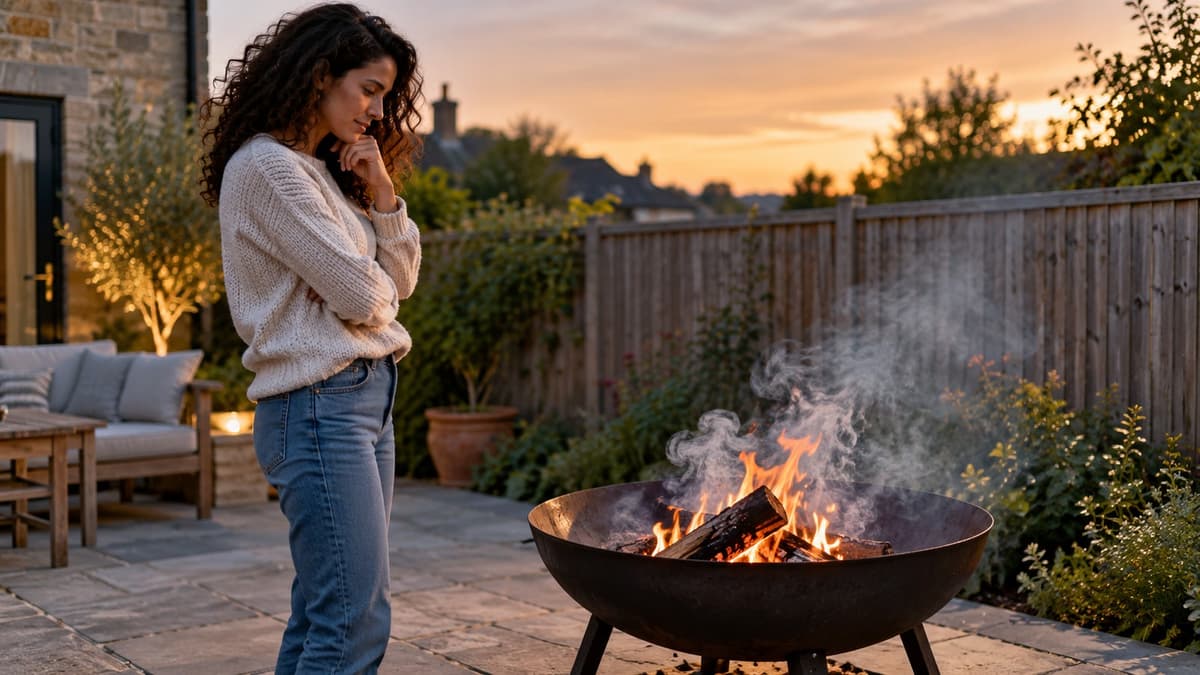
Garden fire pit rules in England
A smoke control area is not a ban on an outdoor bowl. Household waste in the flame is a separate rule.
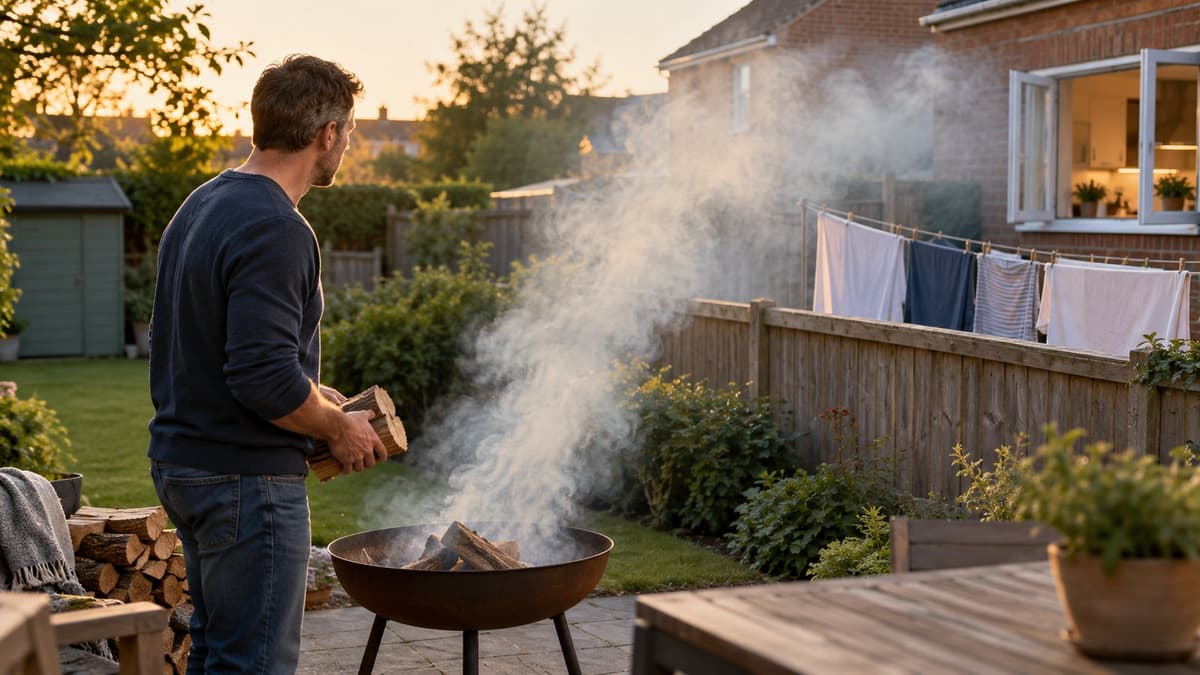
When fire-pit smoke becomes a neighbour problem
Clean dry wood still smells. A council can treat persistent smoke as a nuisance after a complaint.
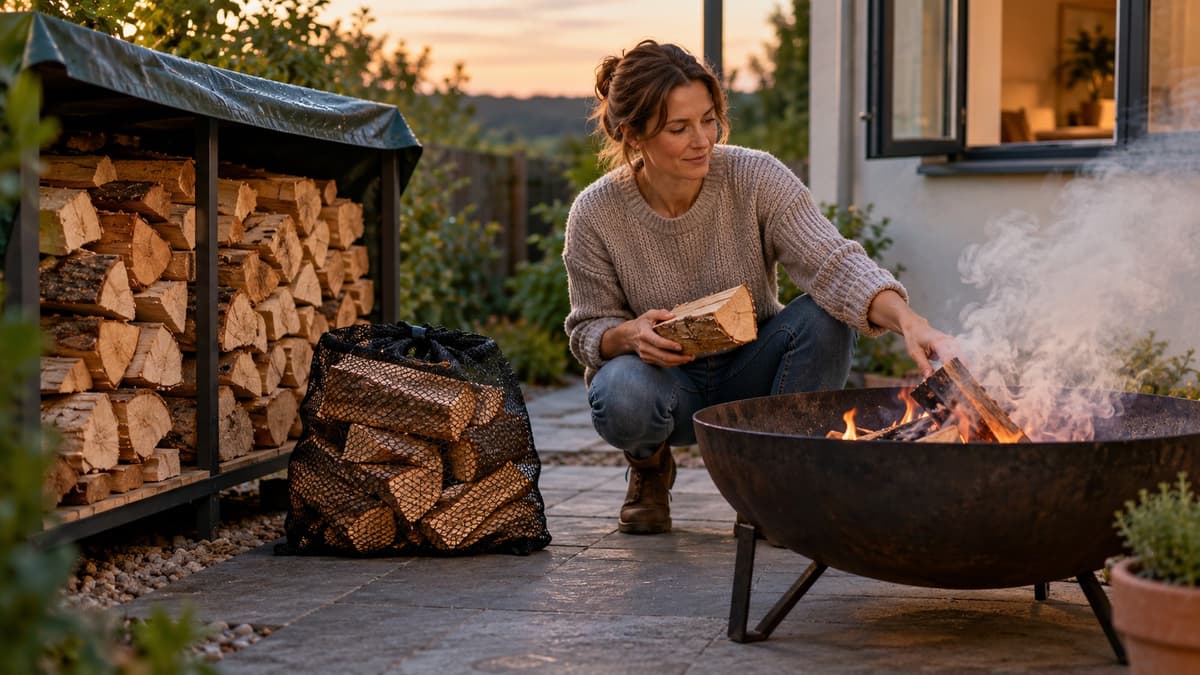
Dry logs for an outdoor fire
Ready to Burn is a sales rule for small bags of wood in England. Rain-soaked logs still smoke in the bowl.