Kiln dried logs fire pit: what 20% moisture changes

Kiln dried logs for a fire pit are a moisture job. In England, Ready to Burn covers small wood sales at 20% or less, and it is not a safety mark for the bowl.
On this page

The net has sat in the garage since the weekend, the bowl is on the patio, and the window next door is open. You bought kiln dried logs for a fire pit, and the label shows Ready to Burn. That sticker is a moisture question, not a permission slip for the bowl. Water in the wood turns a small evening fire into a long grey plume. On GOV.UK's guidance for selling wood in England, the mark covers sellers of volumes under 2 cubic metres, at 20% moisture or less.
Peter F., editor for DIY & tools at productscompared.co.uk, did not meter a bag or lab-test a bowl for this page. The prices below are the shelf figures in the fire bowl comparison, and amazon.co.uk moves them. A qualifying purchase through our links can earn a commission at no extra cost to you.
In short
Dry wood is the smoke control you can actually do before you light. Ready to Burn wood is a seller certificate for small volumes in England, at 20% moisture or less. It is not a safety mark for the bowl, and it does not police a private log pile. A load over 2 cubic metres can arrive outside that certificate, and it can arrive wet. Kiln dried and air dried are both capable of hitting the line, and both fail if the wood gets rained on afterwards.
Why dry wood is the smoke control you have
A fire bowl is an open basin. There is no flue to lift the plume above the eaves, so smoke leaves at about rim height and goes where the wind takes it. A wet log spends the early burn boiling water off. The flame stays lazy, and particles a hotter fire would have burned leave as smoke. Defra's outdoor burning note says wet wood smokes more. A logo on the bag does not change that.
Twenty percent moisture logs are the practical target behind the England scheme: water is no more than a fifth of the piece by weight. Freshly felled wood commonly sits far above that. A grey face and a cracked end only show that the outside has dried. The centre of an unsplit round can still be green. Meter a face you have just split, two readings on each of three logs, not only the top of the net.
Dry wood still smokes at lighting, in a packed nest, and if you starve the fire. Start with dry kindling and one small split, then add larger pieces once the flame is established. One large log on a cold bowl will smoke even at 18%. The limit is less smoke across the evening. If you need no wood smoke at all, a gas fire pit is the other buy, because it does not burn a log.
What Ready to Burn asks of sellers
Ready to Burn is a certification mark for wood sold as a domestic fuel. On the scheme site and on the GOV.UK page about selling wood for domestic use in England, volumes under 2 cubic metres have to be certified, and the moisture ceiling is 20% or less. At 2 cubic metres and above, that certificate is not the rule, so a bulk delivery can arrive wet for you to season. You still dry it before you burn it. The size of the lorry is not a smoke exemption.
The rule binds sellers. It is not a safety mark for the bowl, the stand, or the paving, and it does not settle a neighbour complaint or clear a smoke-control area. Kiln dried is the drying method. The scheme is the pass mark on small volumes placed on sale. A bag can say kiln dried and never have gone through the scheme. If the only evidence is the font, use a meter or a different seller.
Kiln dried or air dried logs you season
A kiln forces heat and air through the stack and can bring small logs down in days. A net of kiln dried logs for a fire pit can be burned the evening it arrives, if the bag stayed dry. A net left on a wet patio for a fortnight takes water back up. The certificate described the sale. Open the bag when you mean to burn it.
Air drying is the route for wood you cut yourself and for a bulk load that arrived green. Split the rounds. Whole trunks dry too slowly for a British winter to finish them. Stack on bearers, leave gaps for the wind, and cover the top only. Split hardwood here often needs a summer plus the following winter before you trust the centre. Species will not rescue a wet centre.
Your own felling was not a small-volume sale, so the England seller rule does not cover it. Burning last month's tree is still a poor fire. Paint, preservative, and glue are not a moisture reading. Mid and West Wales Fire and Rescue's fire-pit advice points at dry wood and away from painted or treated timber. The Esschert FF44 is 11.6 kg at £64.99, with wood listed as the fuel, and the title's 59 cm does not match 21 x 59 x 44 cm in the dimensions field. Cut splits that sit inside the rim. A fire basket changes the shape and not the fuel.
Storage, and what stays out of the bowl
Store the bulk where the wind can reach it. Bearers lift the bottom course out of the soil, or the stack fails from the bottom while the top looks grey. Cover the top and leave the sides open. A wrapped pallet is a damp cupboard, and a shed works only with a vent. Bring in one evening at a time so surface damp can leave. That is not a second seasoning. A cover goes on a cold empty bowl.
Keep painted wood, treated fence, plywood, chipboard, plastic, household rubbish, and wet clippings out. Garden waste belongs with the council or on a compost heap. A briquette is only for a listing that names it. These bowls do not list house coal. Splits at 18% still smoke on damp kindling. If the only wood is a green delivery, wait.
Fuel lines on the bowls in this set
The fire bowls in this comparison do not share one fuel sentence, and several disagree with themselves. Burn only what the listing names, and trust a line only when it appears in both the fuel field and the bullets.
The top pick is the Esschert FF44, ASIN B000V031H8, at £64.99. Amazon.co.uk shows 4.4 from 396 reviews. The fuel line is wood. There is no log grate and no cover. UK reviews say heavy, thick, and solid. One review says the base scorches earth or wood unless the surface is heatproof. The title and the dimensions field still disagree, so measure the bowl you unpack.
The Yaheetech, about £33.24 and 3.3 kg, names charcoal and firewood, and the bullets include a log grate. A grate lifts the wood so air can reach a dry split. It is not the Esschert's class of metal. The comparison treats it as the best value solid bowl on price, the grate, and 4.5 from 556 reviews. A grate will not make wet wood behave.
The 100 cm Harbour, £137.99, with 4.5 from 1,408 reviews, names wood and charcoal in the bullets. The weight field prints 23000 kg, which you cannot use. The 56 cm Harbour, about £33.99 and 4.5 kg, also names wood and charcoal, while UK reviews describe thin metal rather than the cast iron in the title.
The 70 cm Nicoman, £129.99, names wood and charcoal in both the bullets and the fuel field. The 91 cm sibling names wood and charcoal in the bullets, and wood alone in the fuel field. The 70 cm stands 25.5 cm high, and the only review says it sits too low. The HYCHIKA BR58, £37.99 and 3.11 kg, names wood, charcoal, or briquettes, outdoors only on a fireproof base. One UK review calls the metal extremely thin.
Where the fuel lines match, you have the seller's claim. Where they split, you do not, and a Ready to Burn logo will not settle a charcoal argument. Prices on amazon.co.uk move. Dry, untreated wood belongs on a wood line, charcoal only where charcoal is named, and house coal does not fill a gap.
Common questions
What does 20% moisture mean?
Are kiln-dried logs and Ready to Burn the same thing?
Can I burn wood I cut myself?
How should I store a bulk load of logs?
Do briquettes count as dry logs?
Is house coal allowed in the bowl?
Why does wet wood smoke more?
Does the Ready to Burn sales rule apply in Scotland?

Peter F. is the editor for DIY & tools at productscompared.co.uk. Comparisons in this category are checked against amazon.co.uk listings, review evidence and public UK sources.
Related articles
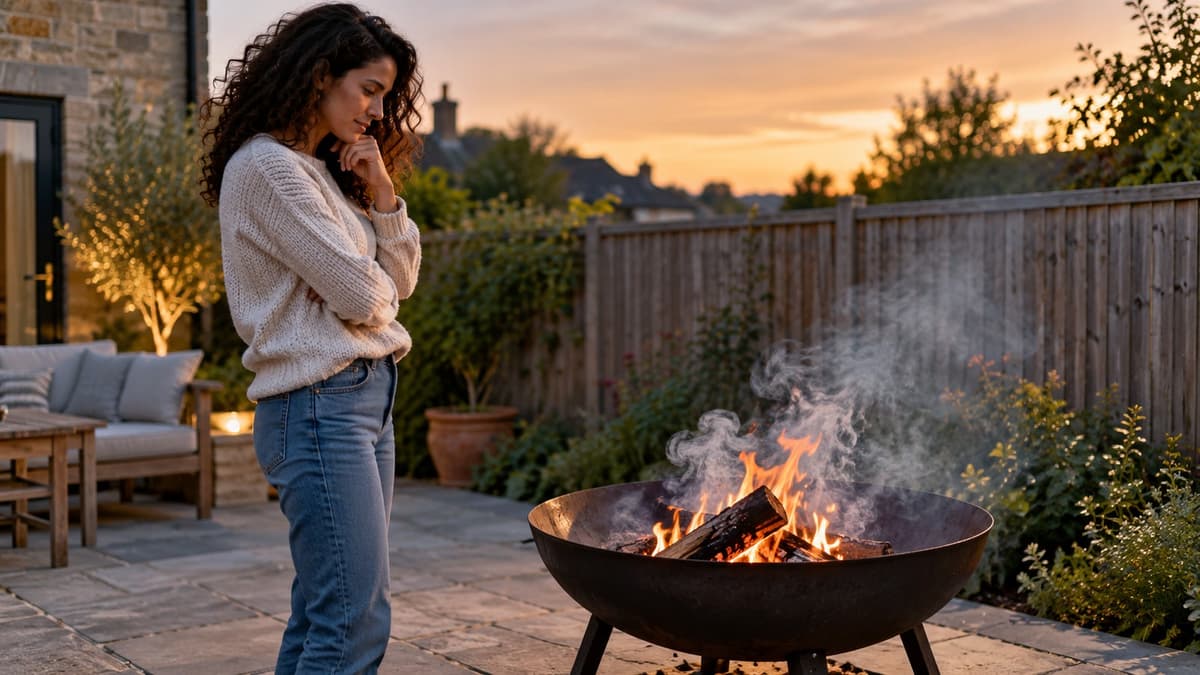
Garden fire pit rules in England
Smoke-control areas are not a ban on an outdoor bowl. What the England rules change for a garden fire.
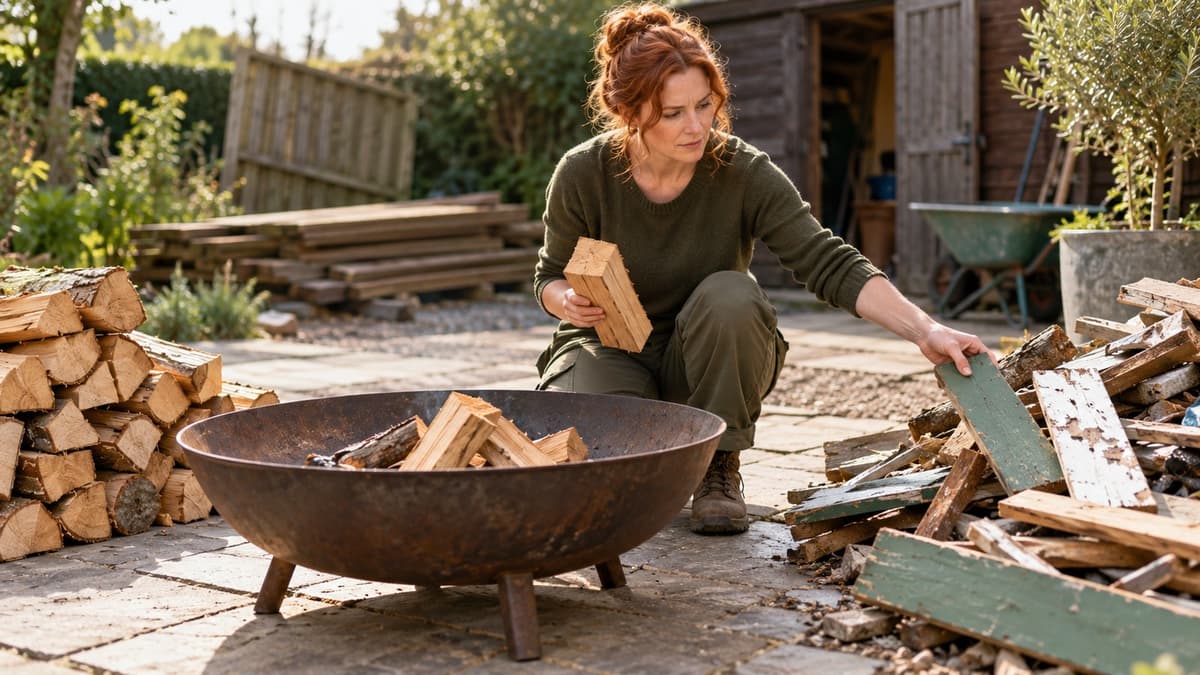
What you must not burn in a fire bowl
Treated timber, garden waste, and wet rubbish are the loads that turn a bowl into a smoke problem.
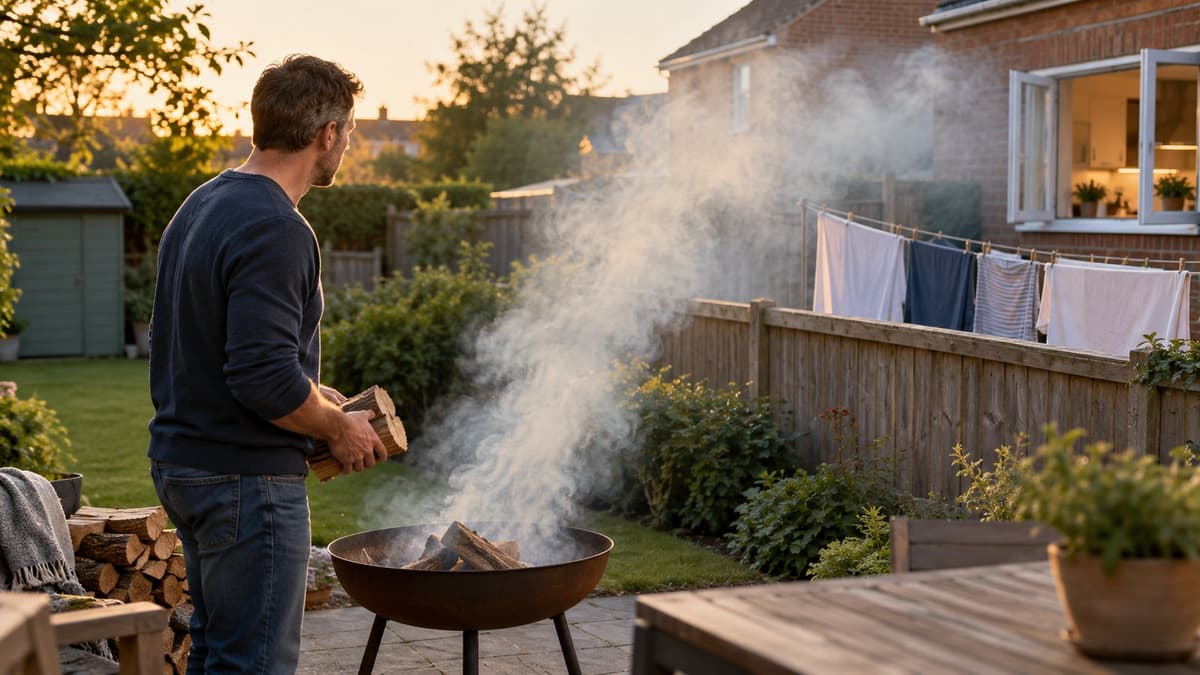
When fire-pit smoke becomes a neighbour problem
Drier logs cut the plume. They do not settle a complaint once smoke is already in next door's rooms.