Fire pit rules UK: an open bowl is not a chimney ban
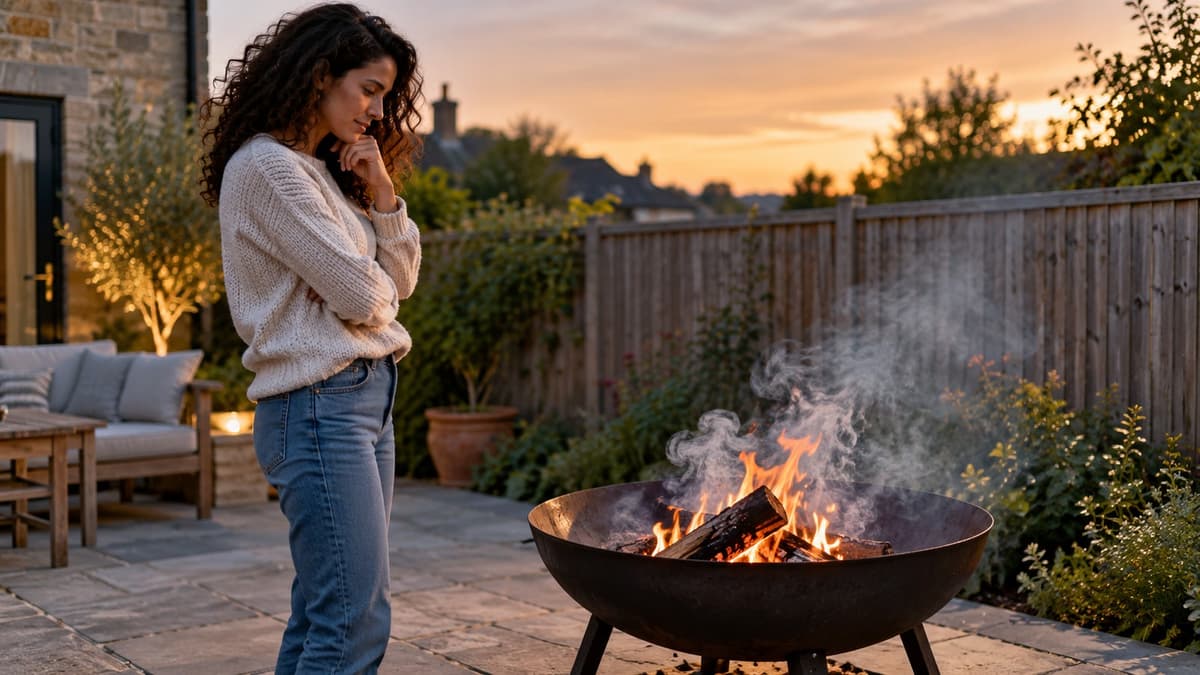
Fire pit rules UK leave an open patio bowl outside England's £300 chimney penalty. Nuisance smoke, household waste, and a road can still stop the fire.
On this page

You are standing over a steel bowl, wondering whether the smoke-control shading on the council map makes the evening illegal. Fire pit rules UK are split across public pages that answer different questions. GOV.UK allows outdoor barbecues, chimineas, fireplaces, and pizza ovens in a smoke control area, and garden bonfires if you follow the bonfire rules. The England penalty of up to £300 is for chimney smoke. Nuisance, household waste, and smoke over a road can still stop an open bowl.
Peter F., editor for DIY & tools at productscompared.co.uk, read the GOV.UK smoke control page, the England enforcement guide published on 1 May 2022, Defra's nuisance-smoke guidance updated the same day, and the garden bonfires page, in October 2026. Nothing here is a lab test of a bowl. A qualifying purchase through our links can earn a commission at no extra cost to you.
In short
In England, the penalty of up to £300 is for chimney smoke in a smoke control area, and outdoor burning sits outside that rule when the fire is outside and not in a building. A patio bowl can still be a statutory nuisance, and smoke that endangers traffic on a road can still be an offence. A summerhouse flue follows the chimney rule. The England penalty figures do not travel automatically to Scotland, Wales, or Northern Ireland.
The chimney penalty and the patio bowl
A smoke control area limits what may leave a chimney. GOV.UK says you cannot release smoke from a chimney, and you can burn only authorised fuel unless it is an exempt appliance Defra has approved. Named fuels include anthracite, semi-anthracite, gas, low volatile steam coal, and the authorised-fuels list. Wood is unauthorised unless that appliance is exempt and you use the fuel the manufacturer specifies. In England, chimney smoke in a smoke control area can draw a penalty of up to £300. A fine of up to £1,000 is a separate rule, for buying unauthorised fuel for an appliance Defra has not approved.
The England enforcement guide covers a chimney of any building, a chimney serving a fixed boiler or industrial plant, and moored vessels where the area includes them. A building is any structure with a roof and walls, and the guide names sheds and summerhouses. A notice of intent can set £175 to £300 for each incident, under Schedule 1A of the Clean Air Act as amended by the Environment Act 2021. The occupier of the building with the chimney can receive it. An open bowl on paving has no chimney.
The same guide says smoke from outdoor burning is not covered by smoke control area rules, and it names barbecues, chimineas, and pizza ovens which are outside and not in a building. The public page adds outdoor fireplaces, and garden bonfires if you follow the bonfire rules. A smoke control area fire pit in the garden, rather than ducted through a roof, is outside the chimney penalty. The council can still serve an abatement notice if that smoke is harmful to health or a nuisance.
When smoke becomes a statutory nuisance
Defra's nuisance-smoke guidance applies to England. Councils must investigate smoke from premises that could be a statutory nuisance under the Environmental Protection Act 1990: smoke that unreasonably and substantially interferes with the use of a home, or that injures health or is likely to. If the council agrees a nuisance is happening, has happened, or will happen, it must serve an abatement notice telling the person responsible to stop or restrict the smoke. Officers weigh how much smoke, how often, how long, and how unreasonable it is. You can be fined for ignoring the notice.
Smoke from a house is covered unless an exemption applies. Defra exempts dark smoke from building chimneys and from chimneys serving fixed boilers or industrial plant, smoke from steam trains, and smoke from armed-forces premises. On 1 May 2022 it removed chimney smoke from houses in smoke control areas from that list. A patio bowl is not exempt, so a complaint can be investigated even though the £300 chimney penalty does not apply. Best practicable means is an appeal point for chimney smoke, not for a bowl left to smoulder.
Waste in the bowl and smoke over a road
You cannot get rid of household waste if it will cause pollution or harm people's health, and the garden bonfires page says this includes burning it. Compost or recycle household and garden waste, and ask the council how garden waste is taken locally. Damp stems smoke instead of flaming. That is the load most likely to fail the nuisance tests, even when the steel itself is lawful to own.
The page does not publish a whitelist of fuels for a nightly fire. Dry wood is the fuel the open-bowl listings in the fire bowls comparison actually state. Household rubbish, painted offcuts, and wet garden waste are the loads a neighbour can report. A small bowl does not shrink the waste rule because the pile fits inside the rim. If you bought the bowl to dispose of the hedge, you bought the wrong tool.
You could be fined if you light a fire and allow the smoke to drift across the road and become a danger to traffic. That carriageway point sits with section 161A of the Highways Act 1980. GOV.UK does not put a pound figure next to the sentence, and neither does this article. A still evening and a lane at the end of the garden are enough for smoke to sit in the carriageway. If you can already see it, put the fire out.
A summerhouse flue and the rest of the UK
A chimney on the roof of a building, for example a summerhouse, may burn only authorised fuel unless the appliance is exempt. The England guide calls a building any structure with a roof and walls, including sheds and summerhouses. The occupier can receive the England penalty of up to £300 if that chimney smokes in a smoke control area. An open bowl on the paving is outdoor burning, outside those emission rules, and still open to an abatement notice. A stove flued through the summerhouse roof is the chimney. A general patio bowl is not an exempt appliance.
The enforcement guide and Defra's nuisance-smoke page apply to England. Smoke control areas exist more widely, and GOV.UK tells you to ask your local council whether you live in one. In Scotland, Wales, or Northern Ireland, ask which notice they use for outdoor smoke and which penalty, if any, attaches to a chimney. Copying £175 to £300 onto a Scottish street turns a true England figure into a false local one. The Republic of Ireland is outside the sources used here.
What to check before you buy an open bowl
Ask the council whether the house is in a smoke control area, and how they want garden waste presented. The chimney rule leaves an outdoor bowl outside the £300 penalty in England. Nuisance and the road can still reach that bowl. A timber deck, or a balcony hard against cladding, is the wrong place to treat that outdoor-burning line as clearance. A listing that mentions decking is a product claim, not a fire-service approval.
If the brief is less wood smoke, look at a gas fire pit before a bigger bowl. It does not throw a wood plume across the fence. GOV.UK lists gas among fuels you can burn in a smoke control area without an exempt appliance. That is a fuel rule, not a promise that every gas table suits every terrace. Gas does not close a nuisance complaint if the use is still unreasonable, and it does not make an indoor flue lawful.
If you still want an open wood bowl, set it on a non-combustible base. The top pick in the fire bowls comparison is the Esschert FF44: 11.6 kg, £64.99, and 4.4 from 396 amazon.co.uk reviews that say heavy, thick, and solid. The title and the dimensions field disagree on height. The stand is not stated, and one review says the iron base can scorch earth or wood. That is a listing limit, not a legal permission.
Common questions
Are fire pits banned in smoke control areas?
What is the £300 penalty for?
Can the council stop my fire?
Is garden waste OK in the bowl?
What if smoke crosses the road?
Does this apply in Scotland the same way?
Is a summerhouse flue different?
Does a gas fire pit change the smoke question?

Peter F. is the editor for DIY & tools at productscompared.co.uk. Comparisons in this category are checked against amazon.co.uk listings, review evidence and public UK sources.
Related articles
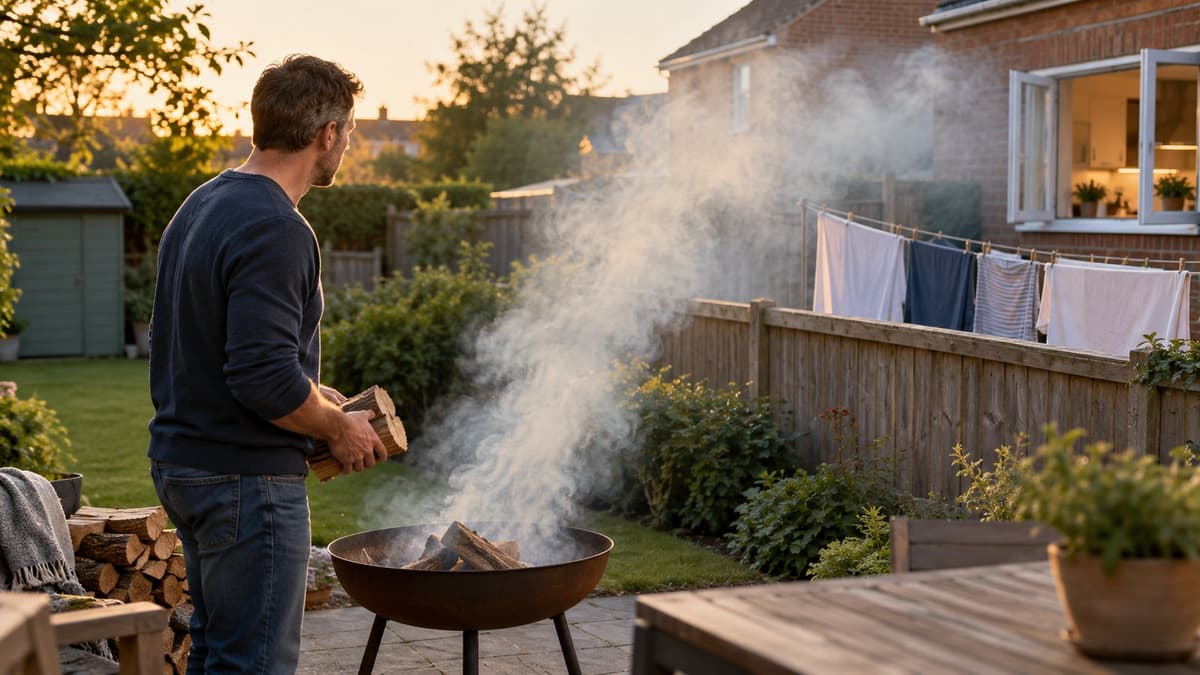
When fire-pit smoke becomes a neighbour problem
What a council in England looks at when smoke crosses a fence, and what an abatement notice asks you to stop.

What you must not burn in a fire bowl
Household waste, treated offcuts, and wet garden rubbish make the smoke that nuisance rules are written for.

When a fire bowl is the wrong buy
A flat, a balcony, or a brief that cannot tolerate wood smoke is a different purchase from an open bowl.