Neighbour fire pit smoke: what a council can do
Neighbour fire pit smoke can be a statutory nuisance if it is frequent or unreasonable. What you can change tonight, and what an abatement notice means.
On this page

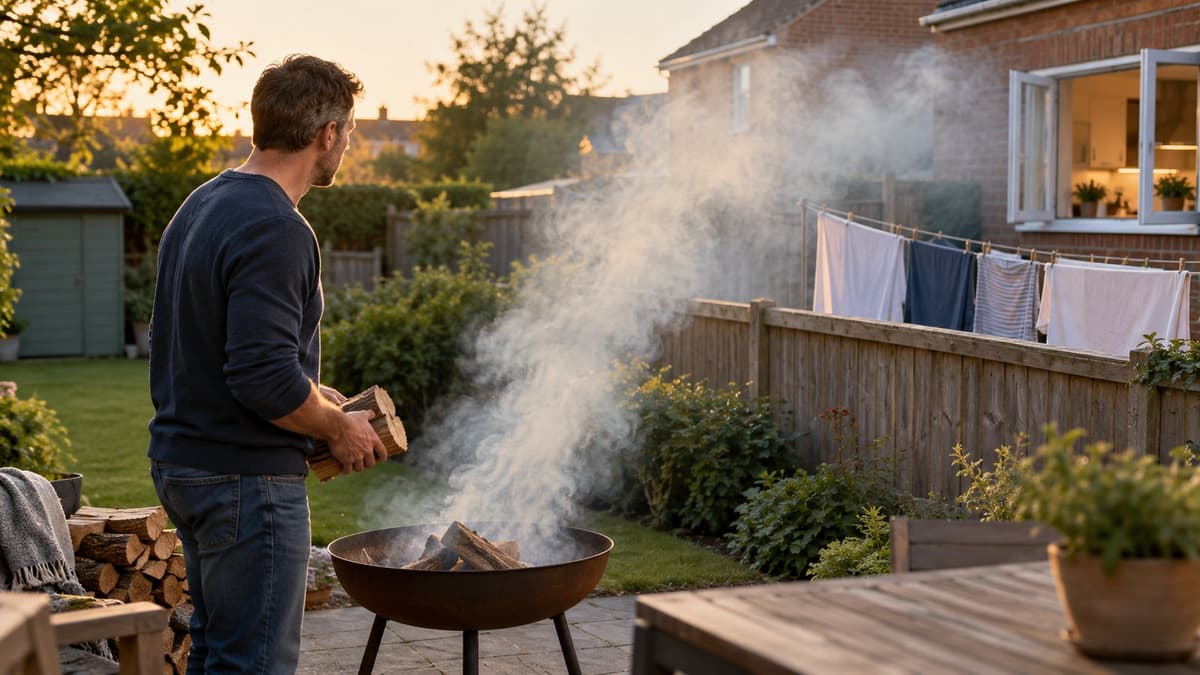
The washing is out next door, the kitchen window is open, and the first logs in your bowl are still a grey column rather than a flame. Then the message arrives about neighbour fire pit smoke. You need two answers on the same evening: what you can change before the plume gets worse, and what a council can do if talking does not end it.
A garden fire is not banned in England and Wales. Smoke from land can still be a statutory nuisance under the Environmental Protection Act 1990 when it is prejudicial to health or a nuisance. GOV.UK tells councils to look at amount, duration, frequency, and whether the smoke is unreasonable. There is no published allowance of evenings.
Peter F., editor for DIY & tools at productscompared.co.uk, checked these notes in October 2026 against GOV.UK on nuisance smoke and garden bonfires, the Environmental Protection Act 1990 for England and Wales, Defra's outdoor-burning note, and the Mid and West Wales fire service page on fire pits. There is no site visit. A qualifying purchase through our links can earn a commission at no extra cost to you.
In short
Neighbour fire pit smoke becomes a council matter when the amount, duration, and frequency make it unreasonable, or when it is prejudicial to health. One careful evening is harder to prove than a weekend habit, and nobody has published a number of nights you can rely on. Dry wood, the wind, and putting the fire out are what you control, and a different bowl does not delete the plume.
When neighbour fire pit smoke is a nuisance
The legal test is narrower than a neighbour who hates smoke, and wider than one evening. Part III of the Environmental Protection Act 1990, for England and Wales, covers smoke from premises that is prejudicial to health or a nuisance. Premises includes land, so the lawn and the patio count. The council has to look into that complaint. It does not have to side with whoever writes first.
GOV.UK asks officers to weigh the amount of smoke, how long it lasts, how often it happens, and how unreasonable it is. A birthday fire out before dark is a different pattern from a bowl that smoulders every Friday. That is a difference of evidence, not a quota. No page used here says three nights a month is acceptable, or that a sixth night triggers a notice.
Health sits in the test beside ordinary annoyance. Smoke that leaves someone struggling to breathe is not answered by saying other people like the smell of wood. You do not need their medical notes before you extinguish it. Defra's outdoor-burning note names fire pits alongside barbecues, so a bought bowl is judged on the smoke that arrived, not on the product title.
Why an open bowl smokes into next door
An open bowl does not steer smoke. There is no flue, and the only direction of travel is the wind you have. Heat rises, then the breeze takes the column. If their house is downwind, the plume reaches their windows even when you are sitting upwind and can barely smell it.
The start of the evening is the usual flashpoint. Until the wood is hot enough to flame, moisture and gases leave as smoke at about fence height. Dry wood smokes less than wet wood. Logs left in the rain, or a handful of leaves, make that first plume longer and dirtier.
A chiminea changes the shape, not the fuel. The neck can lift smoke above your own heads, and the plume still exists once it clears the pot. The Mid and West Wales fire service says to tell neighbours and to put the fire out if someone is affected. Careful lighting will not hold the smoke if their only windows face the patio.
Fuel and wind, the things you can change
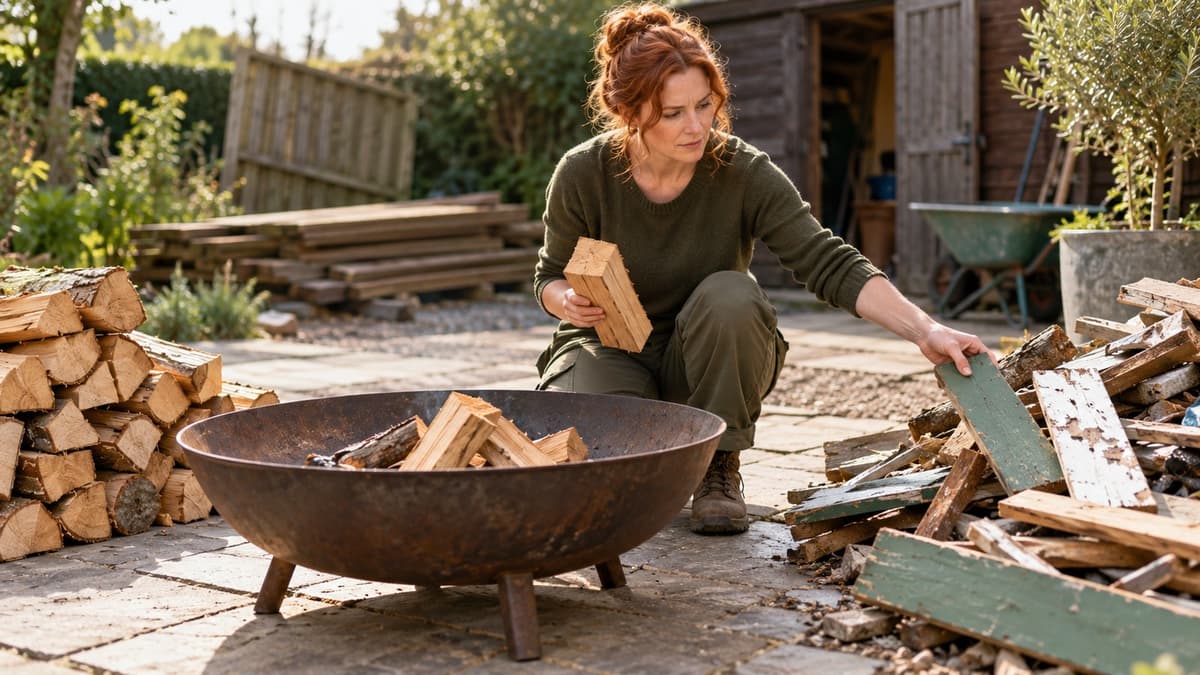
Dry, seasoned wood smokes less than wet wood, fresh prunings, grass, or leaves. Household rubbish does not belong in the bowl. It smokes harder, and burning household waste is a separate problem from a log fire. GOV.UK's bonfire rules say you must not cause a nuisance, and you should not burn waste that will pollute.
Check the wind before you look for a match. If the drift is toward their washing, an open window, or a bedroom, wait or cancel. Moving the bowl a metre rarely beats a steady breeze. Tell them before you light, with a start and a finish, so they can bring the washing in. Water, or another proper way to extinguish it, should already be beside the bowl. If they ask you to stop, stop.
Time of day is a factor, not a permit. Nothing in the England and Wales rules makes daytime smoke lawful and evening smoke unlawful. If a complaint is likely, note the date, the start and finish, the wind, the fuel, whether you warned anyone, and whether you extinguished early. Do not rewrite that note after the row has started.
What a council smoke complaint leads to
The complaint goes to environmental health at the district or unitary council, not to the police and not to the fire service as a mediator. They are usually expected to have tried speaking to you. Refusing to answer the door does not block the call. A polite text last month does not block an investigation if the smoke has carried on.
Officers may ask for dates, times, and how the smoke affected the house. They may visit, watch from the street, or write to you before they decide. Lighting again because they have not served anything yet turns a borderline case into a pattern. The price of the bowl is not a reason for them to drop the file.
If they decide the smoke is a statutory nuisance, they serve an abatement notice. It can require you to stop it, stop it coming back, or restrict it. You can appeal to the magistrates' court within 21 days. That window is in the Environmental Protection Act 1990. Get advice before you light again. Do not treat the notice as paused. Breach it without a reasonable excuse and you can be prosecuted and fined. Take the figure from current GOV.UK guidance and the paperwork. The council can also stop the nuisance and look to recover the cost.
Who you call depends on tonight. Smoke in their kitchen is a council matter, and flames in a fence or a shed are a 999 call. Threats are for the police, who do not decide the nuisance. In Scotland or Northern Ireland, ask that council which notice it uses. The Act cited here is the England and Wales route.
When a different appliance is the honest answer
A new bowl is the wrong purchase when the complaint is the smoke. The top pick in the fire bowls comparison is the Esschert FF44, an 11.6 kg bowl at about £64.99 on amazon.co.uk, with 4.4 from 396 reviews. UK reviews call it heavy, thick, and solid. The height figures disagree, the stand is not stated, and one review says the base can scorch earth or wood. None of that steers smoke.
It suits a non-combustible base and a garden where neighbours are not already affected. It is a poor answer to a statutory nuisance. Open fire baskets show the flame and still do not duct the plume. Choose a shape for heat, sparks, and siting. Dry fuel reduces smoke. A clear-sky photo does not make a wood fire smokeless.
A chiminea is a maybe, not a cure. Do not buy one to win an argument with someone whose windows already fill with smoke. When the brief is no wood smoke, the honest appliance is a gas fire pit, or no fire at all. Gas removes the log plume. It does not remove heat, a visible flame, or the need to keep it off fences and timber. On a balcony or a tight terrace, no wood-burning bowl meets a no-smoke brief.
If this is your first fire, look at their windows before you look at amazon.co.uk. If you are already in a complaint, change the fuel and the wind, put it out when asked, and keep the diary. Do not buy a thicker bowl as a defence to a notice.
Common questions
Can my neighbour report a fire pit?
Is one evening enough for an abatement notice?
Does warning the neighbour first stop a notice?
Why is the fire smokier at the start?
Will a chiminea stop neighbour fire pit smoke?
What if my neighbour has asthma?
Can I only burn in the daytime?
Who do I call if it is already a row?

Peter F. is the editor for DIY & tools at productscompared.co.uk. Comparisons in this category are checked against amazon.co.uk listings, review evidence and public UK sources.
Related articles
Garden fire pit rules in England
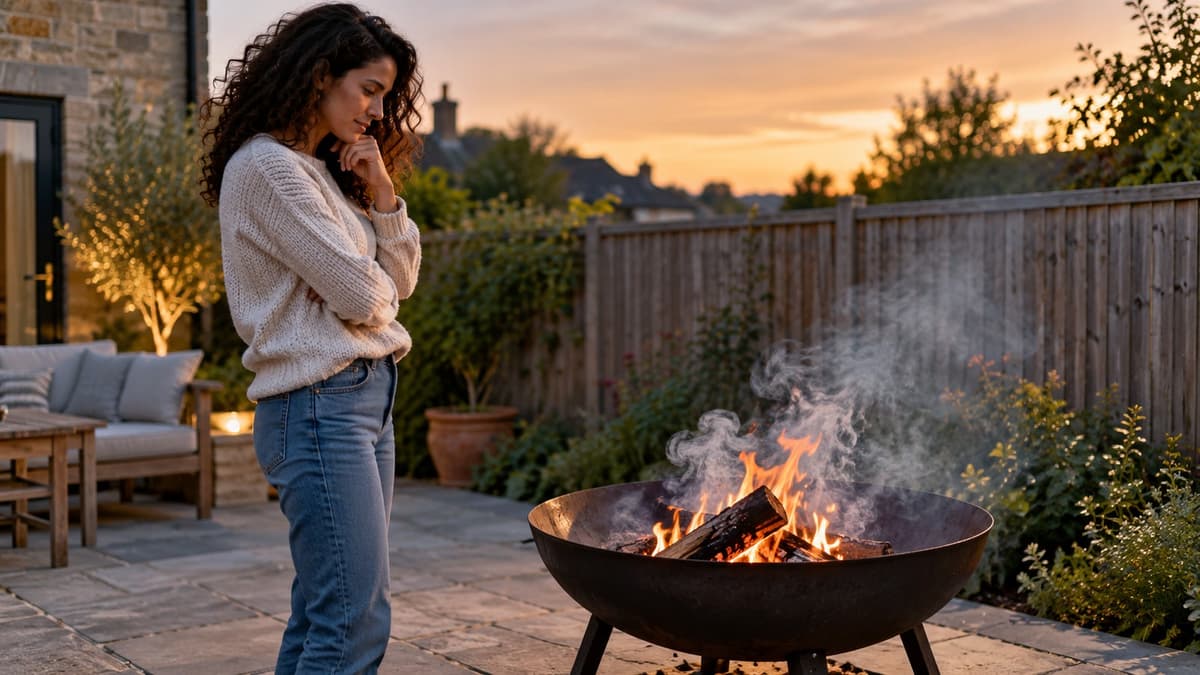
A smoke-control area is often mixed up with a ban on bowls. The nuisance test is what decides a complaint.
What you must not burn in a fire bowl
Treated offcuts, household rubbish, and wet waste smoke harder than dry logs, and some of that burning is a separate offence.

Chiminea or fire bowl
A neck can lift smoke above your own chairs. It does not remove the plume once the wind takes it.