Independent comparisons. We may earn from shop links. More info

How to plant a climbing rose

Updated: October 2026

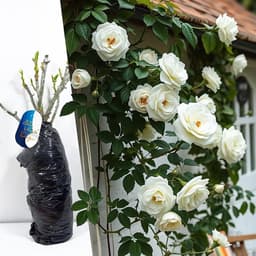
A climbing rose does not cling like ivy. It needs a support, a hole placed out from the wall, and stems tied towards the horizontal if you want flowers along the fence rather than a tuft at the top. This guide follows RHS planting and climbing advice for the UK, whether the cane came from the [climbing rose comparison](/hub/ornamental-plants/climbing-rose) or a nursery bench. Seller windows on those amazon listings are wider than the dormant bare-root season, so use RHS timing first. A qualifying purchase through our links can earn a commission at no extra cost to you.

A climbing rose does not cling like ivy. It needs a support, a hole placed out from the wall, and stems tied towards the horizontal if you want flowers along the fence rather than a tuft at the top.

Our top picks

On this page

When this parcel can go in the ground

RHS guidance puts bare-root roses in the ground from about November to March, while they are dormant. Container roses can go in when the soil is neither frozen nor very dry. Both bare-root listings here state January to May and September to November. The Iceberg 2 litre pot shares that window. Carbeth prints an expected planting period of summer on the three colour pots, which means daily water in hot weather. Treat those seller months as shop convenience. The seed packet is outside this method. If a cane arrives as a short stick between September and April, Carbeth says plants are pruned back for dispatch in that window. A dormant stick is expected. A brittle, blackened cane with no bud swell after a fortnight of mild spring weather is a complaint to the seller.

Support, then the hole

Fix the support before you plant. RHS pruning guidance puts the lowest horizontal wire about 45 cm from the ground, then further wires about 30 cm apart. Vine eyes suit timber. Masonry needs fixings that hold, and permission if the wall is not yours. Keep the hole off the brick. Climber planting advice often quotes about 30–60 cm out from the face. Angle the cane towards the support. Dig a hole two to three times the pot width, deep enough that the rose sits at about the level it grew in the container. These RHS pages give no single graft-union depth, so do not bury the union on a guess. Break up the base, mix in compost if the soil is poor, and water in before the first tie. Soak a bare-root cane, trim broken roots, and spread them so there is no air pocket. Mulch should stay off the stem.

Water the rain shadow and tie sideways

Walls and eaves shed rain, so the foot of a climber dries faster than open lawn. Water at the base through the first summer, including on a north wall. Aspect names are on climbing rose for a north-facing wall. A vertical leader tends to flower at the tip. Stems tied towards the horizontal throw side shoots along the fence. Use soft ties in a figure-eight and leave room for the stem to thicken. Black spot, with purple or black spots, yellowing, and early leaf drop, is the leaf disease named in buyer comments on anonymous pots here. Clearing fallen leaves is hygiene, not a spray programme. Do not hard-prune a climbing sport in its first winter. The RHS says hard cutting can return a sport to bush habit.

Aftercare that is not a rambler calendar

Routine pruning for climbing roses sits in December to February: tie in new long stems and shorten side shoots by about two thirds on an established plant. Ramblers are pruned in late summer after a June flush. The two calendars are on climbing rose versus rambling rose. The first year is water, ties, and patience. Skip a heavy feed until you see growth. A ladder on a two-storey wall, fixings in someone else’s property, or a failed cane under guarantee is when a professional or the seller should take over. Which parcel to buy stays on the climbing rose buying guide.

Common questions

When do I plant a bare-root cane, and when can a potted rose go in?
Bare-root roses go in from about November to March while they are dormant, which is the RHS window. Pots go in when the soil is workable and neither frozen nor baked dry. Seller lines of January to May and September to November, or a summer period on the Carbeth pots, are wider than that core. Use the RHS months first, then water if you plant near the edge of the seller window.
How far from the wall or fence should the hole be?
About 30–60 cm out from the face is the range quoted for climber planting, with about 45 cm appearing in a related support note. The point is the rain-shadow strip, where eaves keep rain off the roots. Planting flush against the brick leaves the root zone dry. Angle the cane towards the wires so the first ties do not snap the stem.
The cane looks like a short stick between September and April. Is it dead?
Not necessarily. Carbeth’s seller text says roses are pruned back for dispatch from September to April, so a short dormant stick is expected. Wait for buds to swell in spring. A brittle, blackened cane that shows no swell after a fortnight of mild spring weather is a complaint to the seller, not a reason to bury it deeper.
Should I hard-prune a climbing sport in the first winter?
No. The RHS says hard pruning can return a climbing sport, a climbing form of a bush rose, towards bush habit. That warning matters if the plant really is a sport. The amazon Iceberg file does not prove the clone. Keep the first winter to tying and light shaping, and leave a hard cut until you know the habit.
What is a ladder job rather than a weekend job?
A two-storey house wall, fixings you cannot make safely, or drilling into a wall you do not own. Get help rather than improvising from a garden ladder. Removing a failed bare-root under a seller guarantee is also a seller conversation. Secateurs do not solve an unsafe support.

Related pages

Sources

Public sources from the research digest, last checked on 21 October 2026. Shelf prices and star lines are the amazon.co.uk figures in the display file. The price band is this set, not a market average. None of these listings is claimed as the best climbing rose in the UK.

  1. RHS: climbing roses (retrieved 21 October 2026)
  2. RHS: pruning climbing roses (retrieved 21 October 2026)
  3. RHS: pruning rambling roses (retrieved 21 October 2026)
  4. RHS: planting roses (retrieved 21 October 2026)
  5. RHS: choosing the best roses (retrieved 21 October 2026)
  6. RHS: Rosa ‘Climbing Iceberg’ (retrieved 21 October 2026)
  7. RHS: rose black spot (retrieved 21 October 2026)
  8. GOV.UK: issuing plant passports (retrieved 21 October 2026)
  9. GOV.UK: moving plants from Great Britain to Northern Ireland (retrieved 21 October 2026)