Independent comparisons. We may earn from shop links. More info

Climbing rose versus rambling rose

Updated: October 2026

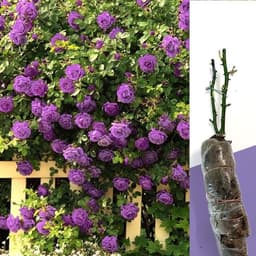
Both send out long stems and both need tying to a support, yet the RHS splits them by when they flower and when you prune. Get that wrong and you either remove next year’s June show or cut a repeat climber as if it were a once-flowering rambler. This page is the type split and the two calendars. None of the seven amazon listings in the [climbing rose comparison](/hub/ornamental-plants/climbing-rose) is labelled a rambler, so the word climbing in a title does not sort the parcel. Planting steps stay on [how to plant a climbing rose](/hub/ornamental-plants/climbing-rose/sub/climbing-rose-how-to-plant). A qualifying purchase through our links can earn a commission at no extra cost to you.

Both send out long stems and both need tying to a support, yet the RHS splits them by when they flower and when you prune.

Our top picks

On this page

The test is when it flowers

RHS guidance describes repeat flowering through summer and into autumn as the usual climber pattern, and a single main flush around June for a rambler. In July, new buds along side shoots point to a climber. A show that finished weeks ago, with hips on arching stems, points to a rambler, unless you bought a known repeat-flowering rambler. BBC Gardeners' World makes the same split: climbers often suit a smaller garden, with fewer and larger repeat blooms, while ramblers cover a tree or a long pergola in one June or July wave. Some ramblers repeat, so the class name is not an always-once rule. Amazon titles here do not settle the type. Carbeth says summer flowering and long flowering with no cultivar. The purple bare-root lists winter as the blooming period. The Iceberg seller line says repeat into autumn, while an RHS choosing-list key can mark Iceberg summer-only on another page.

Two prune calendars

Climbing roses take a routine prune from December to February: tie in new long stems and shorten side shoots on an established framework. Rambling roses take a routine prune in late summer, after the flush, removing about one in three of the oldest stems when the support is full. Renovation of an old rambler can run from late autumn to late winter. A February prune on a rambler removes the wood that would have carried June flowers. An August-only prune on a repeat climber leaves tangled growth and fewer autumn blooms. Carbeth’s note that plants are pruned back for dispatch between September and April is a packing line. A short stick in winter post does not make the plant a rambler. Wire spacing, about 45 cm then about 30 cm, is on the planting page.

Fence, arch, or a tree

Ramblers tend to be more vigorous, with smaller flowers in large clusters, and they want a strong support: an old tree, a barn wall, or a long pergola. Climbers often fit a fence or an arch where repeat colour matters. Neither clings. Both need horizontal training. A climbing sport of a bush rose can revert if you hard-prune it like a hybrid tea. The RHS names 'Climbing Iceberg' as a sport of a bush rose. Hard winter cutting can push it back towards bush habit. The amazon Iceberg listing does not prove you own that sport. North-wall lists sometimes include ramblers such as 'Albéric Barbier', marked (Ra) on climbing rose for a north-facing wall. That plant still takes the late-summer prune unless the cultivar is a repeat exception.

What these seven listings do not tell you

No file in the comparison says rambler, so the Carbeth pots, the bare-root canes, the Iceberg pot, and the seed packet cannot be typed from the title. Winter on the purple bare-root, summer on Carbeth, and repeat on the Iceberg title are seller lines. Watching next year’s flowers is an experiment. Shared reviews, seed versus plant, and the height cap on the white bare-root are on the climbing rose buying guide. Repeat colour on a modest fence means a named repeat climber. One June cascade on a large support means a named rambler, with late summer in the diary.

Common questions

How do I tell a climber from a rambler if I can see it in flower?
Repeat flushes through summer and into autumn suggest a climber. One main flush around June, then hips on arching stems, suggests a rambler. A known repeat-flowering rambler is the exception, so check the cultivar rather than the class name alone. A title that only says climbing, summer flowering, or winter bloom does not replace that look at the plant.
When do I prune each one?
Climbers: December to February for the routine prune, tying in long stems and shortening side shoots on an established framework. Ramblers: late summer after the June flush, taking out about one in three of the oldest stems when the support is full. Renovation of an old rambler can run from late autumn to late winter. February pruning removes a rambler’s June wood.
Do all ramblers flower only once?
Usually once, around June, in RHS and BBC Gardeners' World guidance. Some cultivars repeat, which is why the class name is not a guarantee. Check the label. On an RHS choosing list, (Ra) marks a rambler and (su) marks summer flowering only. Those abbreviations are more useful than the word climbing on an amazon title.
What is a climbing sport, and why avoid a hard prune in the first winter?
A climbing sport is a climbing mutation of a bush rose. The RHS names 'Climbing Iceberg' as one. Hard cutting can push it back towards bush growth, so the first winter is for tying, not a hard cut. The amazon Iceberg listing does not prove the parcel is that sport. The same caution applies to any named sport from a nursery.
Does climbing on these amazon titles mean it is not a rambler?
It means nothing about type. None of the seven listings says rambler. Carbeth’s summer and long-flowering lines name no cultivar. The purple bare-root’s blooming attribute says winter. The Iceberg seller line says repeat into autumn, which still is not an RHS type label. Watch the plant next summer if you buy one of these parcels.
Can a rambler go on a north wall?
Several RHS shady-wall names are ramblers, marked (Ra), including 'Albéric Barbier'. They still need tying, and they still take the late-summer prune after the June flush. A north wall does not turn a rambler into a repeat climber. Confirm any repeat-flowering exception on the cultivar label before you diary the wrong month.

Related pages

Sources

Public sources from the research digest, last checked on 21 October 2026. Shelf prices and star lines are the amazon.co.uk figures in the display file. The price band is this set, not a market average. None of these listings is claimed as the best climbing rose in the UK.

  1. RHS: climbing roses (retrieved 21 October 2026)
  2. RHS: pruning climbing roses (retrieved 21 October 2026)
  3. RHS: pruning rambling roses (retrieved 21 October 2026)
  4. RHS: planting roses (retrieved 21 October 2026)
  5. RHS: choosing the best roses (retrieved 21 October 2026)
  6. RHS: Rosa ‘Climbing Iceberg’ (retrieved 21 October 2026)
  7. RHS: rose black spot (retrieved 21 October 2026)
  8. GOV.UK: issuing plant passports (retrieved 21 October 2026)
  9. GOV.UK: moving plants from Great Britain to Northern Ireland (retrieved 21 October 2026)