Independent comparisons. We may earn from shop links. More info

Red clover or white clover for bees

Updated: 22 October 2026

You are choosing between two clover names on amazon.co.uk, or wondering whether a blend gives you both. This red clover or white clover for bees page separates height, lifespan and which bees can reach the flowers. It does not set a mowing height or a weed-and-feed rule. Prices and the full attribute table are on the [bee pasture comparison](/hub/ornamental-plants/bee-pasture). We did not run a bee visitation study on these packets. A qualifying purchase through our links can earn a commission at no extra cost to you.

You are choosing between two clover names on amazon.co.uk, or wondering whether a blend gives you both. This red clover or white clover for bees page separates height, lifespan and which bees can reach the flowers.

Our top picks

On this page

Two clovers, two shapes

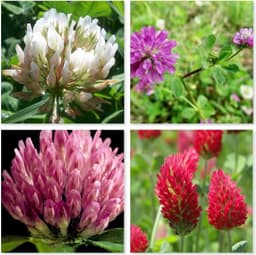
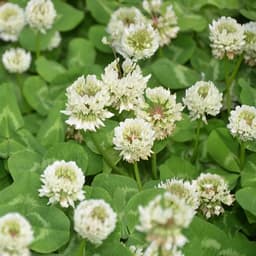
White clover, Trifolium repens, creeps on stolons and can persist for years in a mown sward. Red clover, Trifolium pratense, is upright, with a crown and a taproot. Farm guidance treats it as a short-lived perennial, roughly two to three years in a ley, sometimes up to four, not a decade of ankle-high cover. The red and white mix listing repeats that two-to-three-year line. RHS clover-in-lawns guidance puts white clover in flower-rich lawns and red clover in longer grass. Red can approach 60 centimetres. If the patch must stay walkable, white clover is the match. Send red clover to a taller corner. Mowing stays on the white clover lawn for bees page. Pack sizes are on best bee pasture seed.

Which bees can use which flower

Both clovers feed bees, but not identically. SRUC bumblebee guidance says short-tongued bees use white clover, while long-tongued bees reach into red clover and yellow rattle. Bumblebee Conservation Trust material on the moss carder points to red clover and bird's-foot trefoil. Those bees are coastal and northern in Britain. Sowing red clover supports that flower type. It does not put a scarce species on a suburban fence. White clover’s shorter flowers suit short-tongued bumblebees at lawn height. Red clover’s deeper flowers reward long-tongued bumblebees when the stems can stand. Neither replaces a diverse meadow. Match flower depth to the height you can allow.

When both means a compromise

The 500 g mix at about £27 is how amazon.co.uk sells both. Bullets name white, red, Persian and crimson clover, with one line claiming 70 percent red and 30 percent white. That split was not weighed, and reviews include buyers who saw mostly one colour. Persian and crimson clover are annuals, so the tin is not two perennial lawn clovers. Crimson can flower in year one, then fade unless you reseed. Persian clover is on several bullets and not on the RHS British wildflower pollinator list used here. The top pick on that mix is review depth, 4.1 from 457 reviews, not proof of a 70/30 blend. The red pouch at about £2.99 for 10 g is the best value for a small red sow, 4.2 from 228 reviews. The white pouch at about £2.99 for 5 g has 4.1 from 263, and the title also says oxalis.

Trefoil, annuals, and what not to claim

Bird's-foot trefoil is a third legume, not a clover: five leaflets and yellow flowers, used by long-tongued bees. The 100 g listing at about £10.99 shows 5.0 from one review with no text. Its clay line sits beside RHS well-drained guidance and a 40 to 80 centimetre bullet. It can join a sunny meadow. It does not replace white clover in a lawn. Sweet clover, phacelia, blue lupin and annual crimson are the wrong tools for a permanent lawn. Do not promise moss carder bees in every English garden because you sowed red clover.

Common questions

Should I sow red clover or white clover for bees?
White when the sward must stay walkable and mown. Red when you can allow taller stems for a few seasons and want deeper flowers for long-tongued bumblebees. The two jobs are different, even though both plants are clovers sold side by side on amazon.co.uk.
Which one stays low enough to mow?
White clover. It creeps and can persist under a mower if you leave the flowers. Red clover does not behave like a stripe-lawn plant, and a close cut removes the blooms that long-tongued bees need in a British garden.
How long does red clover last?
About two to three years on the mix listing’s own line, which lines up with farm guidance for red clover in leys. Some newer types are described as lasting up to four years. It is not a permanent lawn replacement.
Do long-tongued bumblebees need red clover?
They use red clover and bird's-foot trefoil more easily than short flowers. White clover still feeds short-tongued bees. A diverse sowing helps more than one species alone, and sowing red clover does not guarantee a scarce species will visit.
Is a red-and-white mix the best of both?
Only if you accept taller growth, annual crimson and Persian components, and reviews that disputed the colour balance. The 70 percent red and 30 percent white line is a seller bullet, not a checked blend, and it is not a simple lawn mix.
What about crimson, Persian or sweet clover in the same packet?
Crimson is often an annual. Persian and sweet clover are mix fillers here, not lawn clovers. Read the species line before you buy, and do not treat a five-type title as five named clovers if the fifth name is missing.
Where does bird's-foot trefoil fit beside the two clovers?
As a meadow legume for a sunny patch, alongside or instead of clover in a tall sowing. It is not a third clover for mowing. The 100 g listing in this set has one review and no stored text, so the evidence is thin.

Related pages

Sources

Public UK sources listed below, prices as captured on 20 October 2026. Shelf prices and star lines are the amazon.co.uk figures used in this comparison. The price bands are this set, not a market average.

  1. GOV.UK: CAB19 pollen and nectar flower mix (retrieved 20 October 2026)
  2. RHS: plants for pollinators, wildflowers (retrieved 20 October 2026)
  3. RHS: bird's-foot trefoil (Lotus corniculatus) (retrieved 20 October 2026)
  4. RHS: clover in lawns (retrieved 20 October 2026)
  5. RHS: sowing for birds and bees (retrieved 20 October 2026)
  6. Landlife Wildflowers: butterfly and bee mix (retrieved 20 October 2026)
  7. Boston Seeds: butterfly and bee wildflower seeds (retrieved 20 October 2026)
  8. GOV.UK: invasive non-native plants (retrieved 20 October 2026)