Independent comparisons. We may earn from shop links. More info

White clover lawn for bees

Updated: 22 October 2026

You want the lawn green underfoot and still useful to bees, without a waist-high meadow. This white clover lawn for bees page is that compromise on land you mow yourself. It is not a red-clover field strip and not a one-kilogram wildflower mix. Seed packs in this set are listed on the [bee pasture comparison](/hub/ornamental-plants/bee-pasture). We did not grow a trial lawn. A qualifying purchase through our links can earn a commission at no extra cost to you.

You want the lawn green underfoot and still useful to bees, without a waist-high meadow. This white clover lawn for bees page is that compromise on land you mow yourself.

Our top picks

On this page

White clover is the lawn plant in this set

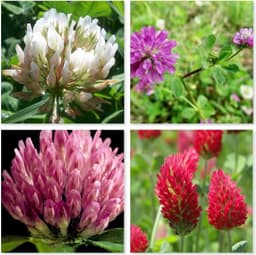
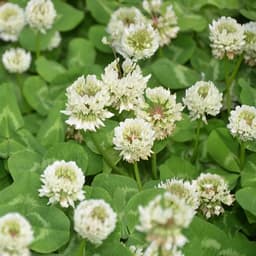
White clover, Trifolium repens, creeps by stolons and roots at the nodes, so it survives in many UK lawns when taller plants would not. The Royal Horticultural Society notes it often stays well under a 45 centimetre ceiling when mown, flowers from May to October, and feeds bees including bumblebees. Red clover can reach about 60 centimetres and is uncommon in a close sward. That contrast is on the red or white clover for bees page. The single-species white clover pouch at about £2.99 for a stated 5 g is the lawn candidate in this capture. The red and white mix, the five-type mixes and the 1 kg pollen mix include red clover, crimson, phacelia, sweet clover or lupin. Those are the wrong shapes for a walkable bee lawn. Bird's-foot trefoil is a meadow legume, not a weekly-mower plant.

Mowing so the flowers are still there

Bees only use clover when flowers sit above the blades. RHS lawn wildlife guidance suggests a higher cut, or intervals of three, four or six weeks. Stopping mowing from March to August is a mini-meadow, not a family pitch. A neat summer lawn is often quoted around 13 to 25 millimetres, which removes most clover flowers even if the plants survive. A practical bee lawn is a higher cut, or mowing every two to three weeks in peak bloom. A 2023 UK study of institutional lawns found cuts every six or twelve weeks had more than 170 percent higher pollinator abundance than fortnightly mowing, with white clover among the flowers. That is one study, not a promise for every garden. Pack choice by area is on best bee pasture seed.

What kills a clover lawn

Lawn weed-and-feed and many selective weedkillers target broad-leaved plants, including clover. RHS notes that clovers, trefoils and medicks resist many products, but resistant is not immune. The label decides. One verified United Kingdom review on the 500 g mix says weed-and-feed killed the sowing. If you want clover, do not use a feed that promises to clear clover and dandelions together. RHS recommends a fork or a rake before mowing when the aim is to remove clover. That is the opposite job, and it shows why a weed-free programme and a bee lawn collide. Sow on bare or thin patches, without floral-bed fertiliser, as how to sow bee pasture sets out, then keep chemical lawn products off the area.

The pouch, and when to stop

The white clover listing at about £2.99 names 5 g and 3,000 pieces and prints no grams-per-square-metre rate. Other seller guides suggest roughly 1.2 to 1.5 grams per square metre for clover lawns. That line is not on this listing and was not checked against the pouch. Reviews at 4.1 from 263 praise germination in gaps, and also report failures and buyers who wanted four-leaf luck. The title also says oxalis. If seedlings are not trifoliate clover, identify them before the patch spreads. Pet friendly on the listing is not a veterinary certificate. Skip red-heavy mixes, kilogram meadow mixes, and any sow you cannot keep clear of weed-and-feed.

Common questions

Can I replace a lawn with white clover and still walk on it?
Yes, with realistic expectations. White clover tolerates some foot traffic, according to Royal Horticultural Society notes, but it is not a hard-wearing sports pitch. Mow high enough that flowers return between cuts, and keep the heaviest wear on a path rather than on the flowering sward.
How often should I mow if I want bees to use the flowers?
Less often than a stripe lawn, and higher. Two to three weeks, or an unmown corner during summer bloom, leaves flowers that a weekly 13 millimetre cut removes. Stopping all mowing from March to August is a meadow, not this lawn compromise.
Will weed-and-feed or a lawn weedkiller kill the clover?
Often yes, even when clover is listed as tolerant of some products. The label decides. Avoid weed-and-feed on areas you sowed for bees. One verified review of the 500 g mix says that treatment killed the sowing. Resistant on an RHS page is not the same as safe on your bottle.
How much seed is in the £2.99 white clover pouch, and what area does that cover?
Five grams are stated. There is no checked coverage line on the listing. The 3,000 pieces figure is not a grams-per-square-metre rate. Measure the bare patches and buy more pouches if you need them, rather than treating the seed count as an area.
Can I overseed clover into a thick lawn?
Only where you have bare soil or very thin grass after raking. A closed sward blocks germination. Surface sow into those gaps and press the seed in lightly rather than burying it. Without visible earth, extra seed mostly sits on the grass.
What if the seedlings look like oxalis?
Identify them before you let the patch spread. The title of the white clover pouch also contains the word oxalis, which is not white clover. That word is a reason to check, not a prediction that every sowing will fail.

Related pages

Sources

Public UK sources listed below, prices as captured on 20 October 2026. Shelf prices and star lines are the amazon.co.uk figures used in this comparison. The price bands are this set, not a market average.

  1. GOV.UK: CAB19 pollen and nectar flower mix (retrieved 20 October 2026)
  2. RHS: plants for pollinators, wildflowers (retrieved 20 October 2026)
  3. RHS: bird's-foot trefoil (Lotus corniculatus) (retrieved 20 October 2026)
  4. RHS: clover in lawns (retrieved 20 October 2026)
  5. RHS: sowing for birds and bees (retrieved 20 October 2026)
  6. Landlife Wildflowers: butterfly and bee mix (retrieved 20 October 2026)
  7. Boston Seeds: butterfly and bee wildflower seeds (retrieved 20 October 2026)
  8. GOV.UK: invasive non-native plants (retrieved 20 October 2026)