Independent comparisons. We may earn from shop links. More info

How to use a gas mask

Updated: October 2026

You already have a tight reusable mask and you are about to sand, paint, or open a solvent tin. How to use a gas mask, on this page, means the check before you rely on it: straps, a seal on clean skin, a filter that is actually seated, and the moment you stop. It is not a ranking of the seven listings in our [gas mask comparison](/hub/occupational-safety/gas-mask). Peter F., editor for DIY & tools, updated this page on 20 October 2026. The checks follow HSE's HSG53 and INDG479. We did not invent a manufacturer sequence these listings do not print. A qualifying purchase can earn a commission at no extra cost to you.

You already have a tight reusable mask and you are about to sand, paint, or open a solvent tin.

Our top picks

On this page

Check the straps before you need them

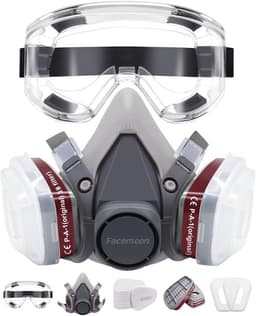
UK reviews on the Wytcyic, Facemoon, and LAMANICE files describe straps and clips that come off or snap. On Wytcyic, reviewers say the head straps come off, the neck clasp is fiddly, or a strap broke on an early use, and one says the filters would not slot into the cheeks. On LAMANICE, two of 36 UK texts describe a neck clip broken in the box or after one use, so the mask could not be tightened. Facemoon reviews include a broken strap connector and a snapped filter mount. An early TYAKRI note that matches a visor mentions a clip that snapped. That is listing experience, not a laboratory fault rate. It is enough to look at the clip before you are standing in dust. Put the mask on only after that look. The harness should be intact, the clips should close, and the filter should sit in the port. Clean skin matters more than a new cotton. If a clip is already broken, return the mask. The facepiece shape, and whether glasses get in the way, is on half face or full face.

The ten-second seal check

HSG53's pre-use check for a tight filtering facepiece is short. Cover the filter or the inlet with your hand, breathe in, and the facepiece should suck onto your face. Hold that breath for about ten seconds. If the mask loosens, readjust the straps and try again. If you cannot get that suck-down, do not use it. A valve that sticks, a filter that is not seated, or a strap that has popped off will fail this check, which is the point of doing it before the dust starts. This check shows that you put that facepiece on correctly today. It is not a fit test. INDG479 says a fit test matches the model to your face, and the daily check does not replace it. At work the exact model needs that test, and you do not run it over facial hair on the seal. A passed breath-in check on an unmarked listing is not that record. If the mask fails, a higher price does not close the gap.

Beard, stubble, and spectacles

A beard, including short stubble, on the seal line makes a tight mask unreliable. HSE's fit-testing guidance says you do not get a reliable seal through facial hair, and the alternative is loose-fitting powered protection, not a harder pull on the straps. That applies to a half mask and to a full facepiece. Washing a beard flat is not the method in that guidance. If you cannot be clean-shaven where the seal sits, these seven listings are the wrong products. Spectacles with side arms break a full-face seal, and goggles can fight a half-mask harness. Wear the eye protection you will actually use during the ten-second check. If the mask will not suck in while you are wearing it, stop before you open the tin.

Filters, cottons, and when to stop

A class 1 gas filter on a standard device should be changed at least every two days, and daily if the substance is a carcinogen or a respiratory sensitiser. A class 2 filter should be changed at least weekly. Those are HSE intervals for standard devices. They are not printed as a schedule on these seven pages, and smell is not a substitute for them. Particle filters are changed when they are damaged, past the date on the packet, or harder to breathe through. HSE also suggests under an hour of continuous wear for an unpowered tight mask. Come off in clean air, then refit, rather than pushing a second hour because the panel is nearly done. Cottons are not the cartridge. Wytcyic includes ten 5N11 pads and LAMANICE includes eight. They are pads in the box list, not a printed P class. A 40 mm carbon canister on the TYAKRI listing, or in the Bryze title, is a different fitting. Do not press a 5N11 into a canister and call it a combined filter. If you smell solvent as soon as you start, or the clip will not tighten, stop. Paint-specific stops, including isocyanate spray, are on the gas mask for painting page. If you are employed, if you cannot get the suck-down, or if a health condition makes respiratory protection uncertain, get competent advice.

Common questions

What should you look at before you put the mask on?
Look at the head harness, the clips, and whether the filters sit in the ports. UK reviews in this set include straps that came off, neck clips broken in the box, and filters that would not slot in. Check those points while you can still return the mask. The seal needs clean, shaved skin. If the clip is already cracked, do not start the job and do not try to lash it closed.
How do you do a seal check on a reusable half mask?
Cover the filter or inlet, breathe in, and hold for about ten seconds. The facepiece should suck onto your face and stay there. If it loosens, reset the straps and try once more. HSG53 is the source of that check. If it still will not hold, do not use the mask. Covering the exhalation valve by mistake, or leaving a filter cap on, will also fail the check, which is a reason to look at what your hand is blocking.
Is that check a fit test?
No. The daily check shows that you donned that facepiece correctly. A fit test, described in INDG479, is the formal match of a specific model to your face, and at work it is required for tight respiratory protective equipment. You cannot turn the ten-second suck-down into that record. You also cannot run a fit test over a beard. Passing the breath-in check on an unmarked listing does not create a fit-test certificate.
Can you wear it over a beard?
No. Facial hair on the seal, including stubble, stops a tight mask sealing. HSE points people who cannot shave the seal line toward loose-fitting powered protection. That is a different product from every listing in this comparison. Pulling the straps tighter does not replace a seal on skin. If you will not shave the seal, leave the mask in the box.
How long should an unpowered tight mask stay on?
HSE suggests under an hour of continuous wear for unpowered tight masks. That is a limit for this kind of facepiece, not a challenge to see how long you can last in a loft. Take it off in clean air, then refit and repeat the seal check if you go back. Heat and a wet face make leaks more likely. The hour is not permission to keep a failed clip on your head.
When do you change a class 1 gas filter if the device is a standard one?
At least every two days, and daily when the contaminant is a carcinogen or a respiratory sensitiser. Class 2 filters on a standard device are at least weekly. Waiting until the carbon looks dirty, or until you notice a smell, is later than that advice. These amazon.co.uk files do not print those intervals themselves. If your listing has no class, you do not have a class 1 schedule to follow. You have an unknown filter.
What do you do if the clip will not tighten?
Stop. A filter cannot protect you through a gap, and a neck clip that will not close leaves that gap. Reviews in this set include clips that failed in the box and clips that failed after one use. Do not wire it shut and carry on sanding. Return the mask, or replace the harness only if you know it is the right part for that facepiece. Then repeat the ten-second check on a mask that latches.

Related pages

Sources

Public UK sources from the research digest, last checked on 20 October 2026. Shelf prices and star lines are the amazon.co.uk figures in the display file. The price bands are this set, not a market average. Assigned protection factors in the buying guide belong to standard devices, not to these seven ASINs.

  1. HSE HSG53: respiratory protective equipment (retrieved 20 October 2026)
  2. HSE: how to choose respiratory protective equipment (retrieved 20 October 2026)
  3. HSE: filter advice for employers (retrieved 20 October 2026)
  4. HSE INDG479: fit testing of respiratory protective equipment (retrieved 20 October 2026)
  5. HSE: fit testing basics (retrieved 20 October 2026)
  6. HSE: bodyshop respiratory protective equipment (retrieved 20 October 2026)
  7. HSE COSHH essentials R3 (retrieved 20 October 2026)
  8. BSIF: ensuring effective respiratory protection (retrieved 20 October 2026)