ESD safety shoes: antistatic is a different claim
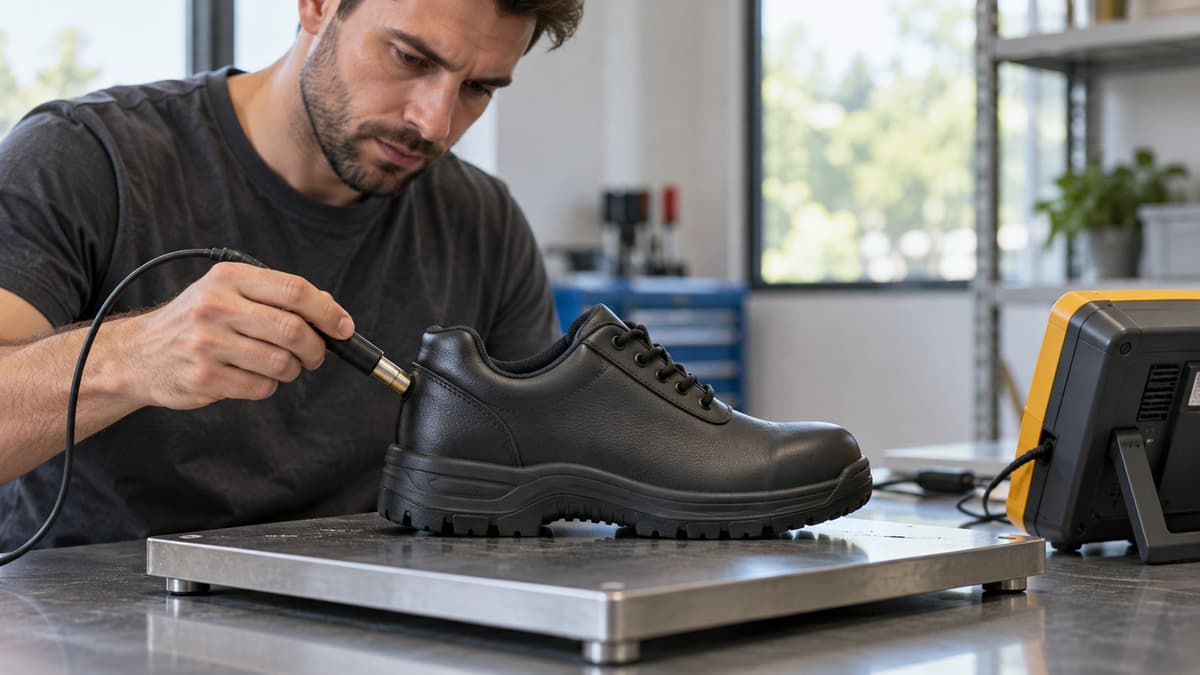
ESD safety shoes are an extra mark for static control, not a shock-proof boot. Antistatic, ESD and insulating footwear are three different claims.
On this page
The listing says antistatic, the area rules say ESD, and someone has told you the boots will also stop a shock from a live cable. Those are three different sentences. ESD safety shoes are an extra mark for electrostatic control where an assessment has asked for it. They are not the S1P or S3 package, and they are not insulating footwear.
In this Albatros set, three titles print ESD. Clifton Low's brand page uses the word and its amazon.co.uk title does not.
In short
ESD safety shoes control static where the assessment asks for that control, including an electrostatic protected area and some ignition risks. Antistatic is a different mark, and insulating footwear is a different product aimed at live conductors. Three Albatros titles in this set print ESD. A failed site test takes the pair out of the area. A home multimeter reading is not that test.
Three electrical claims
Keep the words apart before you look at a price. Anbu's guide to EN ISO 20345 treats the A mark as antistatic, and it says that mark is not protection from live conductors. Antistatic footwear lets charge dissipate so it does not sit on you and then jump. It is a claim about charge, not insulation from the mains.
ESD is the next word, and shop filters treat it as a synonym. The Safety Plus UK guide used here points ESD footwear at EN 61340-5-1 for an electrostatic protected area, and at DSEAR assessments where a spark is an ignition risk. That is a use, with a standard named for the area, not a class that replaces S1P or S3. A shoe can be S1P and ESD, or S3 and ESD. S1P or S3 on a UK site is the package. This page is the extra mark.
Insulating footwear pulls the other way. Anbu cites EN 50321-1. An insulating boot is meant to protect you from live electricity. An antistatic or ESD sole controls charge by giving it a path. HSE's feet-and-legs guidance lists electrostatic build-up, conductive footwear and insulating footwear as separate reasons to choose a shoe. HSE's product-supply page adds the limit: use PPE only as the instructions say. A bench boot does not become a live-work boot because the sole feels special, and a live-work boot is not acceptable in an area that forbids uncontrolled charge.
Where an assessment asks for ESD
The brand does not enrol your building. The assessment does. Safety shoes for electronics belong where a discharge can damage components, which is why EN 61340-5-1 and an electrostatic protected area appear in the Safety Plus guide. A clean room uses them when that room's rules say so. A flammable atmosphere uses the ignition side, under DSEAR, when a spark could start a fire or an explosion. If the assessment names none of that, ESD is a word you do not need to pay for.
An ordinary warehouse is the case that gets over-bought. Concrete, racking and a forklift do not create an electrostatic protected area. Safety shoes for warehouse floors is where slip and class codes belong. If the assessment says S1P and never says ESD, an ESD tick is optional shopping, not a duty. If it says ESD and the dock is wet enough for S3, you need both marks.
Who decides is the site. A title that prints ESD is evidence of a claim, not permission to enter. Ask for the line in the assessment before you filter by the badge. HSE's PPE overview still treats footwear as the last resort after other controls. Humidity, bench grounding and how the area is run can matter more than the shoe.
What an Albatros title actually prints
Three titles in this comparison print ESD. Ultratrail Olive CTX Mid, B07B8G221J, prints S3 and ESD at £61.72, rated 4.2 from 167 ratings. A brand collection page says S7S ESD. The listing you pay for says S3 ESD. The ESD word is on both sources. The class letter is not.
Ultimate Impulse Olive Low, B07MVDYBKH, prints S1P and ESD at £51.52, rated 4.0 from 60 ratings. Reviews in that file talk about heel rub and blisters, and they are marked Italy and Germany, with none marked United Kingdom. The title states neither a slip mark nor a toe material. ESD on the title does not tell you the sole will suit a smooth indoor floor.
The £31.25 shoe, B09QCT342M, prints S1P, ESD, HRO and SRC, plus a fibreglass and metal-free claim. It shows 2.4 from two ratings and no review text. That is a weak sample if you are about to walk it into a controlled area on star rating alone.
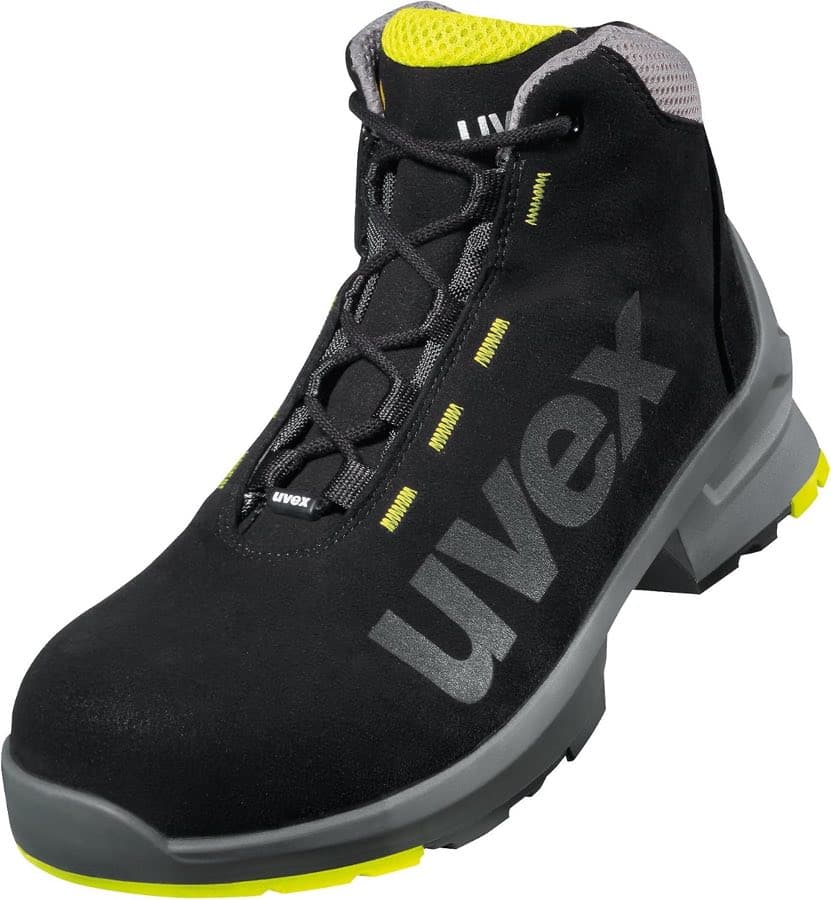
Clifton Low, B08XN4CB9Y, at £55.14, prints S3 SRC, fibreglass and metal-free, and does not print ESD. The current brand page says ESD. You cannot tell a gate that the amazon offer is ESD because another page about the name Clifton uses the word. Clifton Mid, Aer55 and Ultratrail Low omit it too. The Albatros comparison keeps the blank cells. Uvex safety shoes is a different brand's titles. The Uvex 1 X-tended listing, B00G91GMQU, prints S2, SRC and ESD at about £111.68, rated 4.6 from 1,467 reviews. Count the word on the title you pay for.
A failed test takes the pair out
Looking at the upper tells you nothing about whether the sole still does the electrical job. Safety Plus describes a site procedure. The useful part here is the outcome, not a meter setting. A failed test means the pair does not go back into the area until it passes or it is replaced. This page will not give an ohm range, a test voltage or a probe layout.
The same guide's six-to-twelve-month reassessment is a rule of thumb for that test, not a statute and not a life for ordinary safety shoes. A pair can fail earlier if the sole is contaminated. Arco names an antistatic sole permanently fouled with paint as a retire case. Mud you can brush out is maintenance, covered in how to look after safety shoes. Paint that has become the surface of the sole takes the pair out of the ESD rotation even if the upper looks new.
A home multimeter does not stand in for the site test. A kitchen-floor number can be wrong for the method, the humidity and the contact, and it has no authority at the door. If you cannot run the site's check, leave the shoes out of the area. Self-certifying because the title once said ESD is how a failed sole stays in service.
HSE still expects required PPE to be provided and replaced by the employer. An ESD pair the assessment demands is that PPE. A second pair you want because you prefer the colour is the spare. Who pays for safety boots is the duty. It does not teach the electrical test.
Shock and static are different fears
The fear people bring to the filter is a shock from the mains, or a jolt from a cable on a wet site. Insulating footwear, under the standard Anbu cites, is the product aimed at live conductors. ESD and antistatic footwear are aimed at charge. If the hazard is a live circuit, use the footwear the electrical assessment names. If the hazard is a damaged circuit board or a flammable vapour, use the ESD requirement. Do not upgrade to an insulating boot because insulation sounds safer. Insulation can be the wrong path for charge the area needs to dissipate.
Metal in the toe is a separate column. This set does not print a steel cap and ESD together on one title you can point at. Clifton Low claims a fibreglass toe and does not claim ESD on the amazon title. The £31.25 shoe claims fibreglass and does claim ESD. Steel toe or composite toe does not decide the electrical mark. Read both.
These points come from Anbu's class guide, the Safety Plus ESD guide, HSE's feet-and-legs page and product-supply page, and the amazon.co.uk titles named above. Products Compared did not measure resistance and did not certify an area. A qualifying purchase through a comparison link can earn us a commission at no extra cost to you. The commission does not turn a missing ESD word into a pass.
Common questions
What are ESD safety shoes for?
Is antistatic the same as ESD?
Will ESD boots stop me getting a shock?
Do I need them in an ordinary warehouse?
Who decides, the shoe brand or the site?
How do I know they still work?
Which Albatros listings say ESD on the title?
Can I test them with a multimeter at home and call it done?

Products Compared publishes British-English buying guides based on amazon.co.uk listings and public UK sources. We do not run a lab and we do not invent test scores.
Related articles
S1P or S3 on a UK site
ESD can sit on either package. S3 still means a water-resistant upper and a cleated sole.

Safety shoes for warehouse floors
An ordinary warehouse does not become an ESD area because the floor is concrete.

Steel toe or composite toe
The toe test is separate from ESD. A metal-free claim is not an electrical test.