S1P or S3 safety boots: which package the site needs
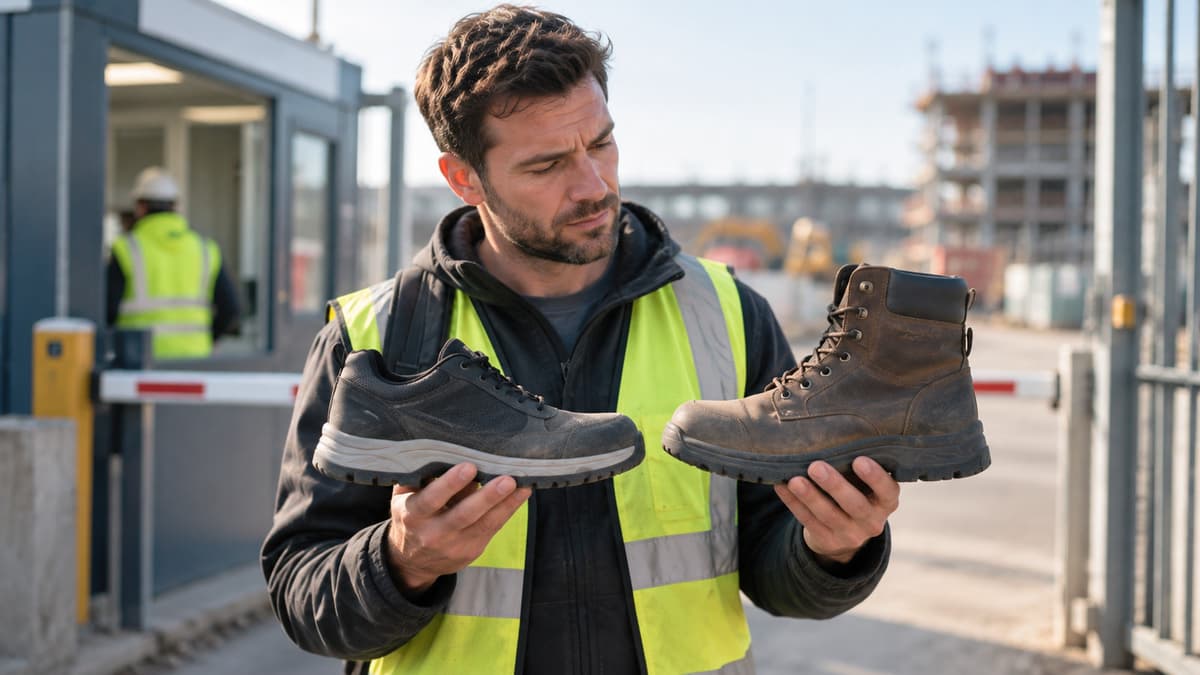
S1P or S3 safety boots differ by a water-resistant upper and a cleated outsole. S3 is a package, and a UK site rule may already have chosen the letter.
On this page
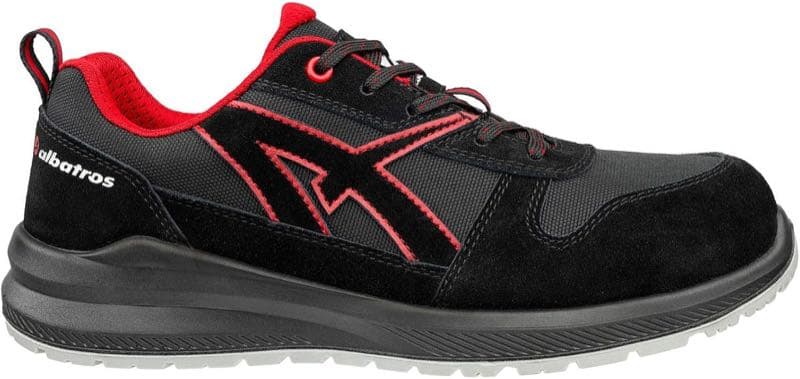
The induction email says S3, and the shoe you already own is a light S1P trainer that got you through a dry warehouse all winter. At the gate, those are different instructions. S1P or S3 safety boots is a choice between two packages. It is not a ladder where S3 means more safe and S1P means a cheaper version of the same thing.
S1P is the dry Class I package plus a puncture-resistant insert. S3 adds a water-resistant upper and a cleated outsole. If the site rule has already named one of those packages, the basket does not get a vote. The rows below show which Albatros titles in this comparison actually print each code.
In short
S1P or S3 safety boots: S1P is the dry package plus a puncture insert, and S3 adds a water-resistant upper and a cleated outsole. S3 is not a waterproof boot, and SRC is not included just because the title says S3. In this Albatros set, three titles print S3, two print S1P, and two print no class at all.
Two packages, and what S3 adds
Start with the hazard, then the letters. The Health and Safety Executive’s page on using the right type of PPE lists foot hazards. It does not publish an S-code league table, and it does not say S3 is always the proper rating. Falling objects, puncture, slips, wet ground and static are different reasons to specify footwear.
Anbu’s class guide is the reading used here. Both packages sit inside safety footwear, so the toe test is the same order of test: 200 joules of impact and 15 kN of compression, on the complete shoe, from the Wise Safety UK marking sheet for EN ISO 20345. You do not buy a stronger toe by moving from S1P to S3. You buy the extra upper and sole claims.
Puncture letters are separate. Some shop pages treat S as a metal insert and L as non-metal. Anbu’s reading is different: P is the metallic puncture test, and PL and PS are non-metallic tests. Those letters describe the midsole insert, not whether the toe cap is steel or composite. Clifton Mid and the Ultratrail mid boot print S3 and still leave the toe material blank.
Older tables put oil resistance inside every S1. On the 2022 edition, fuel oil is the mark FO, not an automatic part of the letter S. None of the seven Albatros titles prints FO. The Albatros S1P or S3 subpage lists the rows. This article is the decision.
A water-resistant upper is not a waterproof boot
Water resistant safety shoes, in the S3 package, claim an upper that resists water penetration and absorption. Anbu separates that WPA wording from WR, the waterproof claim. A wet pavement is the S3 situation. Standing in a flooded trench, or needing a membrane for a full shift of rain, is the WR conversation.
Anbu describes S7 as the S3 family plus WR. The Ultratrail Olive CTX Mid, ASIN B07B8G221J, prints S3 and ESD on the amazon.co.uk title, at £61.72, rated 4.2 from 167 ratings, with EU 46 in the title. A brand collection page says S7S ESD. Buying B07B8G221J does not upgrade the pair to S7. If the site asks for S7 or WR, this listing has not printed it.
Clifton Low, B08XN4CB9Y, is the top pick when the rule asks for an S3 title near £55.14. The amazon title prints S3 SRC. It does not print L or ESD. The brand page says S3L ESD, the non-metallic puncture reading in Anbu’s PL/PS family. Check the tongue on the shoe that arrives. Safety Plus also lists Clifton Low as S3 SRC, at £52, matching the amazon class line rather than the brand page.
S3 safety boots UK searches often add the word waterproof in the next sentence. Use water-resistant for the S3 upper, and use waterproof only when WR or S7 is actually printed. An all-rubber wellington is a different class of boot, and none of these seven titles is that product.
Cleats, indoor floors, and a trial
The cleated outsole is the other half of what S3 adds. HSE’s slip-resistant footwear page wants a more open tread outdoors, so mud and grit can leave the sole, and a closer tread for indoor fluids. A cleat that is right on broken ground can be the wrong pattern on a smooth warehouse floor with oil or stretch-wrap film.
S1P safety trainers leave that cleat out. On a dry internal floor they can be the specified shoe. A dry aisle and a wet dock door are often the same shift. If the written rule says S3 because of the dock, the trainer does not become acceptable for the dry hours only, unless the site has said so.
SRC does not come free with S3. Clifton Low and Clifton Mid print SRC beside S3. The Ultratrail mid boot prints S3 without SRC. The £31.25 shoe, B09QCT342M, prints SRC, and Ultimate Impulse Olive Low, B07MVDYBKH, prints S1P and ESD without a slip mark. That Ultimate Impulse row is the best value when you need S1P on the title near £50.
A slip code is a laboratory claim. HSE still wants a trial on your floor. If the sole packs solid with mud, change the sole design.
When the site rule has already chosen
HSE’s construction FAQ expects protective footwear for construction work, and it says the employer provides it. The marking sentence on that page is older than the 2024 guidance, so this article does not take its letter codes from there. The induction is where the package is named.
If that induction says S3, S1P does not satisfy it. The water-resistant upper and the cleated outsole are what a site is often trying to specify. A clean S1P trainer that passed a warehouse assessment last year is a different workplace. Gate staff match the letter.
If the induction says S1P, an S3 boot is not automatically accepted. The cleated sole can fail the indoor slip trial, and the ankle cut may be wrong for the task. Do not assume a higher-looking code includes the lower one.
Required footwear is free of charge. Section 9 of the Health and Safety at Work etc. Act 1974 bans charging for that PPE. A second pair you choose is your spend, and the site can still refuse a wrong code. Who pays for safety boots is the longer account. Haix and Uvex are other brand sets. Read the code on that title, and do not copy an Albatros S3 row across as if the letter transferred with the price.
Which Albatros titles print the code
Three titles print S3. Clifton Low, B08XN4CB9Y, is £55.14, S3 SRC, fibreglass and metal-free on the title, 4.4 from 130 ratings. Clifton Mid, B08XQC4ZRY, is £68.60, S3 SRC, EU 36 in the title, 3.9 from 37 ratings, toe material unstated. Ultratrail Olive CTX Mid, B07B8G221J, is £61.72, S3 ESD, EU 46 in the title, 4.2 from 167 ratings, toe material unstated. The mid boot’s brand page says S7S. The listing says S3.
Two titles print S1P. Ultimate Impulse Olive Low is £51.52, S1P ESD, size 44 in the title, 4.0 from 60 ratings. The £31.25 shoe, B09QCT342M, prints S1P, ESD, HRO and SRC, with a fibreglass and metal-free claim, and 2.4 from two ratings with no review text. A long code on a two-rating page is a weak sample.
Two titles print nothing you can use as a class. Aer55 Impulse Low, B083WKC82N, is £80.32, 4.4 from 96 ratings. Ultratrail Low, B07B8MGJJN, is £77.37, 4.3 from 488 ratings. The larger star count does not invent an S3. If the site needs a letter, these two titles have not given you one.
ESD, HRO and the toe material are extra marks. Three titles print ESD. Two claim a fibreglass toe. The rest leave the toe blank. ESD safety shoes explains why an antistatic mark is a different claim. The Albatros comparison is the table.
The readings come from Anbu’s guide to EN ISO 20345, HSE’s PPE and slip pages, and these amazon.co.uk titles. Products Compared did not certify any shoe and did not run a slip test. A qualifying purchase can earn a commission at no extra cost to you. If the induction code and the title differ, the induction wins.
Common questions
What does S3 add that S1P does not?
Is S3 waterproof?
Can warehouse staff wear S1P trainers?
Does a site induction that says S3 allow S1P?
Is S7 just a better S3?
Does SRC come free with S3?
Which Albatros shoes in the comparison state the class?
Why do some explainers still put oil resistance inside S1?

Products Compared publishes British-English buying guides based on amazon.co.uk listings and public UK sources. We do not run a lab and we do not invent test scores.
Related articles

Safety shoes cost UK: what these listings charge
Seven Albatros listings run from £31.25 to £80.32. The bands are this set only.
Safety shoes for warehouse work: start with the floor
Slip control starts with the floor. S1P is the wrong package if the assessment says S3.
ESD safety shoes: antistatic is a different claim
ESD is an extra mark on S1P or S3. Antistatic and insulating footwear are different claims.