Safety shoes for warehouse work: start with the floor
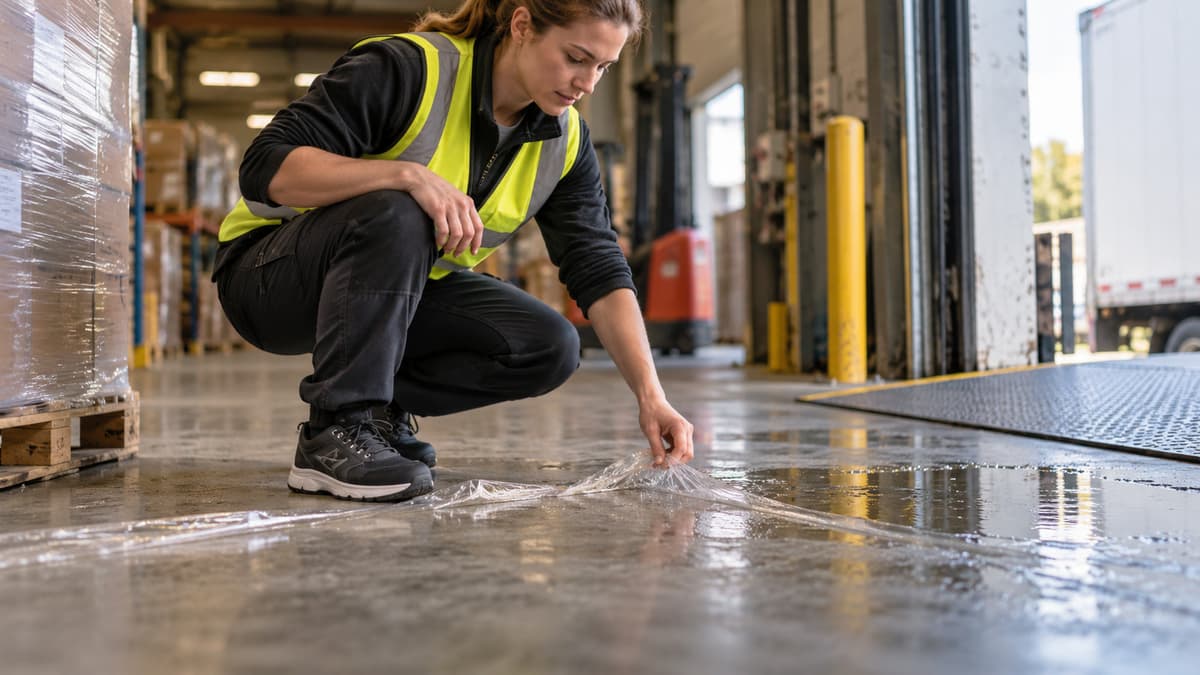
Safety shoes for warehouse work follow the floor, not a trainer shape. S1P can suit a dry aisle. A wet dock, or a written S3 rule, needs another package.
On this page
The aisle looks dry at the start of the shift, and by eleven there is a film of stretch wrap and a puddle at the dock leveler. Safety shoes for warehouse work are chosen after that floor, not from a trainer shape that feels light. HSE’s warehousing guidance treats footwear as help against slips only once you have tried to remove the cause. The shoe is the last resort.
S1P can be the right package on a dry internal floor. S3 is a different package, with a water-resistant upper and a cleated sole, and a cleat can be the wrong pattern indoors. Nothing in this set is a best warehouse shoe by star rating.
In short
Deal with the spill first. Then match the shoe to the assessment: S1P for a dry indoor package, S3 when water and a cleated sole are what the rule names. Trial the tread on the real floor. Concrete comfort in these reviews is heel rub and the odd kind comment, mostly not from the UK. If the boots are required, the employer supplies them.
Fix the floor before you buy the sole
HSE’s warehousing leaflet INDG412 says the right footwear can help with slips, and it puts that help after you have tried to remove the cause. A leaking drum, a dock left open in rain, stretch wrap dragged underfoot, and oil that nobody has granulated are the cause. A new sole on an unchanged floor moves the same slip from one pair to the next.
Slip resistant safety shoes for indoor fluids want a closer tread, on HSE’s procurement page. Outdoors, and where loose solids have to leave the sole, a more open tread is the pattern they describe. A warehouse often has both in one shift: a smooth aisle and a yard. One sole will be better on one of those surfaces and worse on the other. Trial it on the real floor, in the conditions you actually get.
Clogged tread undoes the trial. Brush the sole when you come in from the yard. A pattern that packs solid every day needs a different sole design. Smooth rubber means you replace the pair. Those endings sit in how to look after safety shoes and when to replace safety shoes.
Gloves and a vest do not fix the floor either. Work gloves and a work vest are separate PPE when the assessment names them. They do not add grip to a sole.
S1P, S3, and a dock that is sometimes wet
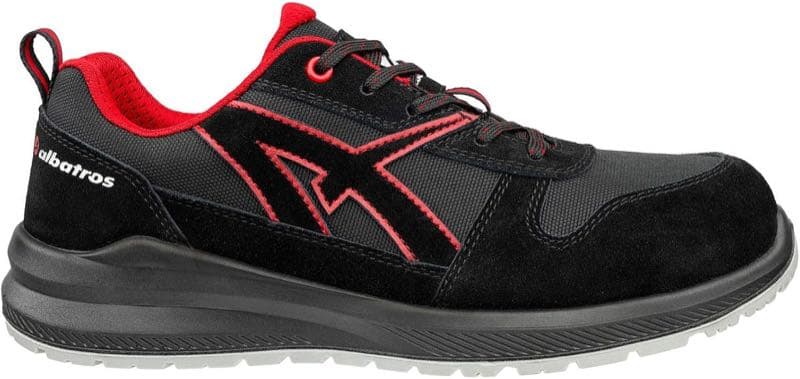
S1P warehouse boots are the dry Class I package plus a puncture insert, without the water-resistant upper or the cleated outsole. A light trainer can match a dry building. The same trainer fails an induction that says S3. Rain at the leveler wets the upper and the floor. S3 adds that upper and the cleat. The cleat can be the open outdoor pattern HSE treats as a poor match for indoor fluids.
If the assessment says S1P, wear S1P and keep the spill controls in place. If it says S3 because you work the dock, an S1P trainer does not cover the dry hours only, unless the site has written that split down. S1P or S3 on a UK site sets out the letters before you filter a shop by warehouse trainer.
ESD belongs in the choice only when the assessment names static. An electronics cage can be an electrostatic protected area. The rest of the building does not inherit the mark. When you need ESD safety shoes keeps that boundary. Ultimate Impulse prints S1P and ESD on the title. That claim does not put the mark on every picker.
A puncture insert matters if the hazard is a nail, a loose fixing, or debris on the floor, which is why S1P and S3 include it and a basic toe shoe without P may not. If the assessment does not ask for puncture protection, do not add it as a slogan. If it does, a title that omits P has not met the line.
Concrete, cushioning, and heel rub
Concrete floor safety shoes are sold on the promise of a long stand. Reviews here that mention a warehouse or a hard industrial floor sit on two models, and they give no cushion score. Aer55 Impulse Low comments describe a light, trainer-like shoe, plus sweat after a long factory shift, laces that untie, and a heel that rubbed. One review, marked France, describes a sole that came unstuck after two days. That is one report.
Ultimate Impulse comments are mostly about the heel: rub, blisters, a return after a single day, and Achilles pain, plus one note that likes the cushioning on a hard floor once the shoe is worn. The file marks them Italy and Germany. None is marked United Kingdom. A hard floor shows up a poor heel. These comments do not show that this last will suit your foot on a British warehouse slab.
Fit is the part you control before the first week. Measure both feet later in the day, in work socks, and refuse a longer size as a way to buy width or softness. Toes that sit behind the cap are unprotected, however cushioned the heel feels. The fitting guide is that method. A blister on day one is a return, not a break-in these listings promise.
HSE’s PPE overview treats comfort as part of whether people wear the protection. A shoe that comes off because the heel is raw is not PPE for the rest of the shift. Ask for another last if the issued pair cannot be worn. That request is about suitability. It is not a request for the softest trainer in the catalogue regardless of the class code.
What a slip mark does not promise
SRC on a title is a slip claim about specified test surfaces. It is printed on Clifton Low, Clifton Mid, and the £31.25 shoe in this set. It is absent from Ultimate Impulse, the Ultratrail mid boot, Aer55, and Ultratrail Low. A dearer shoe can lack the letters. A cheaper shoe can carry them. Neither fact tells you how the sole behaves on your oil.
HSE’s procurement advice is still a trial, because the laboratory surface is not your dock. Do the trial when the floor is in its worst normal state. Worn tread and clogged tread change the performance the mark described when the shoe was new.
Logistics safety footwear also gets asked to be quiet, light, and smart enough for a customer-facing desk. Those are preferences. They sit behind the class and the trial. A black trainer that looks like leisure wear still has to show the letter the induction uses, on the title and on the tongue of the pair that arrives.
Examples from the listings, and who pays
Ultimate Impulse Olive Low, B07MVDYBKH, is £51.52 with S1P and ESD, size 44, and 4.0 from 60 ratings. The written sample is heel rub. Aer55 Impulse Low, B083WKC82N, is £80.32 with 4.4 from 96 ratings, and the title states no class, no toe, and no slip mark. Warehouse comments leave that blank. Clifton Low, B08XN4CB9Y, is £55.14 with S3 SRC, a fibreglass toe claimed, and 4.4 from 130 ratings. It is the S3 example in this set.
The Albatros comparison holds the rest of the grid, including two titles near £80 that print no class. Clifton Low is the top pick there when you need S3 and SRC on the title. The issued class still has to match the assessment. Who pays for safety boots covers why a required pair, and the replacement after normal wear, stays off your wages.
These points come from HSE’s INDG412, HSE’s slip-resistant footwear page, Anbu’s account of what S1P does not add, and review comments in the Albatros files. Products Compared did not run a slip test on a warehouse floor and did not import an accident statistic. A qualifying purchase through a comparison link can earn a commission at no extra cost to you.
Common questions
Do warehouse staff need safety shoes?
Is S1P enough in a dry warehouse?
What if the floor is oily or wet from rain at the dock?
Are trainer-style safety shoes acceptable?
How do I stop sore feet on concrete?
Will SRC in the title stop slips on my floor?
Which Albatros listings mention a warehouse-type shoe?
Should the employer supply them?

Products Compared publishes British-English buying guides based on amazon.co.uk listings and public UK sources. We do not run a lab and we do not invent test scores.
Related articles
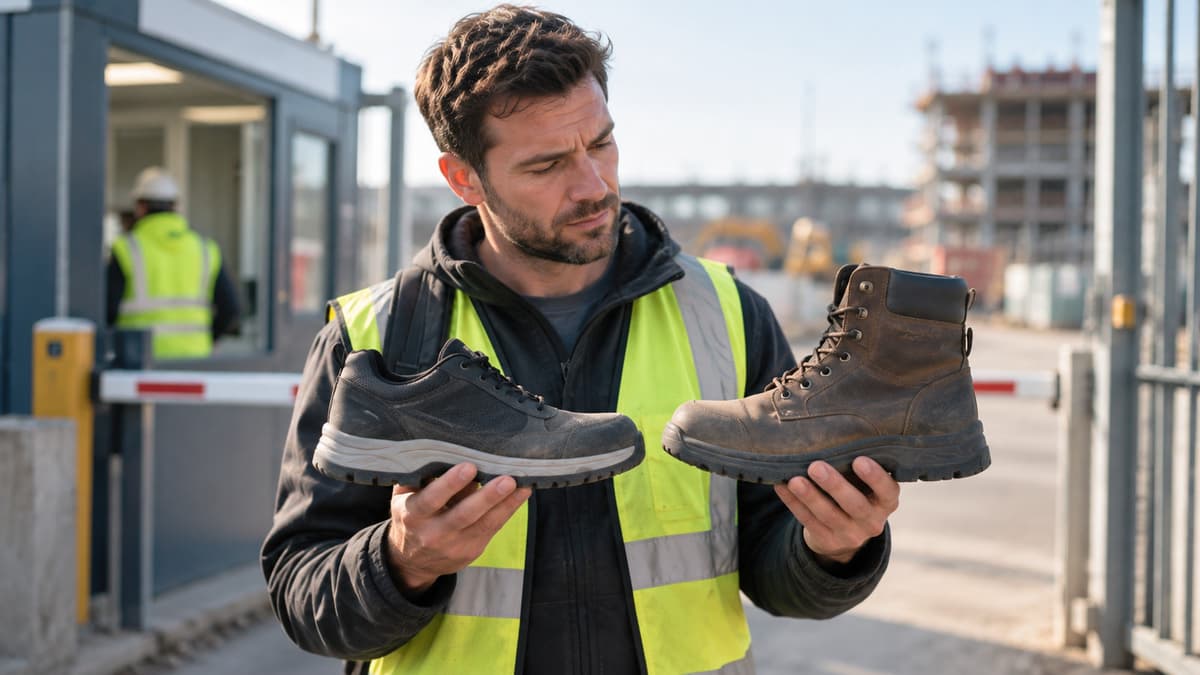
S1P or S3 on a UK site
S1P is the dry package plus a puncture insert. S3 adds water resistance and a cleat.
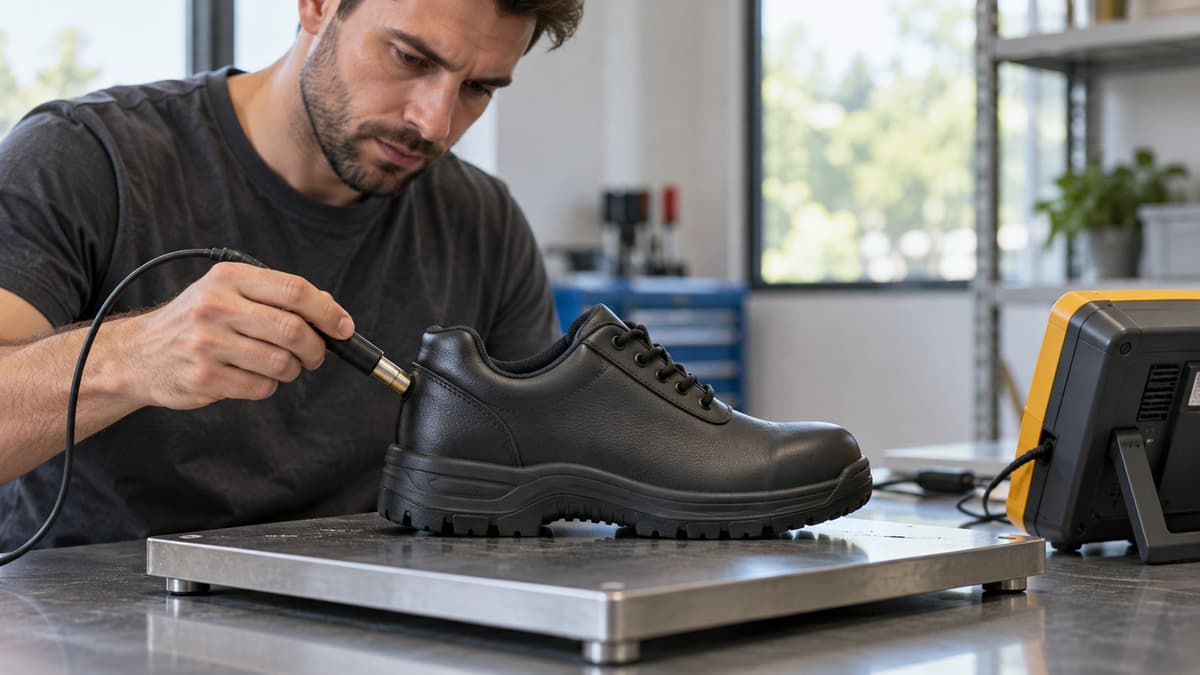
When you need ESD safety shoes
ESD is for a named static hazard. A normal warehouse aisle does not add that mark by itself.

How to fit safety footwear
Heel rub on concrete is a fit problem. Measure both feet and do not buy length to get width.