How to fit safety boots: measure both feet first

How to fit safety boots: measure both feet in centimetres, then use the EU size. Leave about 1 cm at the longest toe, and do not buy length to fake width.
On this page
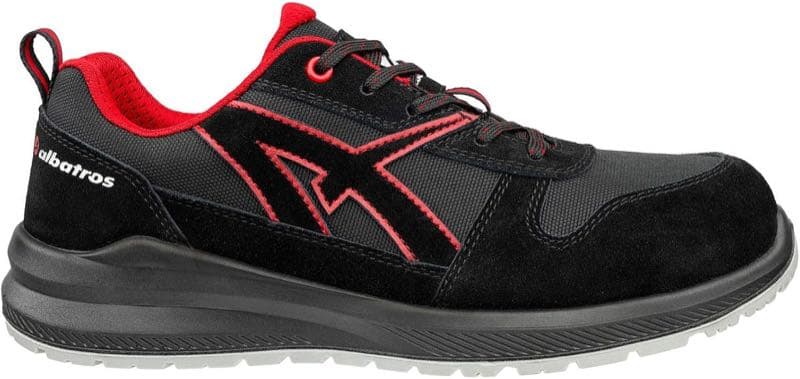
The parcel is EU 43 because your trainers say UK 9, and the toe cap meets your toes on the first walk. How to fit safety boots starts before that order. Measure both feet in centimetres, later in the day, in the socks you will work in, and fit the longer foot. A trainer size is a hint, not the measurement.
Leave about 1 cm in front of the longest toe, from TUC guidance for footwear in general: toes free, heel snug, and no contact with the cap. A longer size bought for width moves the foot back from that cap.
In short
Measure both feet in centimetres at the end of the day, in work socks, and fit the longer one. On the Albatros chart, EU 41 is UK 7, EU 43 is UK 9, and EU 44 is UK 10. Leave about 1 cm at the longest toe, and do not buy extra length to fake width.
Measure both feet later in the day
Feet are larger after you have been on them, so a morning trace is the short version of the same foot. Measure at the end of the day in the socks you will wear. The work socks comparison matches thickness. A thin trainer sock and a cushioned work sock change the centimetres and the heel.
- Stand on a piece of paper with your heel against a flat wall, wearing the work socks.
- Mark the longest toe on each foot, then measure heel to mark in centimetres.
- Write down both numbers and keep the longer foot as the size you order.
- Repeat once. A single hurried mark is how a 26 cm foot becomes a 27 cm order.
The TUC’s Working Feet and Footwear leaflet asks for both feet, about 1 cm at the longest toe, toes that can move, a snug heel, and no contact with the cap. That 1 cm is general footwear guidance, not an Albatros tolerance. HSE’s PPE overview treats comfort as part of whether people wear the protection. A shoe that comes off at the first break is not doing the job.
Use centimetres, then the EU size
The Albatros size chart is the conversion for this brand. EU 41 is UK 7 (25.7–26.2 cm). EU 43 is UK 9 (27.0–27.5 cm). EU 44 is UK 10 (27.6–28.2 cm). A Safety Plus run for Clifton Low also lists UK 7 at EU 41. Clifton Mid’s listing prints EU 36, and the £68.60 sticker belongs to that offer until you confirm another size.
These three rows line up as the EU number minus 34, but the chart skips a whole UK size at EU 40, so that formula fails on a row you did not look up. A foot of 26.5 cm sits between the EU 41 band (ends at 26.2 cm) and the EU 43 band (starts at 27.0 cm). EU 42 is not quoted here. Open the full chart on the Albatros fit and size page.
A UK 9 trainer suggests EU 43 only when the longer foot is 27.0–27.5 cm. Uvex and Haix use their own charts. Do not paste an Albatros EU number onto another brand.
Ultimate Impulse Olive Low prints size 44 at £51.52. The price you see may be that size only. Check the size menu before you treat a sticker as the price of your EU 43.
Room at the toes, and why longer is not wider
The cap is a rigid shell. Toes need to sit under it while you walk, with about 1 cm at the longest toe and room to move. The heel should sit snug so the foot does not slide into the cap on a slope or a stair. If you feel the cap, the shoe is too short or the foot is too far forward. These listings do not describe a break-in that lengthens the shoe.
Width is why people go up a size. The ball of the foot feels pinched, a longer shoe feels wider, and the order goes up. The Uvex fit paper, a competitor source, says an over-long safety shoe leaves more of the foot outside the cap and changes how the foot sits over the sole. That is the mechanism, not a measurement of any Albatros last, and not a reason to avoid Albatros. Refuse the longer size as a width fix.
The Albatros chart here is length only. The seven titles do not print a width fitting. If the shoe is wide enough only in a longer size, it is the wrong last. Who pays for safety boots covers the duty to provide PPE you can keep on. It does not add a wide-fit code these titles never print.
Fit the longer foot, and use a thicker sock on the shorter side only while the heel stays snug and the toes stay off the cap. If the shorter foot slides into the cap, send the pair back. This set has no split-size offer.
Heel rub, and when to send them back
A blister, broken skin, or pain at the Achilles tendon is a return. Ultimate Impulse reviews here centre on heel rub: a return after a single day, a case of Achilles pain, and a comment that likes the cushioning on a hard floor once the shoe is worn. Those reviews are marked Italy and Germany, and none is marked United Kingdom.
Clifton Low reviews split on length. Several say the shoe runs large, including a return at least one size too big. Others say a usual size fitted. Most are marked as written in Germany. That split is why there is no “they all run large” rule, and no “always keep your trainer size” rule, even inside one model.
Send them back if you feel the toe cap, if you ignored the longer foot, if a size-up for width lets the heel slip, or if the skin has broken. PPE protects while it is worn. A pair you cannot keep on is the wrong pair, even when the class code matches the site.
Check the return window before you scuff the soles outdoors. A week on site can fall outside a change-of-mind return even when the fit was wrong on hour one. Try them indoors, in work socks, on both feet, and decide while the window is still open.
What the reviews say, model by model
Clifton Mid, B08XQC4ZRY, is the clearest “too big” cluster: 37 ratings at 3.9, and more than one reviewer says to go one or two sizes down. The only UK-marked line says the boots are very good and gives no size. The title prints EU 36, so another size from the menu leaves that offer until you confirm the last is the same. Do not apply that note to Clifton Low or to any other brand.
Clifton Low, B08XN4CB9Y, at £55.14, is 4.4 from 130 ratings. Its size comments point both ways, mostly from Germany. Ultratrail Low, B07B8MGJJN, at £77.37, is 4.3 from 488 ratings, and its comments also point both ways. The only UK-marked review in that file is negative. A large sample can still disagree with itself.
Aer55 Impulse Low has one self-contradictory size comment. It is not a reason to order up or down. Ultimate Impulse is the heel-rub file, at £51.52 with size 44 on the title. The £31.25 shoe has two ratings and no review text, so it says nothing about fit.
The Albatros comparison holds the prices and the class codes. The fit page holds the chart and the review split. Use centimetres, then the chart, then both shoes on your feet.
These points come from the Albatros size chart, the TUC footwear leaflet, HSE’s PPE overview, and the Uvex fit paper for the over-length mechanism. Review comments are from the Albatros listing files, and most are not marked United Kingdom. Products Compared did not measure a last and did not fit a panel of feet. A qualifying purchase through a comparison link can earn us a commission at no extra cost to you.
Common questions
How do I measure for safety boots?
What UK size is EU 43?
Should there be a gap in front of the toe cap?
My feet are different sizes. Which one do I fit?
The boot is wide enough only if I go up a size. What then?
Safety shoes rubbed my heel on day one. Too small?
Do I fit them in the morning or after work?
Can I use my trainer size?

Products Compared publishes British-English buying guides based on amazon.co.uk listings and public UK sources. We do not run a lab and we do not invent test scores.
Related articles

How to clean safety boots: tread, drying, and limits
Clean the tread for grip, dry the upper slowly, and replace a sole that has already split.

When to replace safety shoes: faults, not a month count
There is no fixed month count. A split sole, a lost eyelet, or a blow to the toe retires the pair.

Steel toe or composite toe: same test, different clues
Both can pass the same toe test. You still need your toes under the cap, whatever it is made of.