When to replace safety shoes: faults, not a month count

When to replace safety shoes depends on the fault you can see or a blow the cap may hide. There is no month count, and the employer replaces required PPE.
On this page
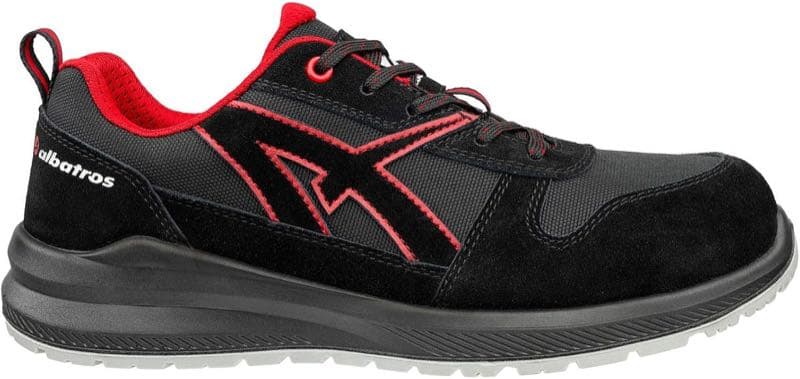
The sole has started to peel at the ball of the foot, the eyelet at the top has torn out, and the pair is eight months old. Someone on the job will tell you safety shoes last a year. Someone else will say six months. When to replace safety shoes, on the sources used here, is the fault in front of you. There is no fixed number of months.
A steel cap that stays dented is an obvious stop. A composite cap can be finished and still look smooth. Reviews in this Albatros set include failures in days and comments about tread after about two years. Those reviews are not a lifespan you can copy onto your pair.
In short
Replace safety shoes for a split sole, a tread worn smooth, a fastening that will not hold, exposed protective parts, or a blow to the toe. There is no universal month count. A composite cap may hide the damage. If the boots are required PPE, the employer pays for the replacement. A scuff on the upper, with no impact behind it, is wear.
There is no fixed number of months
How long do safety boots last? Health and Safety International’s piece on life-extending care says there is no universal replacement interval. Steel shows a dent. Composite may not. A date on a forum, or a habit of replacing every winter, is not a rule from the Health and Safety Executive and not a date printed on these amazon.co.uk listings.
The reviews in this comparison show why a single number would be false. Clifton Low comments include an insole that failed after about a month and a pair that lasted about three months on hard work. Clifton Mid comments include a toe worn after two wears and seams that failed at about three months. An Ultratrail mid comment describes a pair retired after about five months in agriculture, and another a sole that came away. An Aer55 review, marked France, describes a sole unstuck after two days. Elsewhere, tread is still discussed after about two years. An average of those sentences would invent a life the buyers did not share.
Most of those reviews are not marked United Kingdom. A seam noted at three months in a review marked Germany is not your site. Time alone does not sort a sound pair from a finished one. HSE’s COSHH PPE page asks how you know when equipment needs replacing. The answer sits with the supplier’s instructions and the task. Failed PPE offers no protection.
One interval does not belong on this page. Retail ESD guidance sometimes says reassess at six to twelve months. That line is about a failed electrical test on ESD footwear, not about general boot life. It stays on the ESD article. Do not import it as a rule to replace every safety shoe twice a year.
Soles, treads, and eyelets you can see
A safety boot sole coming away is the clearest retire. Water and oil use the gap at the flex, the toe, or the heel, and a nail can enter at the split without defeating the insert. Those reviews are individual reports, from two days to a few months. Your pair is done when you can see the part. Do not glue it and call it a repair. The care guide is for tread you can still clean. A separated sole has left that list.
Worn safety boot tread is the slip version of the same decision. HSE’s footwear page for slips says clogged or worn tread changes slip performance. Mud packed into a cleat is a cleaning job. If the pattern packs solid every shift, HSE’s advice is to change the sole design. Rubber worn to a smooth pad is not mud. The upper can look sound while the marked sole is gone. Retire it for the floor you walk, including a dry warehouse aisle with a film of stretch wrap or oil.
An eyelet that has pulled out is a fastening failure. Ultratrail Low reviews mention eyelets that press or fail. A loose heel lets the foot slide forward into the cap. A bent eyelet that still holds the lace is a watch item. A hole where the eyelet was is a stop. Tightening the lace through the remaining eyes loads the next one.
Seams that have opened, of the kind Clifton Mid reviewers describe at about three months, are the same family. An open seam at the flex or the toe lets weather in where the upper was meant to shed it. If you can see lining, or the edge of a protective insert, stop. Arco’s risks page treats exposed protective parts as the end of the shoe.
A blow to the toe, especially composite
Composite toe after impact is the fault people talk themselves out of. The block hit the toe, the shell looks smooth, and the foot feels all right. Arco says replace after an incident, even when the damage is not obvious, and that a composite cap may not dent. A steel cap that stays dented is the same stop, with a clue you can see. You retire both.
The toe test those caps were built for, 200 joules and 15 kN on a finished shoe, is a certification test. It is not a check you repeat in the car park because the foot feels fine. Steel toe or composite toe explains the materials. If something heavy has landed on the toe, the pair leaves the rotation. A mark after a drum lands on the toe is an impact. Leather rough from screed, with no blow, is a scuff.
Exposed steel, or a midsole insert showing at a split, means stop even when you do not remember a blow. The protection is no longer covered.
Who replaces required PPE
HSE’s COSHH PPE page puts replacement with the employer, along with providing and paying. A deduction for a replacement after normal wear can reduce National Minimum Wage pay, which is the HMRC example in NMWM11120. Who pays for safety boots covers limb (b) workers and the difference between a worn-out pair and a spare you chose. This article does not rule on your payslip.
If you are choosing the next pair with your own money, the comparisons are catalogues, not the retire test. The Albatros comparison shows which titles print a class and which leave it blank. Uvex and Haix are other brands. Clifton Low, the top pick in that set, is listed at about £55.14 with 4.4 from 130 ratings and an S3 SRC title. That is a listed S3 shoe, not a rated life.
Take the failed pair, or a photo of the split, the tread, or the eyelet, when you ask for the replacement. If the employer says the pair should have lasted, the sources here still have no month count to support that sentence.
What a scuff is, and what it is not
A scuffed toe is often the upper, not the cap. A Clifton Low review mentions a toe that scuffed on screed. That is one person’s surface wear. Polish is not a pass after an impact. If the scuff has opened the upper so steel or the edge of a composite cap is visible, the shoe is finished. If the mark is only colour and nothing has hit the toe, keep the pair and watch the sole and the eyelets.
Antistatic soles permanently fouled with paint are a retire case Arco names. Wiping may not bring that sole back. Household treatments do not restore an electrical claim or an S3 water-resistant claim. Paint ground into the tread, if it is truly permanent, is a replacement. Mud that brushes out is a clean.
These points come from Arco’s risks page, HSE’s COSHH PPE page and slip footwear page, Health and Safety International’s note that there is no universal interval, and individual reviews in the Albatros listing files. Products Compared did not wear a pair to destruction and did not set a service life. A qualifying purchase through a comparison link can earn us a commission at no extra cost to you.
Common questions
How often should I replace safety shoes?
The sole is peeling. Are they done?
I dropped a block on a composite toe and it looks fine. Can I keep them?
The tread is smooth but the upper is sound. Is that enough to retire them?
An eyelet has pulled out. Can I keep lacing them?
Who pays for the replacement if they are work PPE?
Do safety shoes expire on a date?
Is a scuffed toe cap a fail?

Products Compared publishes British-English buying guides based on amazon.co.uk listings and public UK sources. We do not run a lab and we do not invent test scores.
Related articles

Who pays for safety boots in the UK
A worn-out required pair is the employer’s replacement, not a deduction from your wages.

Steel toe or composite toe
Steel can show a dent. A composite cap can be finished and still look smooth after a blow.

How to look after safety shoes
Clean clogged tread for grip. A sole that has already come unstuck is a replacement, not a wipe.