Independent comparisons. We may earn from shop links. More info

Plastic or fabric dust protection door

Updated: 16 October 2026

The hall outside the room you are sanding has no window. A plastic or fabric dust protection door is the choice between a clear sheet that keeps that daylight and an opaque screen. The listings in our [dust protection door comparison](/hub/occupational-safety-accessories/dust-protection-door) split that way. Clear plastic when you need the light and a surface tape can grip. Fabric when you want the screen and you will not rely on ordinary tape. Sizes and pack counts are the [dust protection door buying guide](/hub/occupational-safety-accessories/dust-protection-door/sub/dust-protection-door-buying-guide). The Products Compared editorial team compared these materials on 15 October 2026. A qualifying purchase through our links can earn a commission at no extra cost to you.

The hall outside the room you are sanding has no window. A plastic or fabric dust protection door is the choice between a clear sheet that keeps that daylight and an opaque screen.

Our top picks

On this page

Two materials in this set

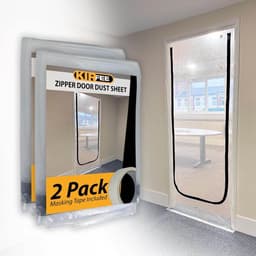
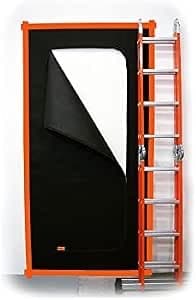
Four listings are clear plastic with a zip. brackit, at £9.95, has a pre-fitted U-shape zip and masking tape,. KIRFEE is two polythene sheets at £18.95, with masking tape, and the bullets say reusable. ROLLINGDOG is the clear sheet at £13.99 whose zip you attach yourself. Three listings are fabric, and they are not the same cloth. dustguard is polyester, 215 cm by 95 cm, £13.89, with 10 m of black duct tape. SafeCore's single door is orange polypropylene, 220 cm by 110 cm, £17.70. A review that calls the dustguard sheet nylon does not overwrite the technical table, which says polyester.

Light, and whether you can cut it

Choose clear plastic when the space outside the work room has to stay usable in daylight. brackit, KIRFEE, and ROLLINGDOG are the see-through rows. If privacy matters more than the landing window, a clear sheet is the wrong way round. Fabric blocks the view and the light. SafeCore reviews say the orange sheet is not see-through. On a landing with no other window, that panel is a blackout for as long as it stays up. Plastic can be trimmed to the frame.

Tape on a smooth sheet or on polypropylene

Ordinary tape is happier on a smooth plastic sheet than on SafeCore's polypropylene, and even then the roll in the box is often too weak. brackit and KIRFEE reviewers call the supplied masking tape weak or liable to pull the sheet or the paint when it comes off. Buyers who had ripped plastic then find that masking tape, duct tape, and gaffer tape will not grip SafeCore's cloth. The single-door title says with tape and the included-components line says No. dustguard is the fabric that behaves differently. It is polyester, and the box includes duct tape that reviewers say holds and that can lift paint. Do not treat polyester and polypropylene as one fabric door.

When plastic, when fabric

Take clear plastic when you need the light and a surface ordinary tape can grip, and accept that the sheet can tear. In this set that is brackit for one pre-fitted doorway, or KIRFEE when you want two clear sheets and tape together. Take fabric when you want a screen, you can lose the daylight, and you will not rely on ordinary tape. Neither material is the enclosure plan for a house you are living in. That plan is how to stop renovation dust spreading. Which named listing matches the job is the best dust protection door page. The hanging sequence is how to fit a dust protection door.

You do not get both

If you need daylight and a sheet that stays up on masking tape, plastic is the side to start. If you need the room beyond to stay visually shut, and you have a fixing that is not a roll of ordinary tape, fabric is the side to start. You do not get both advantages from one row here.

Common questions

When does clear plastic beat fabric?
Clear plastic wins when the hall or the stair has to keep its daylight, and when you will tape a smooth sheet. brackit, KIRFEE, and ROLLINGDOG are the see-through listings. You can see the opening while you trim the spare. The limit is strength and the tape in the box. Reviewers tear plastic and call the masking tape weak. brackit is not marked waterproof.
When does fabric beat plastic?
Fabric wins when you want the other rooms visually shut, and when plastic sheets have already ripped on you. SafeCore reviewers describe a tougher cloth than the plastic they had used. You give up the view and the light. You also take the tape problem on polypropylene, unless you are on dustguard's duct tape and you accept that it can lift paint.
Does reusable on a fabric listing mean it will tape up next time?
No. Reusable on SafeCore means the bullets say you can take it down and use it again. It does not mean ordinary tape will grip the polypropylene on the second hang. dustguard's machine-washable line is a title claim, not a wash test. brackit's bullets do not say reusable at all, though some buyers used the plastic again. A torn hem or a dead zip ends the reuse whatever the bullet says.
Will ordinary tape hold polypropylene?
Often it will not. SafeCore reviews name masking tape, duct tape, gaffer tape, and parcel tape that fail to grip the fabric. Buyers then staple or nail, which marks a finished frame and is a workaround, not the printed method. The single-door title says with tape and the included-components line says No. Bring a fixing you have already tried on a scrap of this cloth, or choose a smooth plastic sheet.
Is dustguard's polyester the same behaviour as SafeCore's polypropylene?
No. dustguard is polyester, 215 by 95 cm, with 10 m of duct tape that reviewers say holds and that can lift paint. SafeCore is polypropylene, 220 by 110 cm, where reviewers say tape will not grip. A review that calls dustguard nylon does not replace the table. Treat them as two fabric doors with different tape records.

Related pages

Sources

Public UK sources used for this comparison, last checked on 16 October 2026.

  1. HSE, Construction dust (retrieved 16 October 2026)
  2. HSE, CIS36 Construction dust (retrieved 16 October 2026)
  3. HSE, Principles of good control practice (retrieved 16 October 2026)
  4. HSE, Wood dust (retrieved 16 October 2026)
  5. Regulatory Reform (Fire Safety) Order 2005, article 14 (retrieved 16 October 2026)
  6. Door Superstore, UK door sizes (retrieved 16 October 2026)
  7. CCS dust-control supervisor note (retrieved 16 October 2026)
  8. Homebuilding, ways to make sanding less dusty (retrieved 16 October 2026)