Independent comparisons. We may earn from shop links. More info

How to fit a dust protection door

Updated: 16 October 2026

The sheet is in the hall, and the door has to open. Fitting a dust protection door means hanging that sheet on the lining, taping a continuous lap, and closing the gap at the floor. You slit the plastic only when the zip was supplied separate. The sheets in our [dust protection door comparison](/hub/occupational-safety-accessories/dust-protection-door) are not ranked here. Which sheet to buy is the [dust protection door buying guide](/hub/occupational-safety-accessories/dust-protection-door/sub/dust-protection-door-buying-guide). The Products Compared editorial team set this order on 15 October 2026. A qualifying purchase through our links can earn a commission at no extra cost to you.

The sheet is in the hall, and the door has to open. Fitting a dust protection door means hanging that sheet on the lining, taping a continuous lap, and closing the gap at the floor.

Our top picks

On this page

Which side, and how much overlap

Hang the sheet on the side that still lets the door move. If you tape across the swing, the leaf hits the plastic the first time someone comes home. The leaf needs its arc, and the sheet needs the lining, not the face of the door. Cover the lining you measured. Before you commit the whole opening, stick a short piece of the tape you will actually use on a hidden patch of the same paint. If it lifts colour, that frame needs a gentler tape or a sacrificial batten.

Tape the top and the sides first

Wipe the frame. Dust on the lining is why masking tape lets go the moment you pull the zip. Run the first strip along the top, with part of the width on the frame and part on the sheet, then do both jambs without a gap at the corners. dustguard's box includes 10 m of black duct tape. Reviewers say that tape holds. They also say it pulls paint off. If the sheet drops when you use the zip, the bond has failed. Why fabric rejects ordinary tape is the plastic or fabric dust protection door page.

A zip already in the sheet, or a zip you stick and slit

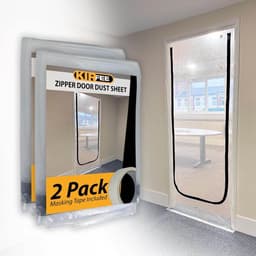
Do not cut a zip that is already in the sheet. brackit's U-shape, KIRFEE's zips, and both SafeCore double-sided zips are walked through. A knife down the middle splits the panel you paid for. ROLLINGDOG is the exception in this set. Its bullets say to tape the sheet, trim the excess, seal the edges, attach the zipper, and slice along it with a small knife. Keep the blade off the teeth. Several buyers could not unzip once the sheet was up, or the adhesive let go within a day. If the zip was already sewn in, put the knife down.

The floor gap, then taking it down

Dust travels along the floor into the hall the first time you sand. Seal the bottom edge to the floor, or to a batten you are willing to mark, before you switch the tool on. Zip the sheet again when you are back in the room. An open zip is a doorway. Take it down slowly. Peel the tape back on itself rather than yanking the sheet. brackit masking tape on painted walls or wallpaper can pull the finish. The wider plan for an occupied house is how to stop renovation dust spreading.

When not to tape the opening

Stop before you tape at all if the opening is a fire door or an escape route that has to stay clear. Article 14 of the Regulatory Reform (Fire Safety) Order 2005 requires emergency routes to stay clear where that duty applies. None of the seven listings states a flame-retardant grade. Stop as well if the dust may be asbestos or lead. A taped sheet does not make that work safe.

Common questions

Which side of the frame does the sheet go on?
Put it on the side that still lets the door leaf swing. dustguard's instructions say the opposite side of the opening, after you have cleaned the surround. Tape to the lining, not across the face of a door you still need to close. If the leaf hits the sheet, you have hung it on the swing side. The overlap has to reach the frame you measured, and there is no universal millimetre figure for these seven sheets.
Do you slit a sheet that already has a zip?
No. A pre-fitted zip is walked through, not cut. That covers brackit, KIRFEE, both SafeCore packs, and dustguard. A knife down the centre ruins the panel. ROLLINGDOG is the listing whose bullets tell you to attach the zipper and then slice. If your sheet already has a sewn or welded zip, close it when you are not passing through.
How do you attach a separate zip without cutting the teeth?
Tape the sheet first, trim the spare, and seal the edges. Stick the closed zip down the opening with the slider at the floor, then cut the plastic along the zip while you open it, keeping the blade off the teeth. That is the order ROLLINGDOG prints. Reviews of this sheet include adhesive that lets go within a day and a zip that will not open once the sheet is up.
What do you do about the gap at the floor?
Seal it before you sand. Tape the bottom of the sheet to the floor, or to a strip you can afford to mark, so dust cannot blow under the hem into the hall. An open gap undoes a neat head and two neat jambs. Zip the sheet again after you walk through. The floor seal is part of the same lap.
When should you stop and not tape this opening at all?
Stop if the opening is a fire door or an escape route that must stay clear where the fire-safety duty applies. None of these listings states a flame-retardant grade. Stop if the material you are disturbing may be asbestos or lead, and get a competent person. A zip sheet does not replace that check, or extraction and a suitable mask in the room where the tool is running.

Related pages

Sources

Public UK sources used for this comparison, last checked on 16 October 2026.

  1. HSE, Construction dust (retrieved 16 October 2026)
  2. HSE, CIS36 Construction dust (retrieved 16 October 2026)
  3. HSE, Principles of good control practice (retrieved 16 October 2026)
  4. HSE, Wood dust (retrieved 16 October 2026)
  5. Regulatory Reform (Fire Safety) Order 2005, article 14 (retrieved 16 October 2026)
  6. Door Superstore, UK door sizes (retrieved 16 October 2026)
  7. CCS dust-control supervisor note (retrieved 16 October 2026)
  8. Homebuilding, ways to make sanding less dusty (retrieved 16 October 2026)