Dust protection door DIY: one control, not the only one
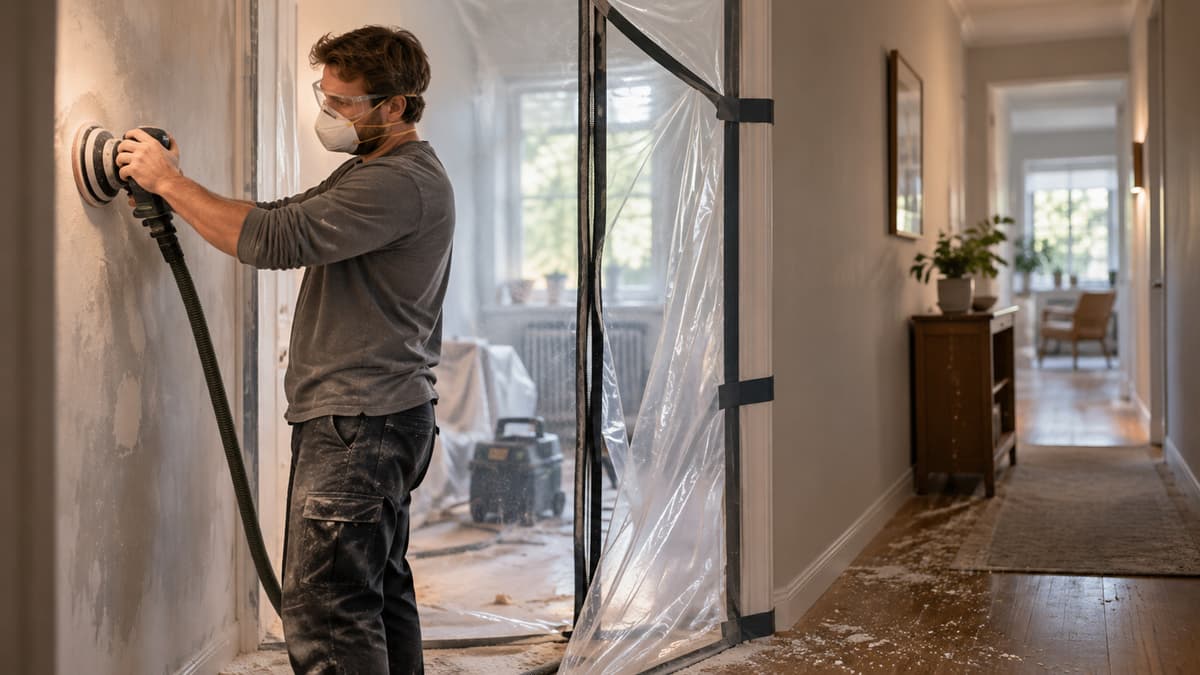
A dust protection door for DIY is a zip sheet on one doorway. HSE still wants enclosure, extraction where needed, and RPE. The sheet is not the whole plan.
On this page

The sander is on, the door is open, and the hallway is already gritty. A dust protection door for DIY is the zip sheet you tape across that opening so the rest of the home is not the dust's next room. It is a real control. It is not the only one, and buying a mask instead of the sheet is the mistake the other way round.
HSE's construction-dust sheet, CIS36, sets the order: limit the dust, enclose the work, extract it, and treat respiratory protection as the last line. This page puts a zip door in that order, then compares the sizes sold on amazon.co.uk. Products Compared did not sand a room or measure residual dust.
In short
CIS36 tells you to enclose dusty work with sheeting or screens, and not to rely on a mask alone. A zip door is that sheet across one doorway. It does not replace extraction or respiratory protective equipment. For construction dust, CIS36's general respirator level is APF 20, which is about the mask, not the plastic. A £10 sheet does not make chasing safe.
Dust is a health risk
Construction dust is not a bit of mess. CIS36 is written because sanding, cutting and chasing put dust in the air you breathe, including silica from masonry and wood dust from timber. A mask does not stop that cloud travelling under a door into a bedroom.
HSE's COSHH guidance puts dust from sanding and cutting in scope even when the tool has no pictogram. A weekend flat refurbishment is still that assessment if you are producing the dust. The zip sheet is one enclosure. It is not the assessment.
APF 20 is the respirator, not the sheet
APF 20 is the assigned protection factor CIS36 gives as the usual level for construction dust, when the respirator fits and you wear it. It is not printed on a plastic door. Enclosure keeps dust in the work room. Extraction removes it. The respirator is what you wear because some dust remains where you stand.
Wood dust and silica are not the same material, and this article will not set exposure numbers. Sanding joinery is not a masonry-mask story. Chasing a wall is not a job for a decorating dust sheet. When you cannot enclose and extract the dust, stop and get someone with the right kit.
Grinding galvanised steel adds fume, which a doorway curtain also fails to catch. That job is the zinc spray on galvanised steel article, including metal fume fever if you weld. Do not mix the two tasks into one roll of plastic.
Enclose the doorway
The sheet closes the opening you are not using as a work face, with a zip so you can leave without ripping it down. Tape it to the lining or the architrave. A gap at the floor or the head is a duct, and so is a zip left open for the sander cable. Run the cable at a taped point, or accept that this session is not enclosed.
DJM's UK kit is about 110 cm by 220 cm, with a zip and tape, and its paint claim is tied to the recommended tape. That limit does not transfer to every masking roll. In the dust protection door comparison, brackit includes 36 mm by 10 m of masking tape and a pre-assembled 4 m U-shape zip. Test a corner if the paint is new or flaky, and pull tape back over itself. A pole system may mark the paint less than a fresh strip every morning. This page has not tested residue. Fitting order, including a zip you stick and then slit, is in how to fit a dust protection door.
Use the zip, not a slit
Cutting a slit and calling it a door is how the dust leaves at waist height, which is where you breathe when you walk through. ROLLINGDOG's bullets say attach the zip, then slice, which is a different install from a pre-fitted zip. Read that order before you cut the only sheet.
The work room itself still gets dirty. The door sheet does not protect the cupboard you are sanding next to. It protects the rooms on the other side of the zip. For dust already moving through an occupied house, see stop renovation dust spreading.
What a zip sheet does not replace
It does not replace extraction. A sander or wall chaser with a vacuum meant for that dust keeps a share of the material at the tool. CIS36 lists enclosure and does not call the enclosure the vacuum. Fine dust stays airborne after you stop. Opening the zip to check a clean hall stirs the room and exports the cloud. Let it settle, or keep extracting, before you treat the doorway as finished.
It does not replace respiratory protective equipment. APF 20 is the general construction-dust figure in CIS36. Choose a respirator that provides that factor, face-fit it if the type requires a fit test, and wear it in the room. A zip door does not change the factor. If glasses fog, sort the seal using why safety glasses fog with a mask. Do not loosen the respirator so you can see, and do not take it off while you are still sanding.
It does not make silica chasing safe. A chase cut throws dust at the wall and into your face. The hall can look acceptable while the work room is not. A £9.95 sheet does not buy a safe chase. If you cannot extract and you cannot wear the right respirator, do not chase.
It does not replace a COSHH thought. If the work creates dust, you assess it. A product photo of a tidy zip is not the assessment. Write down what you are cutting, how you will enclose it, what is extracting it, and what you will wear.
Sizes sold for a standard door
Internal doors in UK homes are often in the region of two metres high and under a metre wide. Linings, skirts and architraves change the opening you must cover. Measure. Do not trust a door kit without the centimetres.
brackit, B07DCZNMC9, is the top pick in the comparison for one lit doorway when you want the zip already on the sheet. On amazon.co.uk it is £9.95, rated 4.5 out of 5 from 640 reviews. The title says 100 by 220 cm and a bullet says 110 by 220 cm, so measure before you trust either figure. The attributes say waterproof is false. The zip is a pre-fitted 4 m U-shape, and masking tape is in the box. Reviewers report later reuse, though the bullets do not say reusable, and the supplied tape can tear or lift paint. That review file is why it leads the set.
dustguard is 215 by 95 cm at £13.89, polyester, with 10 m of black duct tape, and the title says machine washable and reusable. Ninety-five centimetres is the narrow sheet. ROLLINGDOG is 220 by 120 cm at £13.99, clear plastic, 10 m of masking tape, zip attached then sliced. WSDDBB is two polyethylene sheets, 1.2 m by 2.2 m, at £13.95, I-shape zips, tape not included. KIRFEE is two polythene sheets, 1.2 by 2.2 m, at £18.95, with masking tape. SafeCore's single orange sheet is 220 by 110 cm at £17.70: the title says tape, the included-components line says no. The three-pack is £34.99, also with no included components, and a printed weight of 120 g that looks implausible for three doors. Check width, a pre-fitted zip, and whether tape is really in the box.
DJM's site kit, about 110 by 220 cm, is a trade page rather than this Amazon set. ProDec at about £10.02 including VAT is the Safety Supply Company page, 2.1 m by 1.2 m, with a pre-taped zip. Those prices are not amazon.co.uk shelf prices. Do not average them with £9.95. A split sheet, or a zip that no longer meets, is a gap. Do not shake dust off in the stairwell. A qualifying purchase through the comparison link can earn a commission at no extra cost to you. The commission does not extract silica.
Common questions
Will a plastic zip door stop all the dust?
What size fits a UK doorway?
Do I still need a mask?
Is the sheet enough for silica from chasing?
How do I tape it without wrecking the paint?
Can I reuse the sheet?
Which sheet is the top pick?

Products Compared publishes British-English buying guides based on amazon.co.uk listings and public UK sources. We do not run a lab and we do not invent test scores.
Related articles
Zinc spray on galvanised steel
Grinding galvanising makes fume as well as dust. A doorway sheet does not capture that fume.

Why safety glasses fog with a mask
RPE is still the last line. Breath behind a mask will mist glasses if the air path is there.

Wrist strap at an electronics bench
Dust and static are different controls. A plastic sheet does not ground a bench.