Zinc spray repair galvanised steel: build the film
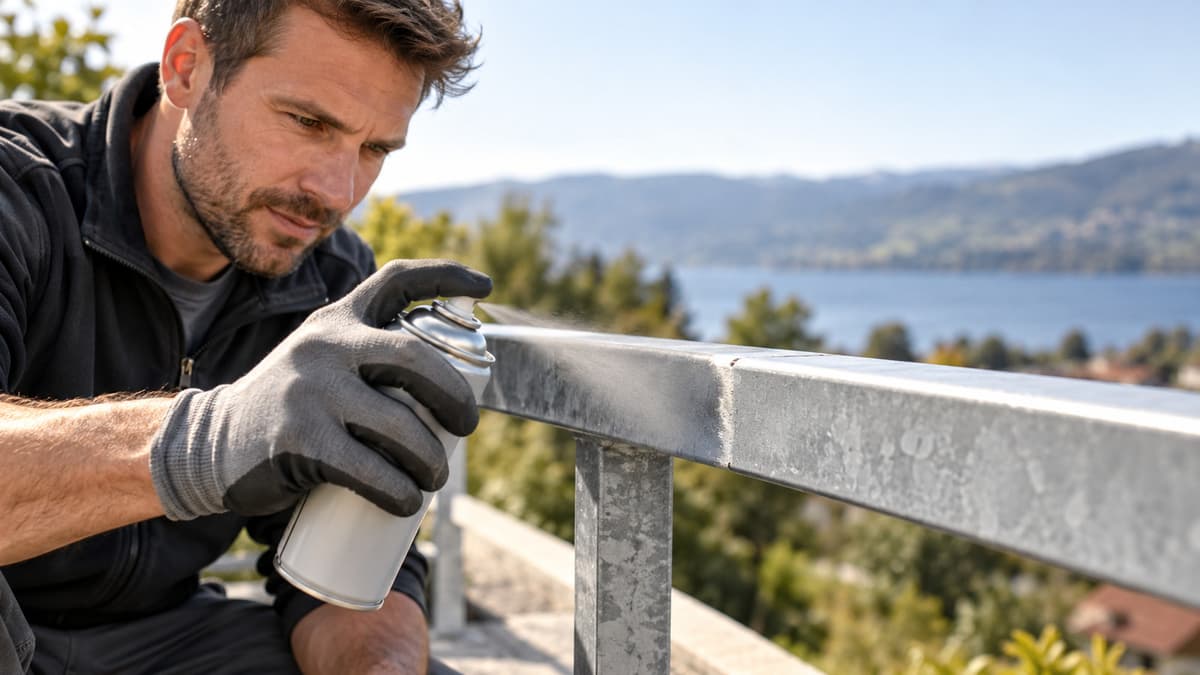
Zinc spray repair on galvanised steel is for small bare spots, built towards 100 micrometres. A light mist is not that film, and welding fume is a separate job.
On this page
The cut is bright silver in the middle of a grey rail, and the can promises zinc. One pass turns the brightness dull. Zinc spray repair galvanised steel starts there, and the dullness is not the repair. The repair is a zinc-rich film, thick enough to matter, on a small bare spot. A mist that only kills the shine is paint-coloured steel.
This page is the small-repair case. It is not a weld procedure and not a lab measurement of any can. Listing notes below are from amazon.co.uk. A qualifying purchase through a comparison link can earn a commission at no extra cost to you.
In short
For a small bare spot, BS EN ISO 1461 practice is a zinc-rich coating built to about 100 micrometres. The Galvanizers Association says ideally at least 80 percent zinc by weight in that film. Sperrin Galvanisers says ideally at least 90 percent. Do not merge those figures. A light aerosol pass is not the thickness. Large areas and welding fume are different jobs.
What a small repair is allowed to be
Hot-dip galvanising is a coating put on in a bath. When you cut, drill, or grind it, you open steel. BS EN ISO 1461 is the standard the UK Galvanizers Association cites for repairing that damage. Their datasheet allows zinc-rich paint or paste, and it gives 100 micrometres as the thickness to aim at. Thermal spray is the route they describe when the area is large. An aerosol counts only if the film is zinc-rich and built up.
How small is small? A Nordic Galvanizers restatement, used here as plain language and not as UK law on its own, describes bare spots of about 10 square centimetres and about 0.5 percent of the accessible surface. A bright ring around a drilled hole, or the sawn end of a bracket, can sit inside that kind of limit. The cut end of a three-metre rail, or a flange ground clean all round, does not. If you are guessing, the Association's datasheet already points large areas back to thermal spray or to the galvaniser.
The Association's ideally at least 80 percent zinc by weight is not Sperrin's ideally at least 90 percent. Both describe zinc-rich paint. They did not publish one merged percentage, and this page will not invent one. A can that hides the zinc share cannot be checked against either sentence from the Amazon title alone.
100 micrometres is their figure, not a thickness we measured. Aerosols shrink as solvents leave, and a run is not thickness. If the job needs a reading, use the gauge the specification asks for. Otherwise keep the repair inside the small-spot case.
Clean, then build a zinc-rich film
Sperrin's renovation note is the sequence: clean the steel, spray from about 25 to 30 centimetres, and build the film. Oil, cutting fluid, and white corrosion salts sit under a new coat and lift it. Degrease, dry, and get back to sound zinc or to bright steel at the edge. Do not spray over loose scale or over a cosmetic mist that is already flaking. Overspray on intact zinc is mostly cosmetic. Bare steel left in the middle is not.
Build means more than one light pass, with time for solvent to leave so the next pass does not slide. A single grey cloud from 40 centimetres hides the cut and leaves a film you could scratch off with a nail. If the can's sheet gives a dry-film build per pass, use that sheet. If it does not, a grey look is not a micrometre reading.
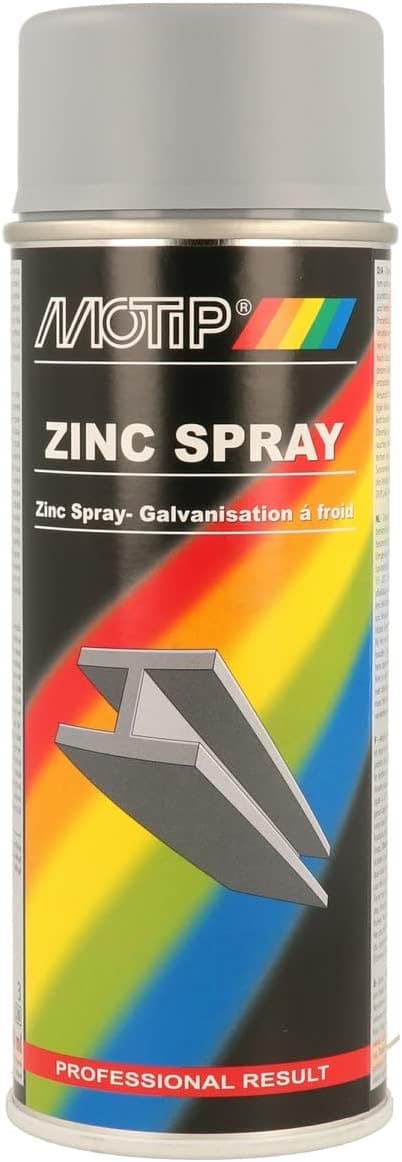
The top pick in the zinc spray comparison is Motip M04061, B002JSWNEM, a 400 ml matt grey can at £8.96. The amazon.co.uk bullets say spot-weldable and state coverage of 1.25 to 1.75 square metres. They do not print a zinc percentage or a heat limit. Motip's own page states more than 90 percent zinc share, which is not an Amazon bullet. The score is 4.3 from 22 reviews, with only two review texts behind it, too thin to judge a wet British winter. Full cure is printed as 2 hours and dry time as 4 hours, so the listing's clocks disagree. Read the tin, and leave the repair overnight if the label is no clearer.
About 1.5 square metres of coverage describes many small scars, not a 100 micrometre film on a large plate. Use the can on brackets, cut ends, and drilled holes. The galvanised steel guide and the how to use zinc spray stay with application. Missing percentages on the other cans are in the buying guide. Which can suits which job is on the best zinc spray page.
HSE's COSHH guidance is the label check for the aerosol itself. If the can is marked hazardous, the solvents are part of the job even when you are not welding: ventilation, no ignition source, and the precautions on that label. Do not spray in a closed van because the tin says zinc.
Welding is a different job
Welding galvanised steel heats the coating and makes fume. The Galvanizers Association tells you to remove the galvanising at least 25 millimetres each side of the weld, to ventilate, to treat it under COSHH, and to know metal fume fever. After the weld, repair the bare strip to 100 micrometres. Leaving the coating to burn off is how the fume is made. Grind it back with extraction, or in air that actually moves the fume away from you.
If you can smell a sweet metallic fume while welding galvanised steel, stop. You are already in the exposure the Galvanizers Association welding page warns about. Ventilate, and do not finish the bead.
If you have been welding galvanised steel and you feel unwell, stop and get advice. This article is not a diagnosis. A respirator chosen for the fume, extraction, and the 25 millimetre strip are the controls. A dust sheet across a doorway does not capture welding fume at the arc.
Spot-weldable, on the Motip listing, is a claim about the dried film. It is not permission to weld through intact galvanising, and it does not remove the fume. Simoniz, at £11.95 in this comparison, is sold as weld-through in the title while two reviews say the tin itself is not marked that way. Read the can in your hand. This page does not award a weld procedure to any aerosol.
Once the metal has cooled, the repair is the 100 micrometre job again, and only if the stripped strip is still small. A long seam cleared 25 millimetres each side stops being a small spot quickly. Add the area up before you keep spraying. The comparison with hot-dip galvanising is where the piece should go back to a bath.
When a spray is the wrong repair
Send the work back, or specify thermal spray, when the bare area is large, when a structural specification names the repair, or when you cannot get the surface clean and dry. A gate cut and shut on site, with metres of bright edge, is a regalvanising conversation. Spraying the face and leaving the back bright is half a repair, and coastal or road-salt sites punish that half. The datasheet is about reinstating a coating, not colour-matching a photograph.
Do not use the can as a primer story you have not read. Motip's listing also names wood among surfaces. Wood is not a galvanising repair. A grey coat on timber does not inherit 100 micrometres of zinc-rich steel practice. Keep the product on the metal the repair is about.
Do not weld because the can says spot-weldable and you have no extraction. A short bead does not switch the fume advice off. Do not grind galvanising in a closed garage because the repair will only take a minute. If the aerosol label is hazardous, follow it while you spray.
The Motip shelf price here is £8.96 on amazon.co.uk. The 80 percent and 90 percent lines stay with the Association and with Sperrin, unmerged. The area figures are the Nordic restatement, not a statute. Products Compared did not measure a dry film and did not weld.
Common questions
Can I spray a cut edge on galvanised steel?
How thick is the repair meant to be?
What if the bare patch is large?
Do I have to remove old zinc before welding?
Is the fume dangerous?
Is 80 percent or 90 percent zinc required?
Will one light coat do?
Does this can approve a weld?

Products Compared publishes British-English buying guides based on amazon.co.uk listings and public UK sources. We do not run a lab and we do not invent test scores.
Related articles

ESD wrist strap how to ground: use the common point
A different ground. Do not treat a zinc can, or a wrist strap, as a tool for live mains.
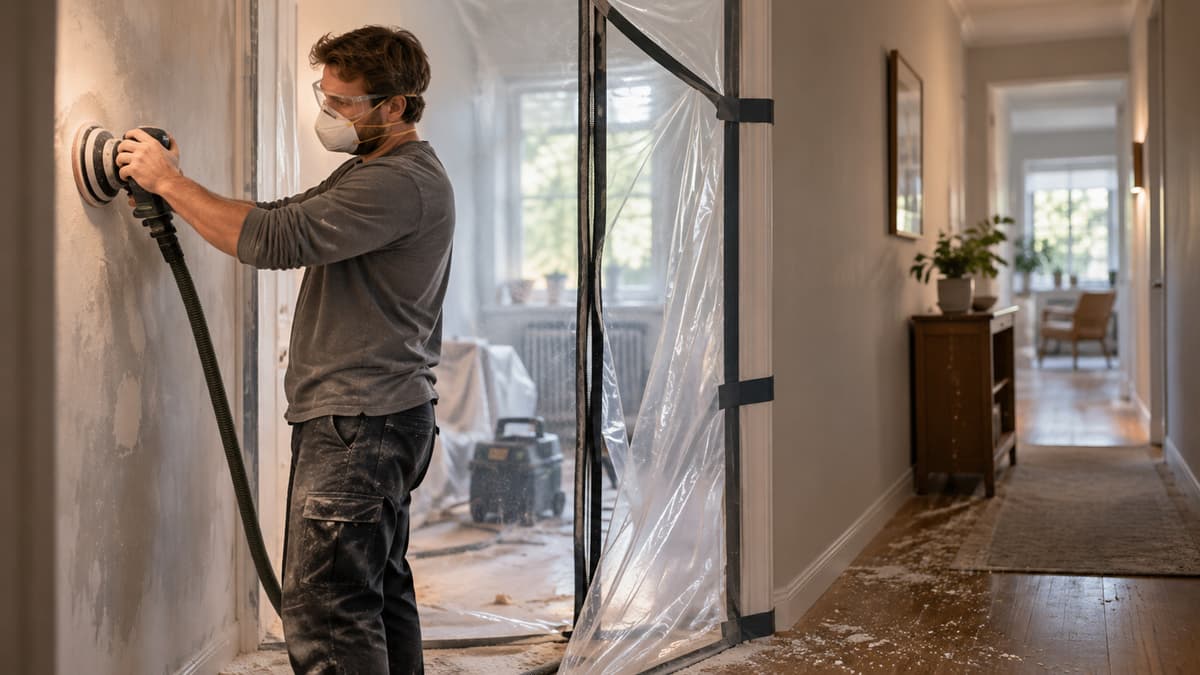
Dust protection door DIY: one control, not the only one
Cutting and grinding make dust as well as a bright edge. A sheet is one control, not the fume plan.

Oven gloves EN 407 contact heat: read the mark
Heat claims need a mark. A zinc spray temperature line, if any, is not a glove rating.