Oven gloves EN 407 contact heat: read the cuff mark

Oven gloves EN 407 contact heat: domestic ovens are often set near 240°C, and contact at that heat burns. Read the cuff mark. A roast photo is not a test level.
On this page
The tin has been in a hot oven, the glove is a thin quilt from a set that photographed well, and the only performance claim on the listing is the word heat. Oven gloves EN 407 contact heat is the question at that lift. Contact heat is the dish against your hand. A roast in the thumbnail is not a test, and a sink glove with a strong star rating is not an oven glove.
SATRA’s briefing is the hazard in plain numbers: domestic ovens are often turned to about 240°C, and contact at that temperature burns. Read the glove against that fact. Do not invent a level the maker never printed.
In short
Domestic oven gloves are PPE in SATRA’s briefing, and the relevant EN 407 property for a hot tray is contact heat. About 240°C is their figure for a typical highest oven setting, not a pass mark we measured on a named glove. Read the mark and the instructions. A pair with no level stated has not told you how hot a dish it is for. Wet fabric and a washing-up glove are the wrong tools.
Hot trays are a contact heat problem
You are closing your hand on a metal tin, a ceramic dish, or a shelf that has been sitting in the oven. That is contact heat: temperature, pressure, and time, with textile between the skin and the metal. The burn on a Sunday is usually the grip, when the glove compresses and the tin’s heat arrives faster than expected.
SATRA states the kitchen version of that hazard directly. Domestic ovens are typically capable of about 240°C at the top setting. Contact at that temperature burns. The sentence is a briefing about ovens and skin, not a certificate for a glove. Thickness in a photograph is not a declared contact performance. A thin cotton layer can look adequate on a table and then compress around a rim.
Wet is the amplifier a reviewer already named. On the Cystsoo listing, one review says keep the gloves dry because wet fabric behaves badly around heat. Machine washing is a care step after the gloves have cooled, not a reason to pick them up damp. This is one review plus a listing claim, not a wet-contact test we ran.
A tea towel folded once has no mark, is often damp, and slips. Steam, oil, and a handle you did not think was hot still count as contact. If you cannot hold the item securely, put it down.
EN 407 and what it does not cover
BSI’s knowledge page for BS EN 407:2020 describes protective gloves against thermal risks, heat and/or flame. Contact heat is one of those risks. The standard is used with EN ISO 21420. Find the pictogram and the performance levels on the glove, and read the instructions in a language you use.
This article will not assign a level on the 1-to-4 scale to any product. The kitchen-gloves comparison file does not contain those levels for the oven glove. Inventing one, then calling the glove fine at 240°C, would be a test we did not do. If the cuff is printed, read it. If nothing is printed, you have no EN 407 contact-heat declaration in front of you.
BSI’s scope also draws a line that shoppers cross. EN 407, in that scope note, is not the standard for firefighter gloves and not the standard for welding gloves. A kitchen mitt is not a welding gauntlet. The zinc spray article is where welding fume sits. Do not wear a cotton oven glove for that arc, and do not buy a welding glove off a kitchen star rating.
EN 407 does not say the glove is waterproof, food-safe, or cut-resistant. A hanging loop and a quilted photo are features, not thermal levels. Five fingers can grip a rim better than a joined mitt, and still state no temperature.
Category II is Eurofins’ placement of oven gloves: PPE that needs a conformity assessment, with UKCA for the Great Britain market through an approved body. Category II is not a temperature. It is a route to a mark. The EN 407 levels still have to be on the pair.
Marks on gloves sold in Great Britain
UKCA and CE are conformity marks. GOV.UK’s guidance on placing products on the GB market is where you check which mark is accepted now. Do not treat a 2024 transition sentence as the rule on 16 October 2026. Northern Ireland is covered there as NI, not as the Republic of Ireland. HSE expects workplace gloves to carry a conformity mark and instructions in English. SATRA’s point is that the domestic glove is still PPE when the contact hazard is the same.
What you should see, when the maker has done the declaration, is a mark, a reference to EN 407, the thermal pictogram with levels, and instructions you can read. What you often see on a marketplace page is a lifestyle photograph and the words heat resistant. Treat the second as silence. Silence is not a low level and not a high level. It is an absence.
Cystsoo, ASIN B0GTNN1WRV, is the oven glove in the kitchen gloves comparison. One beige pair with fingers, £8.99, 4.6 out of 5 from 56 reviews. The listing describes cotton, a hanging loop, and machine washing. The comparison file states no temperature, no EN 407 level, and no UKCA or CE mark. Heat protection is a marketing line. Reviews like the five-finger grip and say the gloves run large. They are not the top pick. The top pick in this set is a washing-up glove.
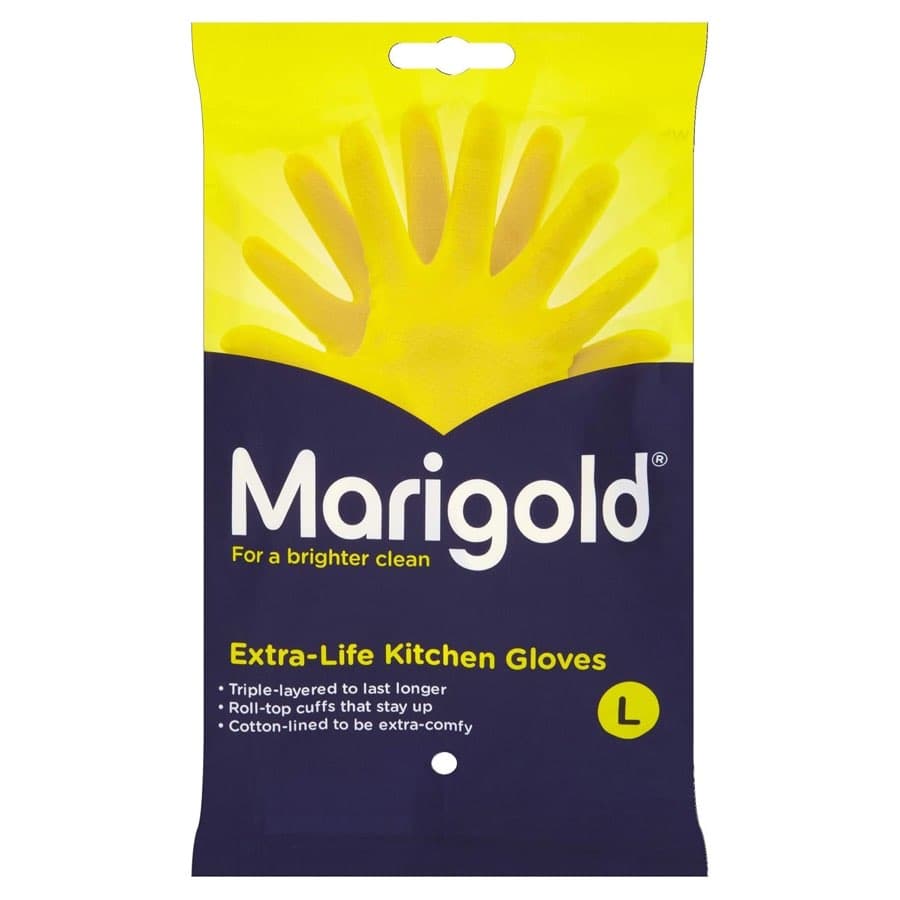
Marigold Extra-Life in large is that top pick: £2.51, 4.7 out of 5 from 4,645 reviews, cotton-lined, for ordinary washing up if you can wear natural rubber latex. Marigold’s page says it is latex and not for dangerous chemicals. A latex-free Amazon attribute does not override that page, and it is not an oven specification. The buying guide, the how to use page and the latex or nitrile page cover the sink. Use the cuff mark for the oven.
How that changes a purchase
Start with the job. A tray from a hot oven is contact heat. Find EN 407 and the contact-heat level on the glove or in its instructions, plus the conformity mark GOV.UK currently expects for that product. If the only heat language is a title, leave it when you need a declared performance. Fifty-six good reviews, as on Cystsoo, tell you shoppers liked the shape. They do not timestamp a burn threshold.
Then look at condition. A compressed, scorched, or wet glove is out of the job even if it was marked when it was new. PPE that no longer performs comes out of use. Wash oven gloves only as the label allows, after they are cool, and dry them before the next roast. Do not store them under a dripping rack.
Do not buy the comparison’s top pick for this task. Marigold at £2.51 is a rational washing-up glove in that set and a poor oven glove, because nothing in its comparison file is an EN 407 contact declaration. Stars measure reviewers, mostly talking about the sink. A best-value rubber glove is the same mismatch. Price per pair is meaningful after the mark is present. Before the mark, a cheaper unmarked glove is a cheaper unknown.
If you employ people in a kitchen, HSE expects a conformity mark and English instructions on the gloves you issue. Preference for the thin pair is not a selection. At home the burn is the same. Welding, flame barbecues, and fireplace gloves sit outside this reading: BSI said EN 407 is not the welding or firefighter glove standard.
Products Compared did not run a contact-heat test. The 240°C figure and the PPE framing are SATRA’s. The scope limits are BSI’s. Category II and the approved-body point for UKCA are Eurofins’s, to be read with current GOV.UK guidance. The missing mark on Cystsoo is the comparison file. A qualifying purchase through a comparison link can earn a commission at no extra cost to you.
Common questions
Are oven gloves PPE?
What does EN 407 tell me?
Is 240°C the test temperature?
Do I need UKCA or CE?
Is a single thin glove enough for a shelf?
Do welding gloves use the same standard?
How do I compare two pairs in the kitchen-gloves table?
Did you burn-test any glove?

Products Compared publishes British-English buying guides based on amazon.co.uk listings and public UK sources. We do not run a lab and we do not invent test scores.
Related articles

Zinc spray on galvanised steel
Another job where a thin coat is mistaken for a stated performance. Fume is a separate hazard.
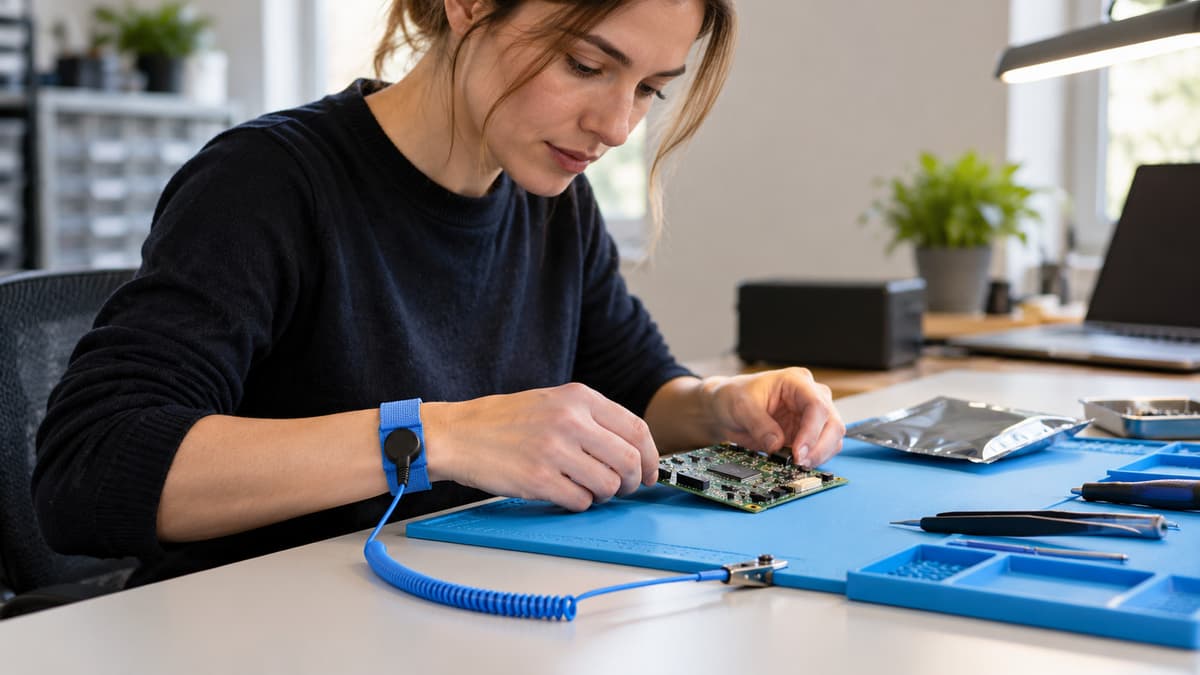
Wrist strap at an electronics bench
A strap equalises static. It is not heat protection, and it is not for live mains.
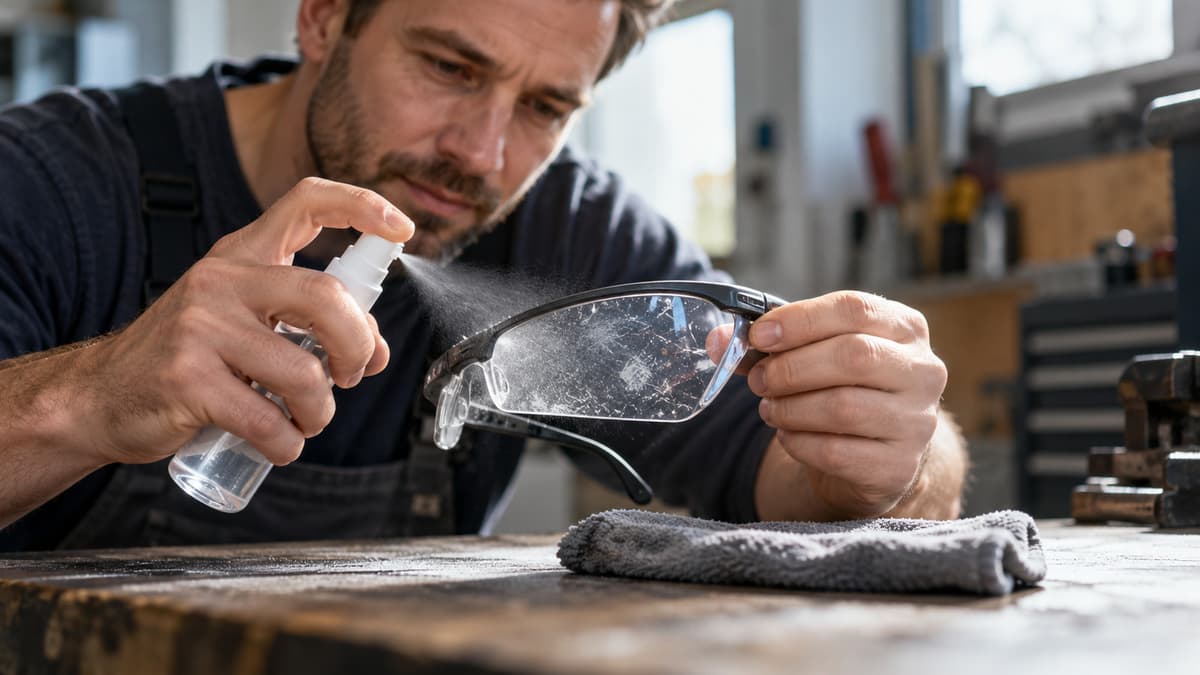
When to replace scratched safety glasses
PPE that no longer does the job comes out of use. A thin, unmarked glove is the same kind of gap.