When to replace scratched safety glasses: judge the view

When to replace scratched safety glasses: stop if the view is worse, the lens is deeply scratched, or the frame is deformed. A spray does not fill that damage.
On this page
The frame still fits and the lens is a web of fine lines you have decided to live with. You spray it, the first minute looks clearer, and the haze returns as the film dries in the grooves. When to replace scratched safety glasses is the point before that spray. The line is the view, the depth of the damage, and the shape of the frame.
HSE's L25 guidance is the source for that line. This page applies it, then says what a bottle can still do on a lens that has passed the check.
In short
Replace safety glasses when you can no longer see the task properly, when the lenses are deeply scratched, or when the frame or headband is deformed. HSE says throw that equipment away. Anti-fog spray does not fill scratches. Fog on an otherwise sound lens is a different fault. Do not bend, tape, or glaze the pair to keep it in service.
Reduced vision is the line
L25 tells you to stop using eye protection if visibility is noticeably reduced, if the lenses are deeply scratched, or if the frame or headband is deformed, and to get rid of it. Those are condition tests, not a month count. A pair crazed by a grinding wheel in two weeks is finished. A pair that is two years old and still clear can stay until one of those conditions appears.
Products Compared has not invented a percentage of the lens that must be marked. Noticeably reduced means you, doing the task: edges soften, glare fills the groove, or you move your head to find a clean patch. If you are hunting for a clear corridor, the view has already gone. HSE's line on failed protective equipment is that it offers no protection.
A single hairline, seen only against the light, with the bench still sharp, is not deeply scratched. Watch it, and leave any coating for a lens you have decided to keep. A milky cluster from a dusty sleeve has crossed the line even if no groove feels deep to a fingernail. The view is the test L25 gives you.
At work, a colleague saying the pair should be fine is not that check. Where the assessment requires eye protection, HSE's selection guidance says the employer provides suitable PPE free of charge. The PPE at Work Regulations 1992 treat suitable equipment as gear that fits and does not increase overall risk. A lens you cannot see through increases the risk of the task.
The replacement is a marked pair. This page does not decide a wage dispute. Take the damaged pair with you when you ask. If you are self-employed, the same condition test applies to the only pair you own.
Scratches, cracks, and a deformed frame
Deep scratches are named on their own because a lens can fail before you admit the view has gone. Solvent crazing, a scrape across the optical centre, or a lens gone white at the edge belongs in the throw-it-away group once it is deep or the view has dropped. A crack is a failed ocular. Impact protection was a property of an intact lens, so do not watch the crack through the shift.
Frame and headband are in the same L25 sentence. Twisted rims, a stretched goggle body, or a headband that lets the seal lift are a deformed frame. A cracked arm is in that family, because the pair will not stay in place. Tape, a cable tie, or pliers on the hinge are modifications. HSE says you do not modify PPE to make it fit. A maker's spare temple, fitted as designed, is a part.
You may change only the lens when the maker sells that ocular for that frame, the frame and headband are sound, and you fit it as they describe. N for fogging and K for scratch have to be on the new ocular.
The N-mark article shows how to read those characters. A lens from another pair, or a glued polycarbonate disc, is a modification. If the catalogue has no spare, replace the pair.
Worn-off marks are a separate reason to issue a new pair. You can no longer show the protector matches the hazard, even when the plastic looks tidy. A homemade code scratched into the arm does not restore that record. Dispose of the damaged pair so the next shift cannot pick it up from a drawer.
Fog is a different fault
A lens that mists and then clears, with no damage marks, is not a scratched lens. Breath, a cold surface, and a washed-off film are mist.
Safety glasses fog with a face mask is the air path. How often to reapply is the clock on the bottle. Binning a sound pair after one fogging leaves that air path in place.
Replace when mist and damage are the same object. JSP's misting guidance says a coating cannot repair a broken seal or turn the wrong goggle into the right one. A crazed lens still looks hazy in dry air. That haze is damage. A film fills the grooves for a minute, then the lines return.
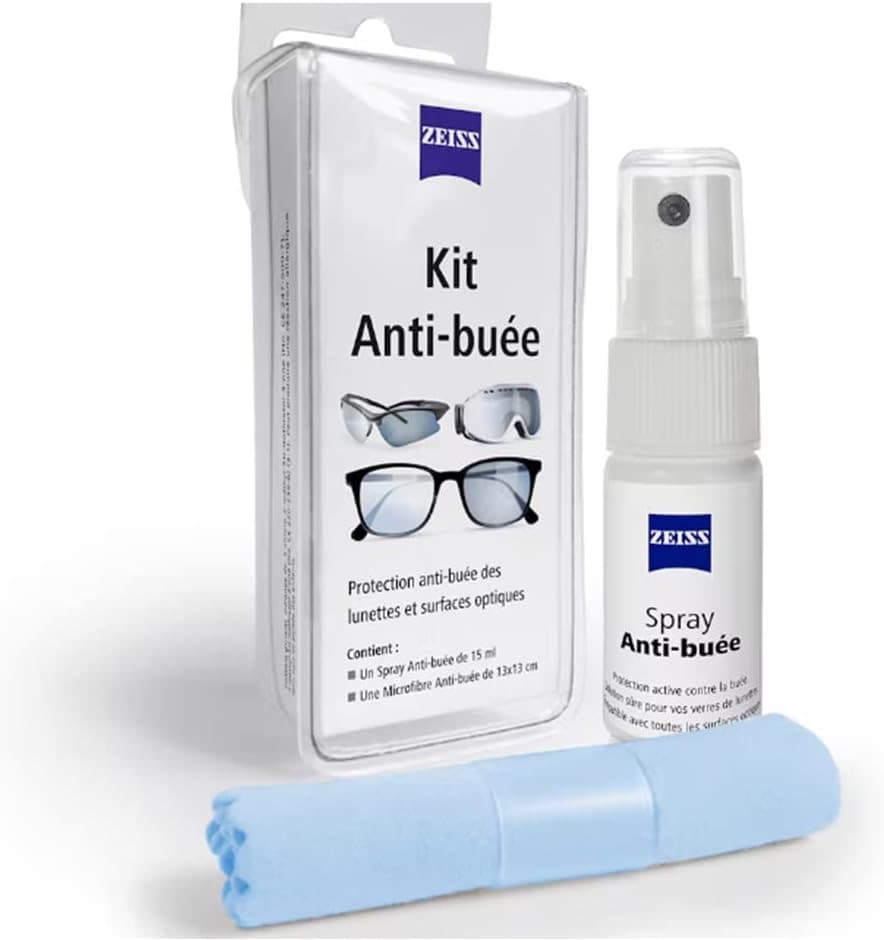
After the keep-or-bin check, the spray is maintenance. The top pick in the anti-fog comparison is the ZEISS kit, B0BSHCT7VX, about £6.99, with 15 ml and a 13 cm cloth, rated 4.3 out of 5 from 723 amazon.co.uk reviews. The listing says two to three days. ZEISS's note is about 72 hours.
Both figures are claims for a film on a lens you wipe dry. They are not a scratch resin, and we did not time a film on damaged PPE.
Use the fluid the eyewear maker allows, and only on a lens that is still clear. The safety glasses page and the buying guide cover that sound lens.
Washing removes some of a sprayed film. That is Bollé's limit, and it does not polish a groove. Metal polish, toothpaste, and scouring cream deepen a light mark. Leave them off the lens.
Do not modify the pair
Choose suitable marked equipment and leave it unaltered. Bent arms, taped foam, a drilled vent, or an unnamed gel on the seal are alterations. HSE's pages on the right PPE say you do not modify equipment to force a fit. A pair that fits only because you bent it is not the marked pair. Fit needs another size. Mist needs the fogging mark, or a treatment the maker names. Scratches need a new pair.
Prescription spectacles help you see. They are not safety glasses, and a spray, including the ZEISS kit, does not move EN 166 fields onto a high-street frame. You may wear them under suitable eye protection if the assessment allows that combination. Where the job needs prescription safety eyewear, the employer provides it when the assessment requires it. Until that pair arrives, the task waits.
UKCA or CE, under the GOV.UK placement rules for that product, belongs on the replacement, with English instructions. Northern Ireland follows the placement rules for NI. A bottle carries neither mark. HSE's supply pages expect those marks on workplace PPE. Coating a cracked arm does not put them there.
Prices here are amazon.co.uk figures for the spray kit only. The sources describe no scratched-lens repair, so this page ranks none. Products Compared did not scratch a lens or time a film in the grooves. L25 is the retire rule, and HSE's selection guidance is the free-provision point. JSP, Bollé, and the ZEISS duration claims set the coating limit. A qualifying purchase through a comparison link can earn a commission at no extra cost to you.
Common questions
How scratched is too scratched on safety glasses?
Can anti-fog spray fill fine scratches?
The frame is fine. Can I change only the lens?
Who pays for a replacement at work?
Is a cracked arm a reason to bin them?
Do I need a new pair if they only fog?
Can I use my prescription glasses instead?
Does a readable N mark mean the lens is still fine?

Products Compared publishes British-English buying guides based on amazon.co.uk listings and public UK sources. We do not run a lab and we do not invent test scores.
Related articles

Why safety glasses fog with a mask
Mist is an air path. A crazed lens is a different fault and a different decision.

What the N mark means on safety glasses
N is a fogging mark on a sound lens. Scratches do not become N because you can still read the letter.

How often to reapply anti-fog spray
Recoat a film that is still on a clear lens. Do not recoat a lens you should have binned.