EN 166 N marking anti fog: what the lens mark means

The EN 166 N marking is an anti-fog check on the ocular itself, summarised as at least eight seconds. K is scratch. A spray does not print either mark.
On this page
The arm of the safety glasses carries a row of letters, the lens carries another, and the listing title says anti-fog. Those three lines are not the same claim. The EN 166 N marking is the fogging character on the ocular. It is the one to find when mist is the reason you are buying, and it is easy to mix up with K, with a frame letter, or with a bottle of spray.
This page is a buyer's reading of that character. It does not copy the standard. It says where N sits, what K is doing beside it, what BSI's 2025 brochure said about presumption after 11 November 2025, and why a spray cannot reprint the mark.
In short
N on safety glasses is a fogging-resistance mark on the lens. The digest used for this comparison summarises that check as at least eight seconds on the ocular, not on the whole protector. K is scratch resistance. A frame letter such as F is a separate mechanical mark. Anti-fog spray maintains a surface. It does not create N.
N is a lens mark for fogging
JSP's guide to eye-protection markings puts N on the lens. If you only photograph the temple, you miss the character that answers the mist question. If you only trust the retail title, you can buy a pair whose ocular never received it. The staged digest states the limit: N is at least eight seconds on the ocular, not a result for the complete protector. Eight seconds is a check of the lens surface. It is not a claim that a masked worker stays clear for a shift.
When HSE's L25 guidance tells you to consider misting as you select eye protection, a lens that has passed a declared fogging check is the evidence you can point at. A title that says anti-mist without a character on the ocular is a description. Take the glasses out of the packet and find the mark before you count the pair as specified. Tags and stickers come off. The moulded or printed characters are what the next person can audit.
N does not cover the frame, the headband, or a second lens you clip in front. It does not describe how the pair behaves once a face mask feeds breath up the inside of the ocular. Bollé's account of that path, the chimney of exhaled air through the mask gap, sits in why safety glasses fog with a mask. JSP's misting note says a coating cannot repair a broken seal or the wrong goggle. If the characters have been rubbed away, you no longer have a readable claim. Coating a blank lens and calling it N is the move this page is written to stop.
K is scratch, and the frame is separate
K means scratch resistance on the same family of lens marks. A lens can show N, K, both, or neither. Scratch resistance keeps fine abrasion from taking the view. It does not stop water condensing, and fogging resistance does not fill a groove already in the plastic. If someone on site points at K and calls it the anti-fog letter, they have named the wrong property. When to replace scratched safety glasses covers the next step once scratches have reduced the view: HSE's L25 line is to take eye protection out of use when visibility is noticeably reduced or the lenses are deeply scratched.
The frame carries a different set of fields. Certus's EN 166 decoder uses the frame line for liquid splash and dust, and keeps K and N with the lens. F on the frame is a mechanical-strength mark in the usual buyer reading of EN 166, and it is not a fogging code. A lens marked N in a frame marked F has a fogging check on the ocular and an impact mark on the frame. You need both for the hazard in front of you. N does not lend impact performance to a weak frame, and F does not lend fogging performance to a bare lens.
A grinding job and a chemical splash are not interchangeable because both pairs say N. Read the whole string, including the optical class and the maker's identity. This article does not reproduce example strings or the clause that defines each symbol. If the string on your pair does not match the supplier's sheet, stop and ask. A mismatched lens in a branded frame is a reason to reject the pair. Aggressive solvents can polish printed characters off a sound lens, so follow the eyewear maker's cleaning instructions.
What changed around EN ISO 16321
BSI's 2025 brochure says the presumption of conformity associated with EN 166 ends after 11 November 2025. The same brochure still lists N. That presumption is how a harmonised standard supports a declaration. It is not an instruction to throw away every EN 166 pair on 12 November 2025. This page is dated 16 October 2026. Read the standard printed on the equipment you are about to issue.
EN ISO 16321 is the newer family. Do not assume every letter survives with the same meaning, or that a 2024 stock sheet and a 2026 stock sheet match on the word anti-fog alone. Ask which standard the model is declared against, and read that citation on the product. If the paperwork says EN ISO 16321 and the lens still shows N, confirm the character with the maker. If the paperwork says EN 166, the digest reading still applies: at least eight seconds on the ocular, not the complete protector.
EN 166 and EN ISO 16321 are standards. UKCA and CE are conformity marks. HSE expects workplace PPE to carry a conformity mark and instructions in English. GOV.UK's guidance says which of UKCA or CE is accepted now, including for a Northern Ireland site. A hang-card with no English instructions is a supply problem even when the lens mark is clear. The 11 November 2025 date is about presumption, and the brochure does not set a replacement interval.
A spray does not reprint the mark
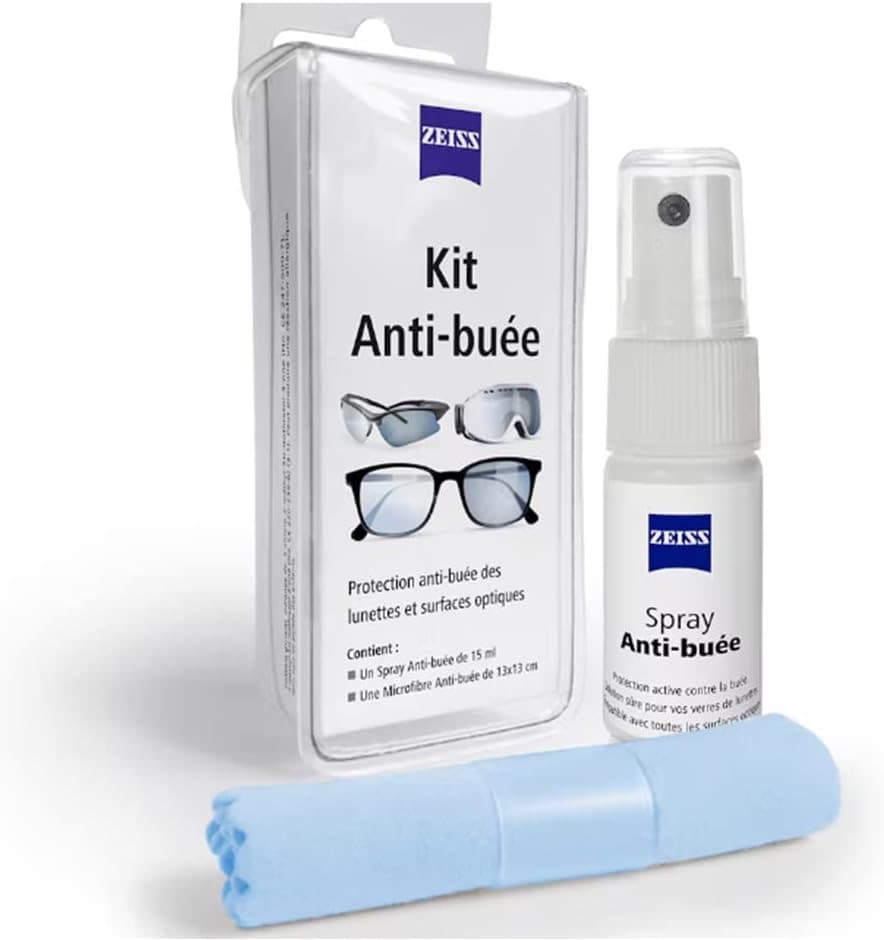
The anti-fog spray comparison is maintenance, not a certification route. The top pick is the ZEISS Anti-Fog kit, B0BSHCT7VX, at £6.99 on amazon.co.uk: 15 ml of spray and a 13 cm cloth, 4.3 out of 5 from 723 reviews. The listing says two to three days, beside ZEISS's note to recoat about every 72 hours. Those are claims about a film you wipe dry. Neither adds N, and the kit is a poor match for a goggle you have to rinse. The buying guide and the safety glasses page stay inside that limit.
Bollé notes that washing removes some of a sprayed film. A permanent coating on a marked lens is a different object from a liquid you refresh. If the maker of an N-marked pair names a safe fluid, use that fluid. A swim gel, a household glass cleaner, or an unnamed solvent can haze the coating the mark was describing. How often to reapply anti-fog spray separates the 72-hour spectacle clock from a goggle you treat every session.
A spray does not print UKCA, CE, or K. If the lens never had N, buy a marked ocular, not a larger bottle. Problem Solved's 100 ml spray at £5.49 is the biggest single bottle in this set, and volume does not change what the liquid is. Prices and review counts are amazon.co.uk figures from the set, not a fogging-time test. Products Compared did not certify eyewear or copy EN 166 or EN ISO 16321. The points above come from JSP, BSI's 2025 brochure, HSE's L25 and PPE supply pages, and GOV.UK's UKCA and CE guidance. A qualifying purchase through a comparison link can earn a commission at no extra cost to you.
Common questions
What does the N mark mean on safety glasses?
Is K the anti-fog mark?
If the lens says N and the frame says F, what is the pair?
Does EN 166 still apply in 2026?
Does anti-fog spray add the N mark?
Where is the mark printed?
Do I need UKCA as well as EN 166?
Is eight seconds enough for a shift with a mask?

Products Compared publishes British-English buying guides based on amazon.co.uk listings and public UK sources. We do not run a lab and we do not invent test scores.
Related articles

Why safety glasses fog with a mask
Breath rises through the mask gap. A marked lens and a spray film answer different parts of that.

When to replace scratched safety glasses
Deep scratches and a deformed frame take the pair out of use, even if N is still printed.

How often to reapply anti-fog spray
Recoat on the bottle's clock. That clock is maintenance, not a new certification.