Independent comparisons. We may earn from shop links. More info

Fluke CAT rating

Updated: 22 October 2026

A Fluke CAT rating is the line to read before probes touch a UK socket, a consumer unit, or anything nearer the supply. It names the installation point the meter is built for when a transient hits, and the voltage figure has to sit beside that category. In this amazon.co.uk set, five listings print CAT III 600 V, and only the 177 and the 179 also print CAT IV 600 V and CAT III 1000 V. Peter F. used those listings and HSE GS38 on 21 October 2026, not a lab. A qualifying purchase can earn a commission at no extra cost to you. Model choice stays on the [Fluke multimeter comparison](/hub/measuring-equipment/fluke-multimeter).

A Fluke CAT rating is the line to read before probes touch a UK socket, a consumer unit, or anything nearer the supply.

Our top picks

Fluke Fluke 117

Best overall

Fluke Fluke 117
8.2/10about £215.00
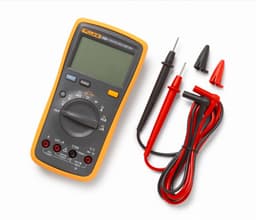
Fluke Fluke 15B+

Best value

Fluke Fluke 15B+
7.1/10about £101.45
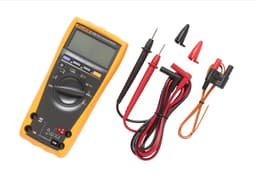
Fluke Fluke 179

Alternative

Fluke Fluke 179
6.9/10about £442.80
On this page

Category is the transient, not the 230 V label

UK mains are nominally 230 V. GS38 sorts meters by where you are working, not by the number on a quiet circuit. CAT II is appliances and portable equipment. CAT III is the fixed installation, including distribution boards and socket outlets. CAT IV is the origin: the meter, the service entrance and outdoor supply conductors. A house socket is CAT III. The service position is CAT IV. Read the voltage with the category. A large voltage figure does not promote a meter into the next category. A CAT II 1000 V meter is not a stand-in for CAT III 600 V at a socket. Fluke's UK safety guide says the leads must be rated at least as high as the meter. The Electricity at Work Regulations 1989 still require competence, isolation where you can, and a real proof that the circuit is dead.

What these seven listings actually print

The 101, the 107, the 15B+, the 17B+ and the 117 print CAT III 600 V on the safety line. That matches a socket or a distribution board in GS38 when the leads and the fuse match the job. It does not match a service head. Only the 177 at £382.80 and the 179 at £442.80 print CAT IV 600 V and CAT III 1000 V. VoltAlert does not rewrite the mark. The split is on Fluke 117 vs 179. The 107 prints CAT III 600 V and also CAT III 1000 V, so do not merge them. The 15B+ and the 17B+ each have a 1,000 V bullet beside CAT III 600 V. Follow the safety line. A 1,000 V range is not CAT IV. Model choice from here is on the Fluke multimeter buying guide.
Fluke Fluke 117

Testsieger

Fluke Fluke 117
8.2/10about £215.00

Tips and fuses

GS38 caps exposed probe metal at 4 mm and prefers 2 mm, with finger guards. A short tip keeps you from bridging neighbouring terminals in a consumer unit. A shroud left in the case is a reason to stop, because the body rating does not repair the lead. Multimeter leads in that guidance carry a high-breaking-capacity fuse, usually not above 500 mA. On a current range, a voltage check can pull fault current through the instrument. A glass fuse is the wrong spare. Do not bridge a blown HBC fuse with wire, a nail or a 13 A plug fuse.

Proving dead is a different instrument

GS38 paragraph 19 prefers a test lamp or a two-pole detector to BS EN 61243-3 when you need to know a circuit is dead. A multimeter can show a tidy zero because the battery is flat, a fuse has opened, the leads are in the wrong sockets, or the dial is on the wrong function. Prove the instrument before and after. VoltAlert, only on the 117 in this set, can hint that a part is live. HSE's order is to identify, disconnect, secure, post notices, then prove dead. If that is beyond your competence at a consumer unit, stop. Opening a service head is outside this page.

Common questions

What is the difference between CAT III and CAT IV?
CAT III is the building installation. GS38 includes distribution boards and socket outlets. CAT IV is the origin: the energy meter, the service entrance and outdoor supply conductors. CAT III 600 V is the wrong tool at the origin even if the screen shows 230 V. In this set only the 177 and the 179 print CAT IV 600 V.
Is CAT III 600 V enough for a UK socket and a consumer unit?
Yes, for those places. GS38 puts them in CAT III, and five listings here print CAT III 600 V. The service position is CAT IV. A 1,000 V bullet does not lift a CAT III 600 V safety line. A CAT II meter is not a substitute on a socket.
Why do the 15B+ bullets say 1,000 V and CAT III 600 V?
They are different claims on the same amazon.co.uk page. One is a measuring range. The other is the safety category. Do not merge them into CAT III 1000 V or CAT IV. The 17B+ has the same split. The 107 prints both CAT III lines, and that is still not CAT IV.
Which meters in this set print CAT IV?
Only the Fluke 177 and the Fluke 179, each with CAT IV 600 V and CAT III 1000 V. The 101, 107, 15B+, 17B+ and 117 print CAT III 600 V. Extra voltage lines on the 107, 15B+ and 17B+ do not add CAT IV.
How long may the probe tip be under GS38?
No more than 4 mm of exposed metal, and 2 mm is preferred, with finger guards. That length reduces the chance of bridging terminals in a board. The leads need a category at least as high as the meter, to BS EN 61010-031.
Do I need fused leads on a Fluke?
Yes, if you are following GS38. Use an HBC fuse, usually not above 500 mA, so the wrong range cannot put fault current through the probes. A glass fuse is the wrong spare. The brand on the meter does not cancel the fuse.

Related pages

Sources

Public UK sources from the research digest, checked on 21 October 2026. Shelf prices and star lines are the amazon.co.uk figures for these seven listings. Price bands are this set, not a market average. A dollar price on a Fluke page is not a UK price.

  1. Fluke UK: multimeter safety guide (retrieved 21 October 2026)
  2. HSE GS38 (retrieved 21 October 2026)
  3. HSE HSG85 (retrieved 21 October 2026)
  4. HSE HSR25 (retrieved 21 October 2026)
  5. Fluke UK 117 (retrieved 21 October 2026)
  6. Fluke UK 179 (retrieved 21 October 2026)
  7. Fluke: 15B+ and 17B+ table (retrieved 21 October 2026)
  8. Electricity at Work Regulations 1989 (retrieved 21 October 2026)