Independent comparisons. We may earn from shop links. More info

How to use a cable detector

Updated: 22 October 2026

The scanner is in your hand, and the first beep arrives before you have moved. That beep is often the calibration, not a cable. This is how to use a cable detector from the set in our [cable detector comparison](/hub/measuring-equipment/cable-detector): a fresh cell, a clear patch of wall, a slow pass, and a mark only where the result repeats. Peter F. wrote it on 22 October 2026. A qualifying purchase through our links can earn a commission at no extra cost to you.

The scanner is in your hand, and the first beep arrives before you have moved. That beep is often the calibration, not a cable.

Our top picks

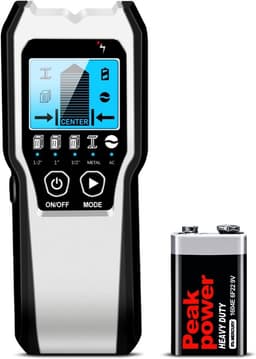
FOLAI FOLAI TH550

Best overall

FOLAI FOLAI TH550
6.3/10about £20.99
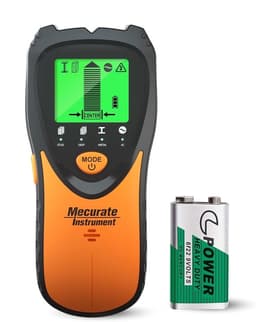
Mecurate Mecurate MSF60A

Rank 2

Mecurate Mecurate MSF60A
6.4/10about £25.99
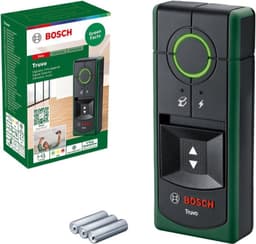
Bosch Bosch Truvo (2nd generation)

Alternative

Bosch Bosch Truvo (2nd generation)
6.0/10about £41.98
On this page

Set it up before the first beep

Fit a cell you trust first. UK reviews on the Mecurate, the TH550, and the HANMATEK keep returning to a dead or missing 9 V cell, and the Truvo’s AAA cells do the same. Put the face flat on a patch you believe is empty, away from the socket. On the TH550, hold the scan button for 1–2 seconds. If you lift the tool, calibrate again. The first useful pass is a socket you already trust.

Scan, then mark only what repeats

Move slowly and keep the face flat. A slight tilt, on the Wenleer notes, is enough for detection to stop. Sweep the bay, come back from the other side, and repeat at another height. Mark an edge only when the same spot returns. If the centre walks sideways on a second pass, do not drill the first pencil line. Prove AC mode on a known live cable with a load switched on. The Truvo manual wants voltage applied, about 110–240 V at 50–60 Hz. Isolated, foil-shielded, and low-current wires are misses HSE allows for. A quiet bay is not permission to drill.
FOLAI FOLAI TH550

Testsieger

FOLAI FOLAI TH550
6.3/10about £20.99

When the whole wall reads live

A beep everywhere usually means you calibrated on the target, the face was tilted, or the board is foil-lined. Lift off and start on a clear patch. Do not merge the manuals. Zircon’s FAQ, for a scanner outside this set, says not to touch the wall with your free hand. The Truvo manual says the opposite when the red light floods the wall: touch it about 20–30 cm away, grip only, gloves and jewellery off. If a second calibration still paints the wall, stop. The zones are on cable detector before drilling.

A tracer is a different sequence

The VXSCAN F04 does not calibrate on plaster. Clip it only to a dead single strand or a parallel pair. The listing says a live cable can damage the unit and the user. Turn the sensitivity down until the tone is quiet a few inches off the wire, then walk until it drops at the break. A room test in the UK notes reached about 15 cm, not the 2–3 feet in the bullet. Do not clip it to live mains to see if it works. Which tool you should have bought is on cable detector vs wire tracer. Who each listing suits is the best cable detector page.

Common questions

Where do I start the calibration?
Start on a clear patch, flat to the wall, away from the socket, a nail, and the stud you are hoping to find. Hold still until the scanner finishes its own zero. On the TH550 that is a 1–2 second hold of the scan button. If you calibrate on the cable, the next sweep beeps everywhere. Lift off and start again on a blank patch. Several reviews say a lift cancels the calibration, so each new position needs its own.
Why does it beep on the whole wall?
The usual causes are a calibration taken on the target, a tilted face, foil-backed or damp board, or an AC mode that is wider than the cable. Mecurate and HANMATEK reviews both describe alarms with no cable under the sensor. Move to a patch you trust, calibrate again, and test the AC mode on a known live wire with a load switched on. If the whole wall still reads live, do not drill on that pass.
Should my other hand touch the wall?
It depends on the manual in your hand. Zircon’s FAQ, for a tool outside this set, says not to touch the wall with your free hand during calibration. The Bosch Truvo manual says that if the red indication covers a wide area, you should touch the wall with your free hand about 20–30 cm away, with no gloves and no jewellery. Using the Truvo rule on a different brand turns a good pass into a full-wall alarm.
How do I check it before I trust it?
Find a cable or a socket you already know is there, and scan that first. The hit should repeat when you approach from the other direction and at a second height. Then try a spot you are confident is empty, and expect quiet. The Health and Safety Executive notes that some detectors miss a low-current wire, so a passed test on one socket does not clear every bay. Mark only the spots that agree.
What if the battery in the box is dead?
Replace it before you judge the scanner. Dead, flat, or missing 9 V cells are a repeated UK complaint on the Mecurate, the TH550, and the HANMATEK, and flat AAA cells turn up with the Truvo. A unit that stays dark is a battery fault until a fresh cell says otherwise. A HANMATEK cell flat within about 30 minutes means you should keep a spare.
Does a quiet pass mean I can drill?
No. A quiet pass means this scanner did not report a target on that sweep. It can miss an isolated, shielded, deep, or low-current cable, and it can miss a stud if you calibrated badly or the board is foil-backed. Look at the route from the socket and treat silence as unfinished. The drilling page covers where those routes are allowed to be.

Related pages

Sources

Public UK sources from the research digest, last checked on 19 October 2026. Shelf prices and star lines are the amazon.co.uk figures captured with these twelve listings. The price bands are this set, not a market average.

  1. HSE: Work near electricity (retrieved 19 October 2026)
  2. HSE: HSG47 Avoiding danger from underground services (retrieved 19 October 2026)
  3. SELECT pocket guide: BS 7671 group 522.6 (retrieved 19 October 2026)
  4. Electrical Safety First: wiring regulations help (retrieved 19 October 2026)
  5. GOV.UK: Approved Document P (retrieved 19 October 2026)
  6. Bosch DIY GB: Truvo (retrieved 19 October 2026)
  7. LSBUD (retrieved 19 October 2026)
  8. amazon.co.uk listings for the twelve ASINs (retrieved 19 October 2026)