Independent comparisons. We may earn from shop links. More info

Cable detector before drilling

Updated: 22 October 2026

The bracket is marked, and a cable detector has just gone quiet on the spot you want. That silence is not a clearance. A cable detector before drilling can add one check on plasterboard. It does not decide where a cable is allowed to be, and it does not turn a prescribed zone into a place you may drill. This page, from Peter F. on 22 October 2026, follows the SELECT pocket guide to BS 7671:2018+A2:2022, the Health and Safety Executive, and Approved Document P for England. The twelve listings stay on our [cable detector comparison](/hub/measuring-equipment/cable-detector). A qualifying purchase through our links can earn a commission at no extra cost to you.

The bracket is marked, and a cable detector has just gone quiet on the spot you want. That silence is not a clearance. A cable detector before drilling can add one check on plasterboard.

Our top picks

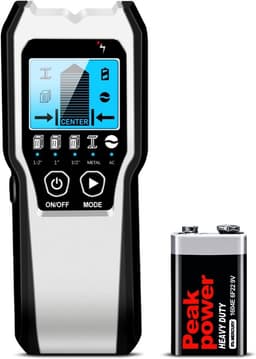
FOLAI FOLAI TH550

Best overall

FOLAI FOLAI TH550
6.3/10about £20.99
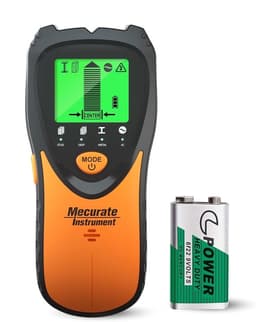
Mecurate Mecurate MSF60A

Rank 2

Mecurate Mecurate MSF60A
6.4/10about £25.99
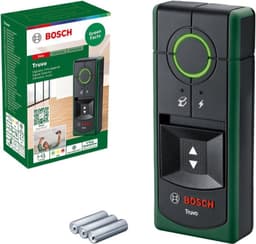
Bosch Bosch Truvo (2nd generation)

Alternative

Bosch Bosch Truvo (2nd generation)
6.0/10about £41.98
On this page

Where a cable is allowed to sit

In the SELECT guide to BS 7671:2018+A2:2022, a cable less than 50 mm from the surface should lie in a prescribed zone with 30 mA RCD protection, or meet Regulation 522.6.204. Zones run within 150 mm of the top and of a corner, and straight from a socket or switch. On a wall 100 mm thick or less, the zone can continue on the reverse. That is where a cable may be buried. The button sequence is on how to use a cable detector.

A zone is not a drilling permit

A prescribed zone is where a cable may legally be buried, especially in the 150 mm strip running from a socket. It is a poor place to drill. Close to the surface, the SELECT guide wants a 30 mA RCD, unless Regulation 522.6.204 is met by an earthed covering, earthed containment, or protection that resists a nail. You cannot see those coverings from the room. Older alterations often leave a cable outside the 150 mm pattern. A quiet reading in a zone is still a zone.
FOLAI FOLAI TH550

Testsieger

FOLAI FOLAI TH550
6.3/10about £20.99

What to do before the bit touches the wall

Look before you scan. Find the socket or switch this bay is likely to feed, and expect a straight run from that faceplate. Energy Networks says the route may not be perfectly straight, and the incoming supply can stay live with the main switch off. Look at the other side if the wall is 100 mm thick or less. HSE says some detectors miss a low-current wire. Switch off at the breaker if you must work near wiring you cannot avoid. If you cannot identify the circuit, or the scanner and the route disagree, stop.

When this is no longer a DIY scan

Digging is a different job. HSG47 asks for plans, a trained locator, and trial holes. LSBUD is the enquiry to the asset owners. A wall scanner does not clear a trench, and HSE says not to excavate mechanically within 0.5 m of a suspected route. Stop if you nick a cable, or if foil or masonry will not scan. The split between scanner, tracer, and hire is the cable detector buying guide. A plasterboard shelf is the best cable detector page.

Common questions

Where are cables allowed to run in a wall?
Under the SELECT guide to BS 7671:2018+A2:2022, a cable within 50 mm of the surface should sit in a prescribed zone and have 30 mA RCD protection, or meet Regulation 522.6.204. The zones are within 150 mm of the top, within 150 mm of a corner, and horizontally or vertically from a socket, switch, or other accessory. On a wall 100 mm thick or less, that zone can continue on the other face. Metal studs need the protection at any depth.
Is a safe zone a safe place to drill?
No. Safe zone is a confusing name for a prescribed zone. It means a cable is allowed to be buried there, so it is where you should expect to hit one, especially in the 150 mm strip running from a socket. Drilling in that strip because it sounds permitted is the misreading. Choose a spot outside those routes when you can, and still do not treat the rest of the wall as proved empty.
Should I look at the other side of the wall?
Yes, when the wall is thin. If it is 100 mm thick or less and you can see a socket or a switch on the reverse, the zone can continue through. A scanner used on one face only will miss that. HSE also says to look both sides before you work near wiring. A cavity or a dot-and-dab wall can hide the run from the face you are decorating.
Does a quiet detector clear the hole?
No. HSE says some detectors miss a low-current wire. Foil-backed board, a bad calibration, and a cable deeper than the listing’s claim produce the same silence. A quiet pass means this tool did not report a target. It does not cancel a prescribed zone, and it does not mean the bay has no cable, pipe, or stud. Mark only what repeats.
Should I turn the breaker off?
If you must work near wiring, HSE says switch off. Do that at the breaker for the circuit you are beside, and remember that the incoming supply can remain live with the main switch off. This page is not a guide to opening the consumer unit. If you cannot identify the circuit, or the scanner and the visible route disagree, stop rather than drilling on a guess.
Is putting up a shelf notifiable electrical work?
In England, notifiable work under Approved Document P includes a new circuit, a consumer-unit change, and circuit work in a bath or shower zone. A picture hook or a shelf fixing is not that list. Scotland and Northern Ireland have their own building rules, so the English list is not a UK-wide answer. Nicking a cable, or altering the circuit, takes the job out of ordinary DIY and over to a competent person.

Related pages

Sources

Public UK sources from the research digest, last checked on 19 October 2026. Shelf prices and star lines are the amazon.co.uk figures captured with these twelve listings. The price bands are this set, not a market average.

  1. HSE: Work near electricity (retrieved 19 October 2026)
  2. HSE: HSG47 Avoiding danger from underground services (retrieved 19 October 2026)
  3. SELECT pocket guide: BS 7671 group 522.6 (retrieved 19 October 2026)
  4. Electrical Safety First: wiring regulations help (retrieved 19 October 2026)
  5. GOV.UK: Approved Document P (retrieved 19 October 2026)
  6. Bosch DIY GB: Truvo (retrieved 19 October 2026)
  7. LSBUD (retrieved 19 October 2026)
  8. amazon.co.uk listings for the twelve ASINs (retrieved 19 October 2026)