Independent comparisons. We may earn from shop links. More info

Selaginella lepidophylla vs Anastatica hierochuntica

Updated: 21 October 2026

The title says Rose of Jericho, and a second tab says Chajarat Mariam, and you need to know which plant can turn green. Selaginella lepidophylla vs Anastatica hierochuntica is that split. They are unrelated. One is a spikemoss that can photosynthesise again if the inner tissue is alive. The other is a mustard-family annual whose dry skeleton opens and stays brown. The [Rose of Jericho comparison](/hub/houseplants/rose-of-jericho) is the table of amazon.co.uk listings. This page does not rank them by price and does not give a soak timetable. Peter F. used Royal Horticultural Society names, Kew’s Plants of the World Online, and the species lines printed on the listings in this set, captured on 20 October 2026. There was no lab grow.

The title says Rose of Jericho, and a second tab says Chajarat Mariam, and you need to know which plant can turn green. Selaginella lepidophylla vs Anastatica hierochuntica is that split. They are unrelated.

Our top picks

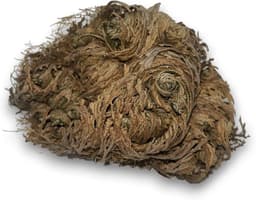
HOSTENATURA HOSTENATURA

Best overall

HOSTENATURA HOSTENATURA
7.2/10about £5.85
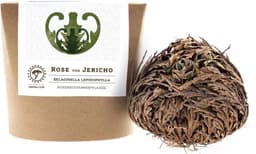
YAKEBA YAKEBA gift box

Rank 2

YAKEBA YAKEBA gift box
7.3/10about £21.74
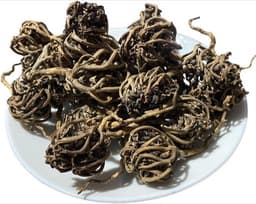
Générique Générique

Alternative

Générique Générique
0.9/10about £29.99
On this page

Two plants, one shop name

The Royal Horticultural Society lists Selaginella lepidophylla as resurrection clubmoss and Anastatica hierochuntica as holy rose. Both pages also allow rose of Jericho or resurrection plant as English names. Neither species is native to Britain or Ireland. A shop title that uses only the English name has not told you which plant is in the parcel. Kew records the spikemoss from southern New Mexico and western Texas through Central America. It records the annual from the Sahara to Iraq and the Arabian Peninsula. Britannica calls Anastatica the true rose of Jericho and Selaginella lepidophylla the false rose, from the Chihuahuan Desert. True there is a naming history, not a mark of a better houseplant. If you want green fronds, the false rose is the one that can produce them. If you want the plant Britannica calls true, you are buying a dried annual, not a clubmoss that greens up on a windowsill. A third name appears once in UK retail and then stops. Some herb shops sell Selaginella pilifera under the same English name. It is not one of the two RHS plants above, and it is not among the ten listings in this comparison. If a page prints pilifera, it is a different species.

Green fronds or a brown skeleton

Selaginella lepidophylla can regain respiration and photosynthesis when the inner tissue is alive. That is the plant in The Guardian’s resurrection-plant note: a dried ball that can turn green. Anastatica hierochuntica does not do that once it is a dry skeleton. A 2010 anatomy paper describes the movement as hygrochastic, which means the dead tissues curl and uncurl with moisture. The published summary of the species makes the same limit: the dead tissues do not revive or turn green. The skeleton uncurls. If you soak Mary’s flower and wait for the clubmoss in the Guardian photograph, you are waiting for a different plant. Opening is a poor life test for both. A 2019 paper in the Journal of the Royal Society Interface shows that outer stems of the spikemoss can still move when they are dead. The Lady Bird Johnson Wildflower Center, a US source, says a ball that opens and stays tan to dark brown can be a dead Selaginella lepidophylla sold as if it will live again. Use that as a limit on what an open brown ball means, not as UK law. An Anastatica skeleton also opens and stays brown, and that brown is what the plant is, not a care mistake. You should not expect flowers from the dried spikemoss on a dish, and you should not expect a living green annual from a parcel sold as a dried flower. The annual flowered before it was dried. The parcel is the skeleton. Fertility, tea, and pet-safety lines are not decided here. If a child or a pet eats an unidentified dried plant, contact NHS 111 or a vet.
HOSTENATURA HOSTENATURA

Testsieger

HOSTENATURA HOSTENATURA
7.2/10about £5.85

What to buy if you want green fronds

Choose Selaginella lepidophylla when you want a chance of green fronds, and only when the listing prints that binomial. In this set, YAKEBA prints it, HOSTENATURA puts it in the description, and the Brxmpn title names it. EquSym and HERBALISTA do not print a binomial, so those packs do not tell you which of the two plants you are holding. A missing name is not a small omission. It is the reason a brown ball and a green photograph can both be correct for the title the seller used. If the named spikemoss is what you wanted, the wake-up is a shallow dish and a dry-down, on the how to revive a rose of Jericho page. If you want the top pick and the best value among the listings that name the spikemoss, that decision is on the best rose of Jericho page. Green is a property of living Selaginella lepidophylla.

What to buy if you want the dried annual

Choose Anastatica hierochuntica when you want Mary’s flower as a dried object and you will not expect the green clubmoss. Générique is the listing in this set whose product-type field prints that binomial. VITALIA sells dried flowers as Chajarat Mariam and does not print a species name, so you cannot confirm the annual from the Latin. Chajarat Mariam on a UK listing is a shop name for that tradition, not a third species and not a care method. The Rose of Jericho buying guide is where piece counts and conflicting unit-count fields are checked. This page stops at the name. A brown skeleton that only uncurls is what dried Anastatica does.

Common questions

Which one turns green?
Selaginella lepidophylla can turn green if the inner tissue is alive and can photosynthesise again. Dried Anastatica hierochuntica uncurls and stays brown. The dead annual tissues do not revive. An open shape, on its own, does not tell you which plant you have.
Which one is the true rose of Jericho?
Britannica calls Anastatica hierochuntica the true rose of Jericho and Selaginella lepidophylla the false rose. The Royal Horticultural Society uses rose of Jericho for both. True is a naming tradition. It does not mean the annual will turn green, and it does not mean the spikemoss is a fake product.
What is Chajarat Mariam?
Chajarat Mariam is a shop name used for Mary’s flower, the dried annual associated with Anastatica hierochuntica. In this set, VITALIA uses that name and does not print a binomial. Générique is the listing that prints Anastatica hierochuntica. The English name alone does not prove the Latin.
Can a dead spikemoss still open?
Yes. Outer stems of Selaginella lepidophylla can move when the tissue is dead, which a 2019 Royal Society Interface paper describes. A ball that opens and stays brown can be a dead spikemoss, which is also the limit the Lady Bird Johnson Wildflower Center states. Movement in water is not proof of life.
Which listings in this set name which plant?
YAKEBA, the HOSTENATURA description, and the Brxmpn title name Selaginella lepidophylla. Générique prints Anastatica hierochuntica. VITALIA says Chajarat Mariam without a binomial. EquSym and HERBALISTA do not print either Latin name, so those titles do not settle the question.
Are either native to Britain?
No. The Royal Horticultural Society records neither Selaginella lepidophylla nor Anastatica hierochuntica as native to Britain or Ireland. Kew’s ranges are the Americas for the spikemoss and North Africa to the Arabian Peninsula for the annual. A UK listing is a shop page, not a wild plant.
Is Selaginella pilifera a third plant?
Yes. Some UK herb shops use rose of Jericho for Selaginella pilifera, which is neither the resurrection clubmoss nor the holy rose on the RHS pages. It is not in the ten listings compared here. If the label says pilifera, do not assume it will behave as Selaginella lepidophylla without reading that seller’s own note.

Related pages

Sources

Public UK and botanical sources named below. amazon.co.uk prices, stars and review counts on these ten listings were read on 20 October 2026. Page updated 21 October 2026.

  1. RHS, Selaginella lepidophylla (retrieved 20 October 2026)
  2. RHS, Anastatica hierochuntica (retrieved 20 October 2026)
  3. Kew POWO, Selaginella lepidophylla (retrieved 20 October 2026)
  4. The Guardian, houseplant of the week: resurrection plant, 8 November 2024 (retrieved 20 October 2026)
  5. Journal of the Royal Society Interface, stem movement in Selaginella lepidophylla, 2019 (retrieved 20 October 2026)
  6. Consumer Rights Act 2015, sections 9 and 11 (retrieved 20 October 2026)
  7. GOV.UK, plants and wood from outside the EU (retrieved 20 October 2026)
  8. ASA, healthcare and medicinal claims (retrieved 20 October 2026)