Independent comparisons. We may earn from shop links. More info

How to revive a rose of Jericho in a shallow dish

Updated: 21 October 2026

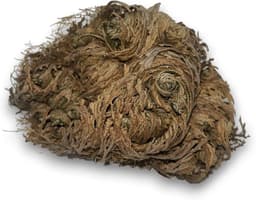
The ball on the windowsill is still a tight brown fist, and you want to know how to revive a rose of Jericho without leaving it in a bowl until it smells. This page is the wet, light, and dry-down routine for the spikemoss Selaginella lepidophylla, the plant that can turn green if the inner tissue is still alive. It is not a ranking of the ten amazon.co.uk listings, and it is not the species test. The [Rose of Jericho comparison](/hub/houseplants/rose-of-jericho) is where those listings sit next to each other. Peter F. followed The Guardian’s 8 November 2024 care note and a Royal Society paper on stem movement, and did not soak a plant in a lab. A qualifying purchase through a comparison link can earn a commission at no extra cost to you.

The ball on the windowsill is still a tight brown fist, and you want to know how to revive a rose of Jericho without leaving it in a bowl until it smells.

Our top picks

HOSTENATURA HOSTENATURA

Best overall

HOSTENATURA HOSTENATURA
7.2/10about £5.85
EquSym EquSym 4-pack

Alternative

EquSym EquSym 4-pack
7.2/10about £19.51
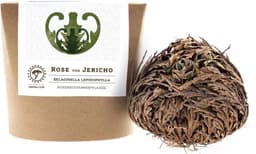
YAKEBA YAKEBA gift box

Rank 3

YAKEBA YAKEBA gift box
7.3/10about £21.74
On this page

Put it in a shallow dish, not a deep soak

Set the dry ball on pebbles in a shallow dish, then add rainwater or distilled water until it reaches the pebble line. The Guardian describes that arrangement because the plant is sensitive to chlorine, and it says the ball unfurls within hours. You are wetting the base, not burying the plant in a jug. A deep soak that covers the fronds is a different instruction, and it is the one that leaves tissue sitting in water. Farmer Gracy, a UK seller, says a dry plant perks up in about four hours. The Spruce, a US guide, says about three to four hours with the water just above the pebbles and the plant not deeply submerged. Those times are a window, not a promise that your ball will match a green photograph by teatime. HOSTENATURA’s listing says a bowl of warm, not hot, water. The EquSym 4-pack listing says a deep dish with the roots covered and the fronds exposed. Those two seller lines are not the same method. Follow the shallow pebble dish unless the listing you bought specifies the other, and even then keep the fronds out of a long bath. A UK app, Growli, says tap water is fine and that you should keep the plant moist. That fights the Guardian line on chlorine, so this page does not merge the two. Rainwater or distilled water is the instruction to follow.

Take it out before it stays wet

A complete dry-down every few days is part of the routine, not an optional extra. The Guardian states that limit alongside the temperature band of about 18–29°C while the plant is active. Constant water is how these parcels go mouldy. Farmer Gracy is stricter on the wet window: do not leave the plant standing in water for more than a few days or it rots, change the water daily, and give it rests without water. The Spruce suggests one dry day a week and a full dry-down every couple of weeks. This page follows the Guardian as the UK source, and it treats Farmer Gracy’s few days as the rot warning, not as a second timetable to blend in. In practice that means you look at the dish on the second or third day, not at the end of a fortnight. If the water is cloudy, change it rather than topping up the same bowl. If you cannot remember when you last emptied it, empty it. Then let the plant dry in the air until it is fully dry, which is the Guardian’s dry out completely, before you wet it again. Misting is not in that note, so do not mist a plant that is already sitting in water. Skip the long soak if the ball already smells, feels soft, or shows a fuzzy coat. That is no longer a wake-up. It is the problem on the rose of Jericho mould page.
HOSTENATURA HOSTENATURA

Testsieger

HOSTENATURA HOSTENATURA
7.2/10about £5.85

Light, warmth, and what opening does not prove

Bright indirect light is the placement in the Guardian note. A south-facing sill in July can be harsher than bright indirect, so a spot back from the glass, or a north-facing room that is still bright, matches that line better than a pane in full sun. HOSTENATURA’s listing disagrees with itself: one line says direct sunlight, another says no direct sun while the plant is dormant, and another says indirect light once it is open. Do not pick the sunniest sentence because it sounds more lively. While the plant is active, about 18–29°C is the band the Guardian gives. A cold porch in a British winter sits under that, and a radiator shelf can sit over it. Move the dish if the room is outside that range for days at a time. Opening is not proof the plant is alive. A 2019 paper in the Journal of the Royal Society Interface shows that outer stems of Selaginella lepidophylla can still move when the tissue is dead. The curl is a physical response to water. An open brown ball can be a dead spikemoss, or it can be the other plant sold under the same shop name. Green fronds, if they come, are the sign that inner tissue is working. Brown and open is not a failure of the dish by itself. If you wanted a plant that turns green and the ball only swells and stays tan, stop repeating the soak and read which species you are likely holding. That judgement sits on the Selaginella or Anastatica page.

When this routine is the wrong page

This routine assumes you already have the spikemoss, or a ball you believe is the spikemoss. It does not tell you which amazon.co.uk listing to buy, and it does not walk through pack counts. If the title never printed a binomial, the Rose of Jericho buying guide is the page that separates a named Selaginella lepidophylla from a title that only says rose of Jericho. Anastatica hierochuntica, including plants sold as Chajarat Mariam, is a dried annual skeleton. It can open in water and it stays brown. Soaking it on this timetable will not produce the green clubmoss in the Guardian note. Stop when the plant smells, goes soft, or grows fuzz. If a child or a pet eats an unidentified dried plant, that is NHS 111 or a vet. If the ball will not open after one careful wetting and a dry-down, do not leave it submerged for a week.

Common questions

How do you wake a dry ball?
Set it on pebbles in a shallow dish and add rainwater or distilled water to the pebble line, then give it bright indirect light. The Guardian describes unfurling within hours and a complete dry-down every few days, at about 18–29°C while the plant is active. Do not start with a deep jug of water over the fronds.
How long does it take to open?
The Guardian says within hours. Farmer Gracy says about four hours, and The Spruce says about three to four hours. Your ball can be slower, and an open shape is not the same as green fronds. If nothing has moved after a careful first wetting, do not leave it standing for a week to force it.
What water should you use in the UK?
Rainwater or distilled water is the Guardian instruction, because the plant is described as sensitive to chlorine. Do not treat UK tap is fine as the same rule. If you only have tap, leaving it to stand overnight is a suggestion from a US guide, not a promise that chlorine will be gone.
How long can it stay in the dish?
A few days is the rot warning from Farmer Gracy, who also says to change the water daily and then give the plant a rest. The Guardian’s line is a complete dry-down every few days. Follow that dry-down. Do not keep the dish topped up for a fortnight.
Does opening mean it is alive?
No. Outer stems of Selaginella lepidophylla can still move when they are dead, which is what a 2019 Royal Society Interface paper describes. Green tissue is the sign of a living plant. An open brown ball can be dead spikemoss or the other species sold under the same name.
When should you stop and treat it as mould or a dead ball?
Stop when it smells, feels soft, or grows a fuzzy coat, and move to the mould problem rather than soaking it again. If it opens and stays brown with no fuzz, it may be Anastatica or a dead spikemoss. That is a species question, not a reason to add more water.

Related pages

Sources

Public UK and botanical sources named below. amazon.co.uk prices, stars and review counts on these ten listings were read on 20 October 2026. Page updated 21 October 2026.

  1. RHS, Selaginella lepidophylla (retrieved 20 October 2026)
  2. RHS, Anastatica hierochuntica (retrieved 20 October 2026)
  3. Kew POWO, Selaginella lepidophylla (retrieved 20 October 2026)
  4. The Guardian, houseplant of the week: resurrection plant, 8 November 2024 (retrieved 20 October 2026)
  5. Journal of the Royal Society Interface, stem movement in Selaginella lepidophylla, 2019 (retrieved 20 October 2026)
  6. Consumer Rights Act 2015, sections 9 and 11 (retrieved 20 October 2026)
  7. GOV.UK, plants and wood from outside the EU (retrieved 20 October 2026)
  8. ASA, healthcare and medicinal claims (retrieved 20 October 2026)