Descale an electric shower head: a safe method
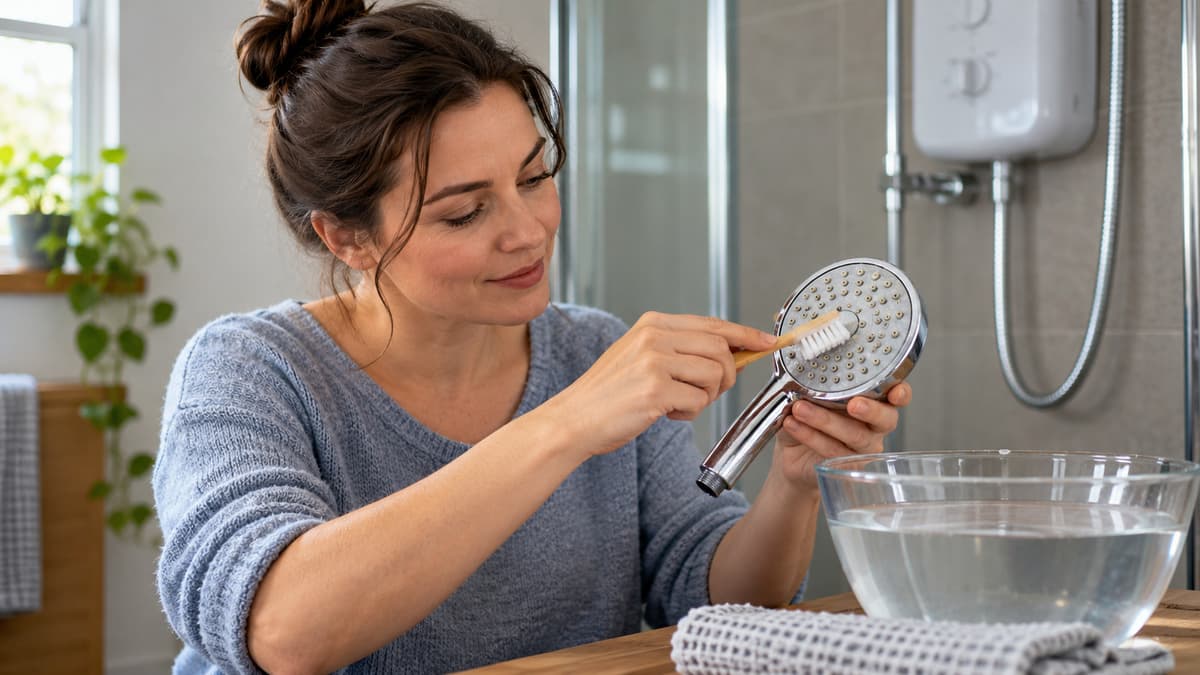
Learn how to descale an electric shower head safely, clear blocked nozzles and recognise when weak or cycling flow needs a qualified professional.
On this page

A weak, uneven spray or an electric shower that starts cycling between hot and cold can be caused by limescale blocking the head. You can often descale an electric shower head without touching the electrical unit: isolate the shower, remove only the detachable head, clean it according to its manual, rinse it thoroughly and refit the supplied parts. Cleaning the head is routine maintenance. Opening the shower casing is not.
In short
Switch off and isolate the shower before you remove its head, then use rub-clean nozzles or the manufacturer's approved descaling method. A 50/50 mixture of white vinegar and warm water for about an hour is one manufacturer-backed method, not a rule for every model. If cleaning the head does not restore a steady spray, leave the casing closed and have the water supply, inlet filter or internal fault assessed properly.
Why limescale changes the shower
An electric shower heats cold mains water as it passes through the unit. The head is part of the shower's flow path, not just a cosmetic fitting. When mineral deposits narrow several spray holes, water cannot leave in the pattern or at the rate the shower was designed around. You may notice jets firing sideways, a concentrated centre spray, a weaker overall flow or white crust around the nozzles.
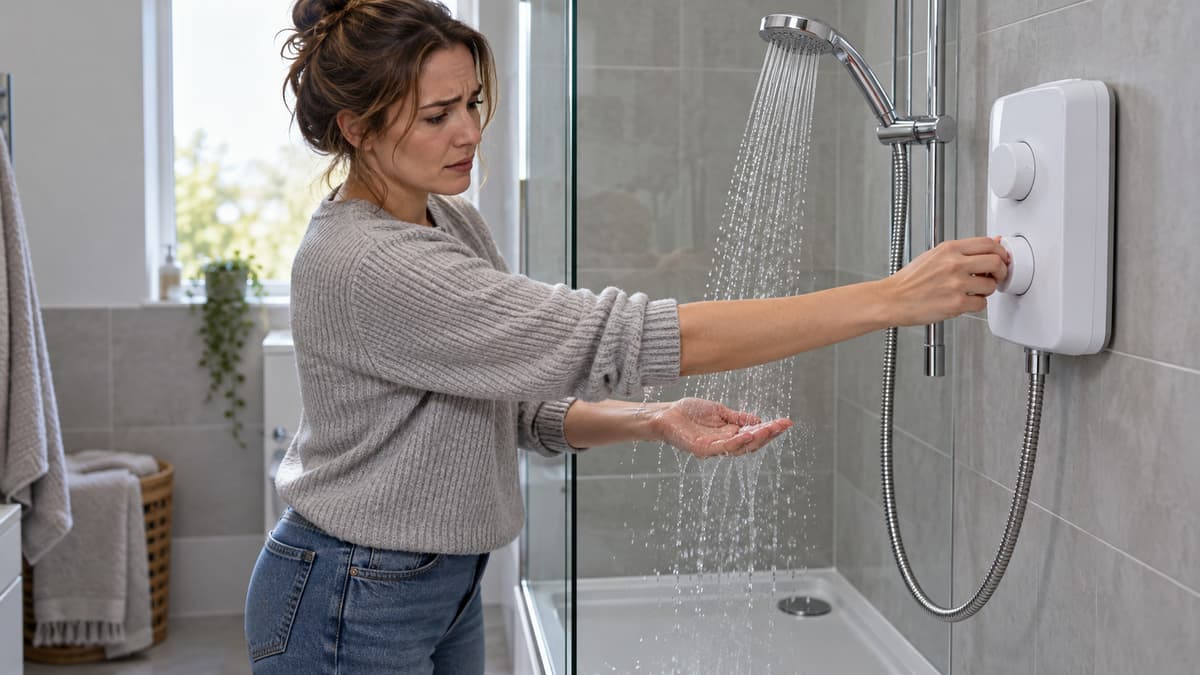
A restriction can also contribute to hot-and-cold cycling. If too little water passes through the heater, the temperature rises until thermal protection cuts the heat, then heating resumes as the water cools. A low cold supply, a restricted inlet filter or a failing component can look the same. Scale around the outlets and an uneven spray make the head the sensible first check. Loss of heat, tripping, a casing leak or a burning smell do not. Our guide to hot and cold cycling covers the other causes, and the electric shower comparison helps if you are choosing a unit.
Isolate the shower before cleaning
Turn the shower off at its own controls, then use the separate shower isolator before handling the head. Depending on the installation, this may be a pull-cord switch or a wall-mounted switch outside the wet area. Allow the shower and the water in the hose to cool so nobody can switch the unit on while the head is detached.
Read the cleaning section of the manual for your exact model. It should say whether the head unscrews from the hose, whether a retaining washer is present and which cleaning products are acceptable. If the property is rented, check the landlord's instructions before substituting parts. Some guidance requires the supplied head and hose to stay with the shower.
Put a towel in the bath or tray so a dropped head does not mark the finish and a washer does not disappear down the waste. Unscrew the head from the hose by hand. Do not twist the hose at the shower unit. If modest hand pressure will not move it, stop rather than using grips.
Do not pour vinegar or any other cleaner into the electrical unit, and do not remove the cover. Isolation at the wall switch is not a licence to open the casing.
How to descale an electric shower head
Use the least aggressive method that matches the amount of scale and the manufacturer's instructions. The aim is to clear the outlets without enlarging them, scratching the finish or leaving acid in the head.
- Inspect the detached head. Note where the washer sits and check it for splits or distortion. Look for white deposits and a cracked thread.
- Rub flexible nozzles first. Massage rubber or silicone outlets with a finger or soft cloth across the whole spray face, not only the blocked jets.
- Prepare an approved soak if rubbing is not enough. Aqualisa's maintenance advice uses equal parts white vinegar and warm water for about one hour, and only when that suits your head. Your manufacturer's concentration, time and exclusions take precedence.
- Soak the removable head, not the hose or the shower unit. Use a bowl. Do not hang a liquid-filled bag on the fitted head, where it can leak towards the casing.
- Rinse with clean water, wipe with a soft cloth, and check that debris is out of the outlets and the thread.
- Let excess water drain so you do not carry descaling solution back to the hose. Dispose of the used solution and wash the bowl.
Do not clear holes with a needle, drill bit or other sharp object. It can tear flexible nozzles, enlarge the jets and permanently alter the spray. Avoid boiling water, abrasive pads, bleach and an undiluted acid treatment unless the manufacturer expressly calls for one.
Rub-clean nozzles or a vinegar soak
Rub-clean nozzles are the quickest response to a light surface deposit. Flexible tips let brittle scale break away as you massage them, often without chemicals, if you clean little and often. They do less once hard scale has formed inside the spray plate.
A vinegar soak reaches deposits you cannot rub off the face. White vinegar is acidic, and finishes, seals and plastics vary. The 50/50 warm-water method for about an hour comes from Aqualisa's guidance. It is not Mira, Triton or every other manufacturer's instruction. If your manual names a branded descaler, a different dilution or no vinegar, follow that.
A generic replacement head is not automatically an upgrade. Manufacturers may specify the head and hose because resistance and spray pattern affect flow through the heater. A similar high-pressure or water-saving head can behave differently. The hard-water guide for electric showers explains why compatible fittings matter.
Refit and test the shower
Return the washer to the same position and screw the cleaned head onto the hose by hand until it sits securely without force. Over-tightening can distort the washer or crack a plastic thread. A missing washer can leak in a way that looks like a hose fault. Keep the head aimed into the tray or bath before you restore the isolator.
Follow the manual's start-up procedure, often a cooler start with water running before you raise the temperature. Watch the hose joint and the spray. Stop, isolate and reseat the washer if the joint leaks. A steadier spray and temperature suggest the blocked head was part of the problem. If the spray is still weak, do not keep raising the heat: a hotter setting reduces flow.
What cleaning will not fix
Descaling cannot repair a failed heating element. If the shower produces a steady flow but the water stays cold on every heat setting, an electrical or internal fault is more plausible. A unit that trips, makes an unfamiliar electrical noise or smells hot should be switched off and assessed, not tested again.
Cleaning the head may not cure low pressure. Electric showers rely on the cold mains, and another outlet used at the same time can cut the flow. A partly closed service valve or a blocked inlet filter can restrict water before the heater. Cycling can clear when a blocked head made the unit overheat, but winter mains or a high temperature setting can do the same. Test one change at a time. If the fault is confirmed, read when to replace an electric shower.
Keep the case shut
Do not remove an electric shower's cover to look for scale. Water and a high-power mains supply share the enclosure, and parts may stay hazardous even if you believe the unit is isolated. Opening the cover can disturb seals. Owner maintenance ends at the detachable parts in the manual.
An inlet filter is the usual next suspect when the head is clear but flow stays poor. Reaching it may mean isolating the electricity and water and removing the casing. That is for someone competent to follow the manufacturer's procedure and prove the supply is isolated. Get a qualified shower engineer or electrician if water comes from the casing, the shower trips, flow stays poor with a clean approved head, or the temperature stays unstable. In a rented home, tell the landlord what changed after you cleaned the head rather than opening the unit.
Common questions
Can I use vinegar to descale an electric shower head?
How long should I soak a shower head in vinegar?
Should I switch off an electric shower before cleaning the head?
What are rub-clean shower nozzles?
Can I descale inside an electric shower?
Will descaling fix an electric shower that runs cold?
How often should I descale an electric shower head in a hard-water area?

Peter F. is the editor for DIY & tools at productscompared.co.uk. Comparisons in this category are checked against amazon.co.uk listings, review evidence and public UK sources.
Related articles
When an electric shower swings hot and cold
Work through the common reasons an electric shower cycles between hot and cold.

Cold mains pressure and an electric shower
Understand why kilowatts do not determine pressure and what can restrict the flow.

When to replace an electric shower
Recognise the faults that call for repair or replacement rather than routine cleaning.