Electric shower hot and cold: stop temperature cycling
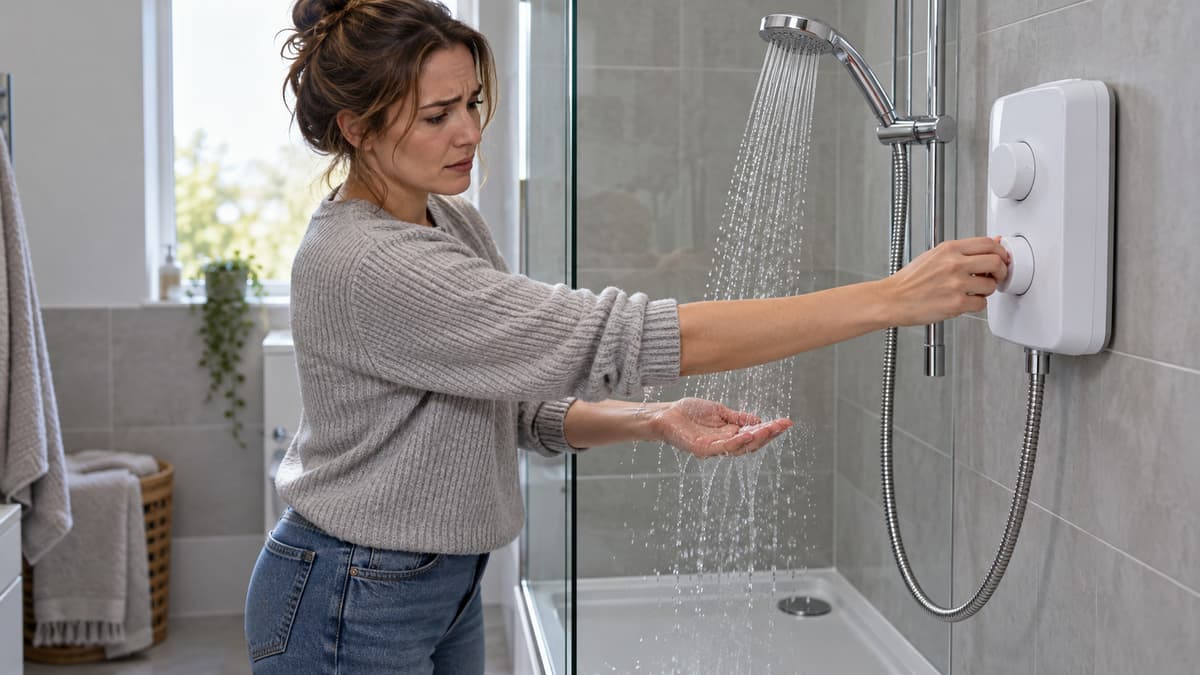
Find out why an electric shower runs hot then cold, how to check the head, hose and flow safely, and when to stop using it and call a qualified electrician.
On this page

One moment the water is comfortable; the next it is freezing, then it surges hot again. When an electric shower runs hot and cold, the heater is often reacting to low or restricted water flow rather than simply failing outright. You can check the shower head, hose, controls and competing water use without removing the casing, but persistent or severe swings need professional diagnosis.
In short
An electric shower commonly cycles hot and cold when water passes through its heater too slowly and the thermal cut-out temporarily stops the heating. Limescale in the head, a restricted hose, a temperature control set too high or another outlet reducing the incoming pressure can all contribute. Start with safe external checks, and stop using the shower if there are leaks, burning smells, electrical trips or scalding water.
Why an electric shower goes hot then cold
An electric shower takes cold mains water and heats it as you use it. It does not have a cylinder of hot water to blend in, so its outlet temperature depends heavily on how much water passes over the heating elements. Slower flow gives the water more time to heat; faster flow generally makes it cooler.
If flow becomes too low, the water inside the unit can get hotter than intended. A thermal cut-out, often shortened to TCO, interrupts the heating before excessive temperature causes damage. Once the unit cools, heating may resume, creating the hot-cold-hot cycle. That does not prove the shower is healthy, but it explains why a flow problem can feel like an electrical fault.
A failed part is not the first assumption. Triton advises checking pressure, the head, the hose and the temperature-control position when a unit cycles. A flow problem often changes with the dial or with other water use, while a component fault may remove heat on one power setting. That clue is not a reason to open the case.
Check the shower head, hose and controls
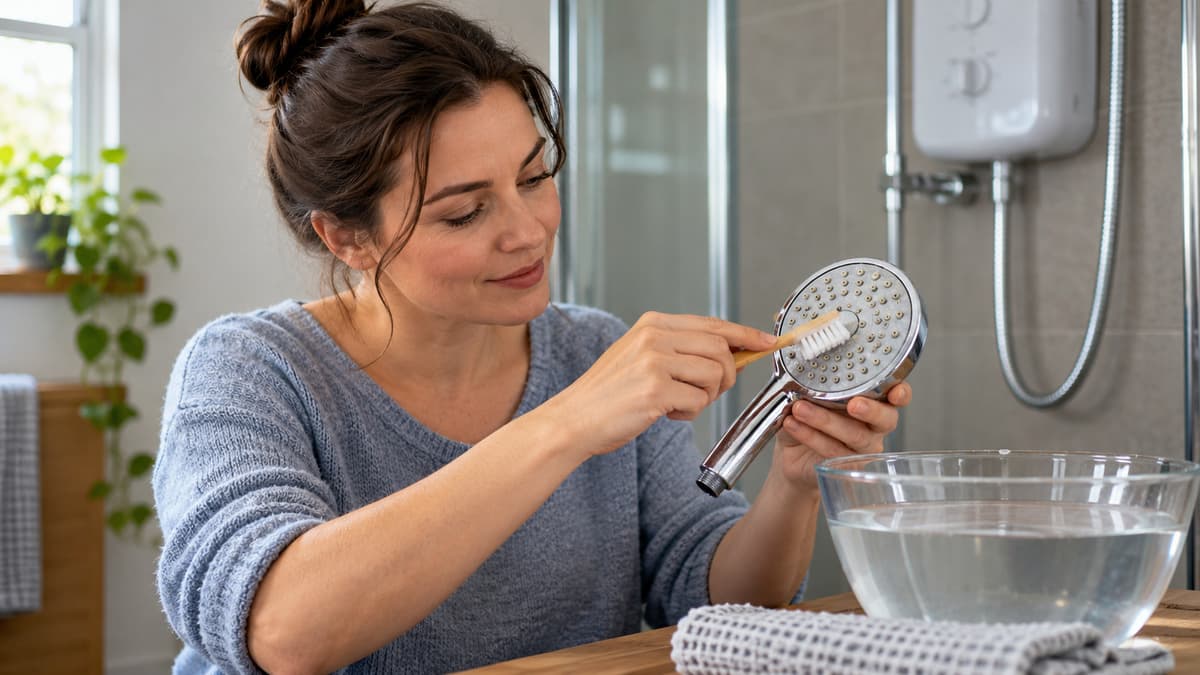
Switch the shower off and let it cool, then examine the spray plate. Uneven jets, water squirting sideways or visibly crusted nozzles suggest scale or debris. Clean and descale the head only as its manufacturer directs, rinse it thoroughly and refit it correctly.
Hard-water scale is especially relevant because a modest restriction across many small spray holes can reduce total flow. Our guide to electric showers in hard-water areas explains the maintenance trade-offs. Cleaning may restore flow, but a damaged, heavily blocked or incompatible head should be replaced with one approved for the shower.
Next, follow the hose from the unit to the handset. Straighten any sharp bend and look for crushing, twisting or deterioration. A hose can also collapse internally while appearing acceptable from the outside. If replacement is necessary, use the bore, length and type specified by the shower manufacturer; a decorative narrow-bore hose can recreate the restriction you are trying to remove.
Try a cooler temperature-control position. On many manual electric showers, turning towards hotter reduces the flow rather than increasing the electrical power, so a very high setting can push a marginal flow into thermal cycling. Change one step at a time and let the temperature settle. The electric shower operating guide covers the controls. Do not test with an unapproved head or hose, and do not obstruct the outlet. If approved parts are clear but cycling continues, look at the incoming supply rather than opening the unit.
What happens when another tap is opened
An electric shower connected to the cold-water main needs adequate pressure and flow while it is running. If someone flushes a toilet, opens a kitchen tap or starts a water-using appliance, that second demand can reduce what reaches the shower. The temperature may rise briefly as flow falls, then turn cold if the thermal cut-out interrupts heating.
Ask other people not to use water during one shower and note whether the temperature stays stable. That is safer than turning a tap on while someone stands under water that might suddenly become hot.
If avoiding simultaneous use solves the problem, you have identified a supply limitation rather than repaired it. That may be manageable in a small household, but it is not a satisfactory long-term answer when ordinary toilet or tap use makes the shower unsafe or unusable. A plumber can assess the dynamic pressure and flow at the shower while other outlets operate; a static pressure reading with everything closed does not show the whole picture.
Colder incoming water in winter needs more heating for the same outlet temperature, so the operating margin is smaller than in summer. A partly blocked head or a marginal supply can show up then. Adjust the controls; do not accept violent temperature swings.
What a thermostatic electric shower changes
A thermostatic electric shower monitors outlet temperature and adjusts operation to keep it steadier than a basic manual model. It does not override the safety limits or make up for an inadequate supply. If incoming flow drops too far, the shower may reduce heat, shut heating off or still operate a safety cut-out. A blocked head and a restricted hose still matter. Thermostatic means controlled temperature within stated conditions, not immunity from plumbing problems.
A thermostatic model can improve control, but it will not cure a constricted pipe, poor mains flow or competing household demand. Compare rating, cable, protective device, pressure range and installation instructions before buying. Our 11 kW electric shower comparison includes manual and thermostatic options. The buying guide sets out the trade-offs for your circuit and water supply.
Do not assume an 11 kW unit can replace a lower-powered shower on the existing wiring. Higher power usually means higher current. The cable and kilowatt guide covers cable size, protective device and isolation. A qualified electrician has to confirm the circuit; temperature cycling is not a reason to skip that check.
When the fault needs a professional
External checks should end at the shower casing. Do not remove the cover, probe terminals or test the thermal cut-out with a multimeter. An electric shower is a fixed high-current appliance containing mains electrical parts close to water, and switching it off at its controls does not necessarily isolate every internal part.
Stop using it and arrange help if you notice a burning smell, crackling, discolouration, water leaking from the casing, visible cable damage or repeated operation of the circuit breaker or RCD. The same applies if outlet water becomes scalding, the controls behave unpredictably or normal isolation cannot be relied upon. Do not keep resetting a protective device to complete a shower.
Where cycling remains after the approved head and hose are clear, the controls are sensibly set and no other outlet is drawing water, a qualified repairer can investigate internal causes. These may include a degraded thermal cut-out, heating-element fault, flow switch problem, internal blockage or loose electrical connection. The symptom alone cannot distinguish them safely.
Tell the repairer whether the fault happens on every power setting, how long it takes to appear, whether another tap changes it, and whether winter makes it worse, plus the make, model and approximate age. Repair is not always economical when parts are obsolete. Replacement still means checking the circuit and water supply, not choosing by kilowatt rating alone.
A safe troubleshooting order
Work through the likely causes in an order that keeps water and electricity separated. Change one condition at a time, or you will not know which restriction mattered. One successful shower does not overrule leakage or electrical tripping.
- Stop if the shower is unsafe. Burning smells, casing leaks, electrical trips, damaged controls or scalding water are reasons to isolate it if safe and call a professional.
- Check whether other water use matches the fault. Avoid running taps, toilets and appliances during one trial, then note whether the shower remains stable.
- Inspect the head when the shower is off and cool. Clean scale according to its instructions and replace a damaged head only with an approved type.
- Inspect the hose externally. Remove kinks and replace a crushed or internally collapsed hose with the manufacturer-specified size.
- Reduce the temperature setting slightly. Allow time for the outlet to settle instead of turning the control rapidly between extremes.
- Book a qualified diagnosis if cycling remains. Keep the casing closed and report the pattern, settings and effect of other outlets.
Common questions
Why does my electric shower go hot and then freezing cold?
Is a blocked shower head enough to cause cycling?
Why does it turn cold when someone flushes the toilet?
Should I change the shower hose?
Is the thermal cut-out broken?
Does cycling mean the element has failed?
Will a thermostatic shower solve the problem?

Peter F. is the editor for DIY & tools at productscompared.co.uk. Comparisons in this category are checked against amazon.co.uk listings, review evidence and public UK sources.
Related articles
Descale an electric shower head: a safe method
How to descale an electric shower head safely, clear blocked nozzles, and spot when cycling flow needs a professional.

Electric shower water pressure: what you need
How mains pressure, flow and shower power interact, and why an electric shower can cut to cold.

Thermostatic electric shower or manual: which is better?
Compare thermostatic and manual electric showers, and decide whether the extra cost suits your household.