Electric shower water pressure: what you need

Electric shower water pressure comes from the cold main. See the bar and flow it needs, why low flow cuts the heat, and when a pumped model suits a loft tank.
On this page

You select the high setting and expect a stronger spray because the case says 10.5 kW. The flow stays weak, or the water turns cold when the washing machine fills. Electric shower water pressure comes from the water supply. The kilowatt rating tells you how much heat the unit can add.
In short
A standard electric shower needs a direct cold mains supply that meets that model's minimum pressure and flow. Extra kilowatts heat more water and leave a weak main unchanged. If flow falls too far, the unit may switch off its heating elements and deliver cold water.
Pressure comes from the main, not the kilowatts
An electric shower heats cold water as it passes over the elements and sends it to the handset. A conventional unit stores no hot water and has no pump. Outlet force starts with the cold main, then falls through the valves, the heater, the hose and the head.
The kilowatt figure is heating capacity. At the same incoming temperature, a 10.5 kW unit can heat more litres per minute than an 8.5 kW unit. That helps in winter, when the main is colder, if the main can supply the flow and the circuit can take the load. The electric shower buying guide covers those installation trade-offs.
On many manual showers, turning the control towards hotter restricts flow, so each litre is heated for longer. You get hotter water and fewer litres per minute. A higher-powered unit may keep that shower warmer at a higher flow, and it still needs incoming pressure and spare capacity when something else draws water. Daily controls are in how to use an electric shower.
How much pressure an electric shower needs
There is no single minimum bar for every electric shower. Use the pressure and the flow in the manual for that model. Pressure without flow is not enough, and a strong static reading with every outlet closed can collapse once water moves. Installers measure the supply while it is working.
Triton's published guidance rises with power. Showers up to 8.5 kW generally need around 1 bar dynamic pressure at 8 litres per minute for full performance. Its 9.5 kW units need around 1 bar at 10 litres per minute, and its 10.5 kW models need around 1.5 bar at 11 litres per minute. Those figures apply to Triton's ranges.
Some Triton units can run at reduced performance from roughly 0.5 bar at 8 litres per minute. That is not the full advertised flow. If the home is marginal at 8 litres per minute, a 10.5 kW unit will not beat a weak main. Check the current manual, including for a high-output unit in the 11 kW electric shower comparison.
Why low pressure can make the water run cold
Enough water has to move through the heater to carry heat away. If pressure or flow drops below the operating threshold, a low-pressure device can keep the elements from energising. Water may still leave the handset, and it will be cold or much cooler. That can look like an electrical fault when the shower is doing what it was designed to do.
A cold tap, a refilling cistern or a washing machine can share the main while you shower, so flow at the shower falls. Once it crosses the cut-out, the heat goes. When the other demand stops, the heater may return. Cold spells that match another appliance point to the supply.
A scaled head, a kinked hose, a partly closed service valve or debris in an inlet filter can cut flow in the same way. Leave the casing closed: the unit combines mains electricity and water. Check the nozzles against the manual and look for a visible kink. Scale is covered in hard water and an electric shower.
Cold water that starts as another outlet opens points to falling supply flow. Cycling with no other demand can be thermal protection from a restricted head.
Check your supply before buying
Start with the supply. Time a known volume from a direct cold mains tap, often the kitchen cold tap. A 10-litre bucket that fills in 60 seconds is about 10 litres per minute. If it fills in 50 seconds, multiply 10 by 60 and divide by 50, which is 12 litres per minute.
The bucket is screening. It does not measure dynamic pressure, the tap may not share the shower's pipe route, and neighbourhood demand changes the result. Repeat it at a busy time, and again while another appliance draws water.
Before installation, ask a competent plumber to confirm dynamic pressure and flow at the connection. That matters more for a 10.5 kW model, an upstairs bathroom, old pipework, or taps that lose flow together. The supply arrangement has to match the manufacturer's instructions.
The electrical side is separate. Moving from 8.5 kW to 10.5 kW may mean a different dedicated circuit, protective device, cable and isolator. Better flow does not make an unsuitable circuit safe, and a larger cable does not improve the water. Compare both in the cable and kW guide.
Loft tanks, pumps and pumped electric showers
A loft cistern is gravity-fed. Pressure depends largely on the height of the stored water above the outlet. A typical standard electric shower is built for a direct mains connection, so a low cistern feed can sit below its operating requirement. Cold water from either source is not interchangeable.
On a cistern supply, the relevant product may be a pumped electric shower: heating and a pump in one unit, for a suitable stored cold supply. Mira distinguishes a cold-mains electric shower from that pumped alternative. The instructions still limit tank position, pipework, capacity and installation.
A generic pump ahead of a standard shower is a different job. Both manufacturers have to approve it. Triton notes that pumping options are not suitable for every rating, and a layout allowed at a lower power may be refused at 10.5 kW. An unapproved pump can create excessive pressure or unreliable running.
Ask an installer whether you have a direct main, a private supply or a cistern-fed branch before you buy. Poor flow through the whole property may sit with the incoming service, the valves or the pipework. Where the main cannot be improved, choose a product designed for the supply you have.
Fixes that do not create more pressure
A new head changes the spray. It does not create water at the inlet. Fewer or smaller outlets can feel sharper and add resistance through the heater. An unapproved head can contribute to overheating and temperature cycling. Use the handset the manufacturer permits, and keep the nozzles free of scale.
A longer hose adds resistance, so flow can fall, and hose length can affect backflow protection if the handset reaches a bath, basin or toilet. Follow the manufacturer's permitted arrangement. Opening a partly closed service valve can restore flow. Leave inaccessible valves alone, and do not remove a flow regulator or safety part.
Clear external scale as the manual describes, avoid competing demand, correct a known restriction, improve poor pipework where that is feasible, or choose a shower built for the source you have. If it still cuts out on a supply already confirmed as adequate, or if it leaks, trips or smells hot, switch it off and get a professional inspection.
The top pick in our 11 kW comparison is the Mira Azora 9.8 kW thermostatic, about £297, with 4.6 from 361 amazon.co.uk reviews. The listing states no flow figure, so the rating is not a pressure result. A qualifying purchase through our links can earn a commission at no extra cost to you. We have not measured these showers in a lab. The bar and litre figures are Triton's published guidance for its own ranges.
Common questions
What water pressure does an electric shower need?
Will a 10.5 kW electric shower increase water pressure?
Why does my electric shower go cold when another tap is opened?
Can a standard electric shower run from a loft tank?
Can I fit a pump before an electric shower?
How can I check my water flow rate?
Does a longer shower hose improve pressure?

Peter F. is the editor for DIY & tools at productscompared.co.uk. Comparisons in this category are checked against amazon.co.uk listings, review evidence and public UK sources.
Related articles
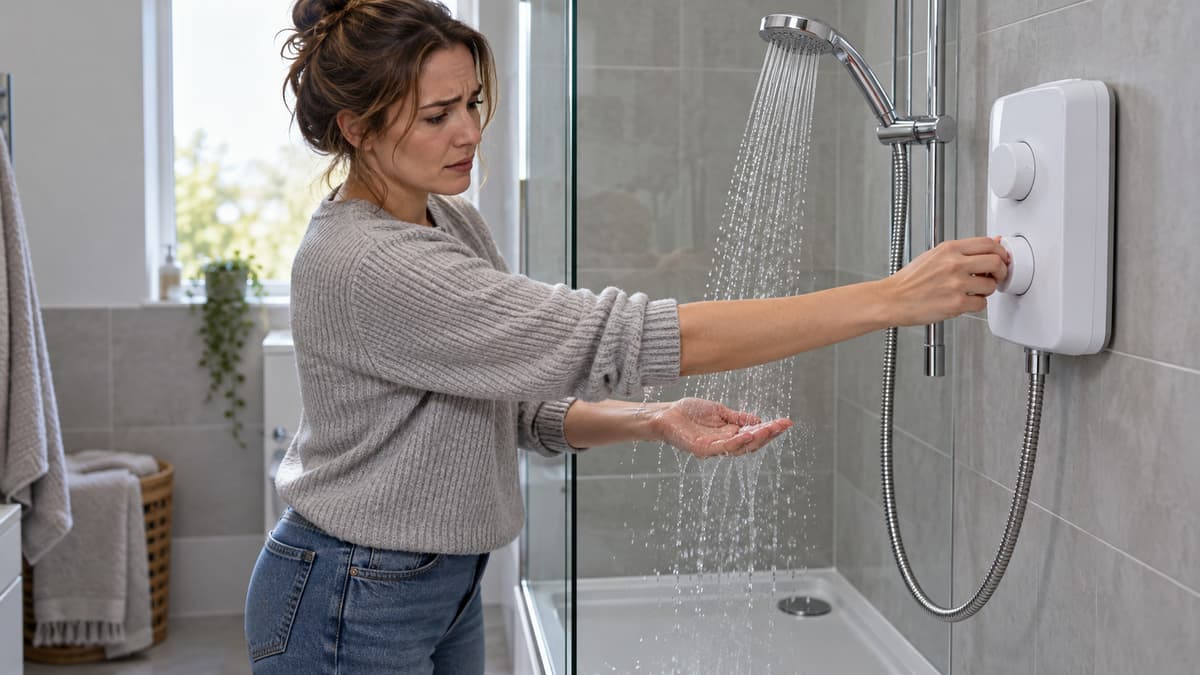
When an electric shower swings hot and cold
Trace temperature cycling to restricted flow, competing taps or the thermal cut-out before assuming the heating element has failed.

Why an electric shower goes lukewarm in winter
See why colder incoming water changes the flow and temperature you can get from the same electric shower.

Thermostatic or manual electric shower
Compare the two control types and understand what thermostatic regulation can and cannot fix.