Tomatoes in pots: pot size, grow-bags and watering
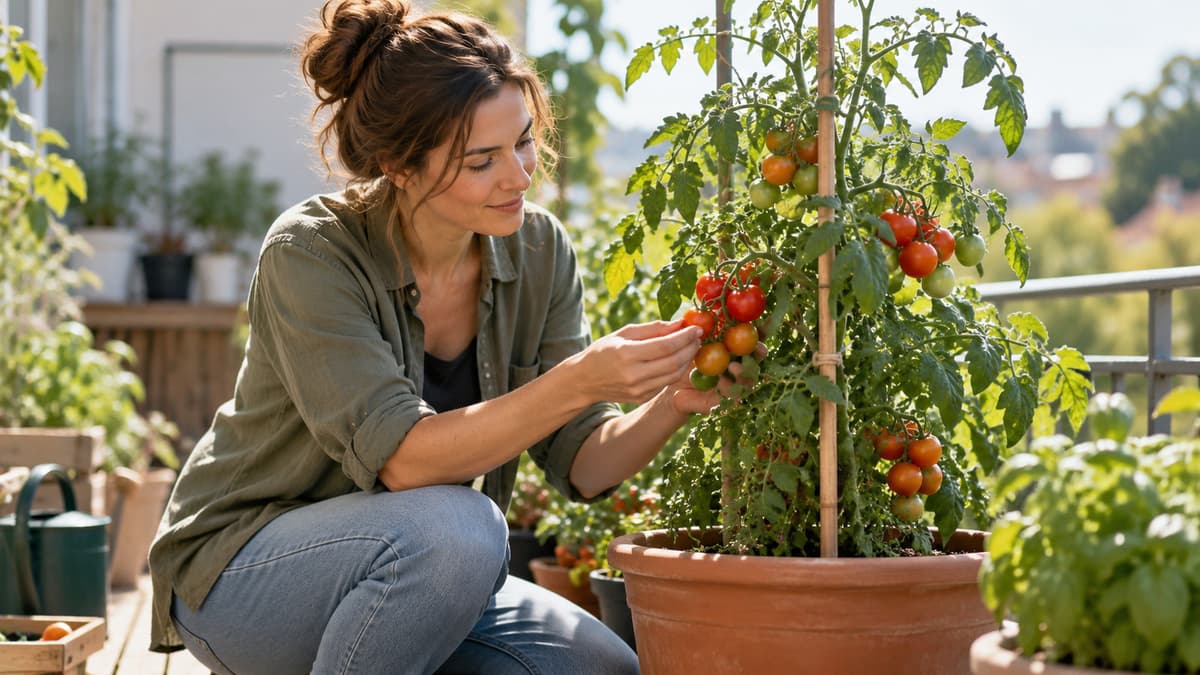
One tomato needs a 30–45 cm pot. Standard and deep grow-bags take different plant counts, a 65 cm listing is not a bush, and blighted compost stays out.
On this page

Tomatoes in pots are the plan when the balcony has room for one bag and a couple of containers, and the seed title says patio. One tomato still needs a proper volume of compost. The Royal Horticultural Society puts a single plant in a pot 30–45 cm across, and two plants in a standard growing bag. A 65 cm line on a listing is not proof you bought a bush. If you halve the pot and double the plants, you spend August watering a container that cannot keep up.
This page uses the Royal Horticultural Society tomato grow guide, including its notes on containers, fluctuating water and blighted compost, and Gardeners' World on pots, bags and feeding. The packet limits come from the tomato-seed listings compared on amazon.co.uk in our tomato seeds comparison. A qualifying purchase through that comparison can earn us a commission, at no extra cost to you. Nothing here is a lab trial. Prices on those listings are in GBP and they move. Written up in October 2026.
In short
For tomatoes in pots, give one plant a container 30–45 cm across, or at least 30 cm wide and deep if you follow Gardeners' World. A standard growing bag takes two plants on the Royal Horticultural Society figure. A deep bag takes two or three on the Gardeners' World figure. Meldon's three per grow-bag is their bullet, not the standard-bag rule. Feed on one published schedule, not a blend, and do not reuse compost from a blighted greenhouse crop.
The pot and the bag, in two versions
Start with the pot, because that is where patio growers under-size the plant. The Royal Horticultural Society puts one tomato in a 30–45 cm pot. Gardeners' World asks for a pot at least 30 cm wide and at least 30 cm deep. If the container is under 30 cm across, it is too small for the plant these guides describe, whether the packet has a patio photograph or not.
A growing bag is a different volume, not a renamed pot. The Royal Horticultural Society says two plants in a standard growing bag. Gardeners' World says two or three plants in a deep grow-bag. If you take the higher number and use the thinner bag, the middle plant dries out first. If you cannot tell whether the bag is the deep sort, plant two.
Meldon's listing says three plants per grow-bag. That bullet belongs to Meldon, not to the Royal Horticultural Society's standard-bag figure. With that seed and a deep bag, three can sit inside the Gardeners' World range. With a standard bag, the figure is still two. Three cordons in a short bag are three root systems, plus three canes in a sack that tips.
A cordon in a large pot needs a cane and a sheltered site, because the pot becomes top-heavy once the plant is tall and the compost is wet. A balcony rail in a prevailing wind is a poor site unless you can lash the cane to something that does not move. Bush types are the ones the Royal Horticultural Society points to for troughs and hanging baskets. A Moneymaker listing that never states a bush habit is the wrong plant to dangle.
Fill the container with peat-free compost. That is the Royal Horticultural Society recommendation for this kind of growing. Do not improve a too-small pot with a handful of feed. Volume first, then water, then feed. The how to sow guide covers getting the plant ready for that container. Hardening off and a last frost date still apply on a patio. A pot is not a greenhouse.
Bush, dwarf, and the listings that do not say
A trough or a basket wants a bush. A large pot with a cane wants a cordon, if you will pinch it and tie it. A height of 65 cm on a JustSeed listing is not proof of a bush. JustSeed Moneymaker does not state a habit. Just Seed Sungold does not state a habit. Sungold is the comparison's top pick on the listing score. The Royal Horticultural Society calls Sungold an Award of Garden Merit cordon, a variety note rather than a line on that packet. You cannot look at 65 cm and order a hanging basket.
Meldon does state an indeterminate habit. The bullets for Ailsa Craig and Moneymaker say a single stem and side-shoots removed. That is a cordon: large pot, cane and shelter, or a bed or greenhouse border. If you already have that seed and only a small pot, wait for a 30–45 cm container.
The patio kit is titled for pots. A review said two of the four varieties were not dwarf. One review is not a trial, and it is enough to stop you sowing the whole kit into one basket. Open the inner labels. Any name you cannot place as a bush should get a large pot and a cane, or stay out of the basket. Our best tomato seeds page ranks the set for the listing you can read, not for a patio word on the photograph.
Prefer a packet that prints bush, determinate, cordon or indeterminate. A balcony picture is an illustration. The habit line is the instruction. Where it is missing, assume you may need a cane until the plant shows you otherwise, and buy the 30–45 cm pot before a second variety.
Water and feed in a container
Pots dry faster than the ground, all summer. The Royal Horticultural Society links water that swings from dry to sodden with split fruit and blossom end rot. The seed was not the cause. The compost moisture was. Check with a finger. If the top few centimetres are dry, water at the compost and keep the leaves dry. If the pot is still wet from yesterday's rain, leave it.
There is no daily litre count in the sources used here, and this page will not invent one. A hot week dries a pot sooner than a cool, wet week. Empty a saucer that stays full, because a sodden base is the other half of that swing. Feel every planting hole in a grow-bag. The plants at each end often see more rain than the one in the middle.
Do not merge the two feed schedules. For containers, the Royal Horticultural Society says a high-potassium feed every 10–14 days once the first fruits swell. Gardeners' World says feed weekly once flowers appear. Follow the guide you already used for pot size. A double dose burns roots in a small volume of compost.
Gardeners' World calls tomatoes hungry plants, so plain compost with no feed runs out as the trusses set. If you have been feeding twice a week to be safe, stop and return to one source. On a cordon, feed does not replace side-shoot removal, and side-shoot removal does not replace water.
Compost you should not reuse
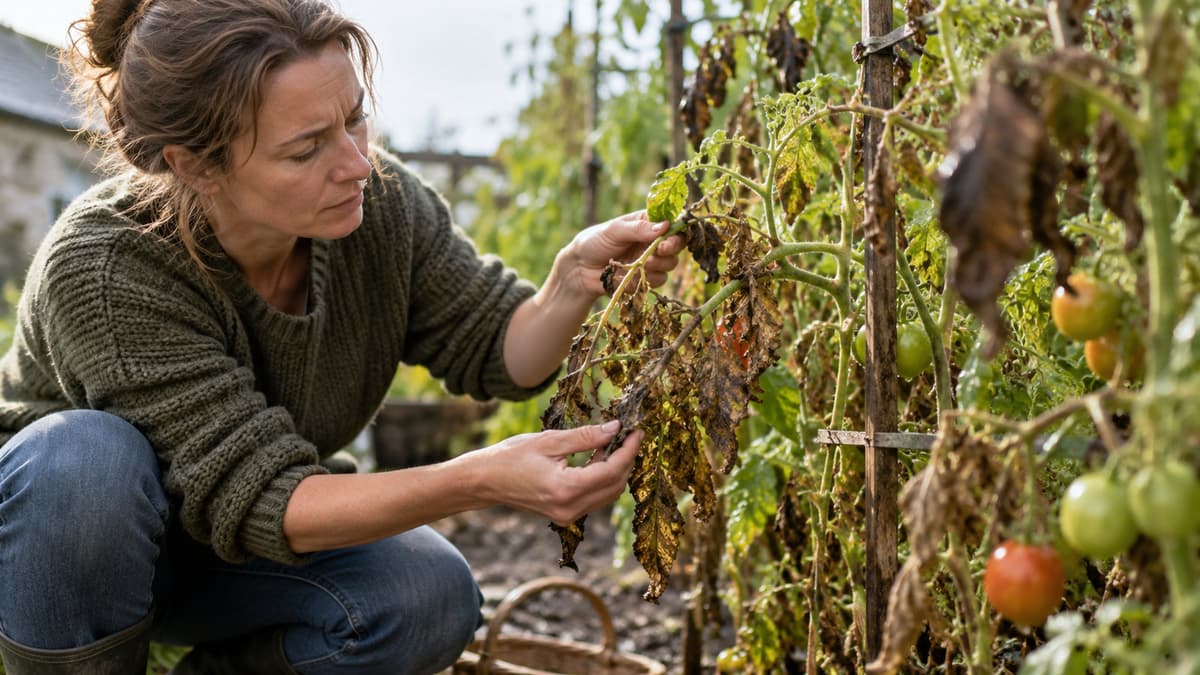
Do not reuse soil or compost from a blighted greenhouse crop for tomatoes the following year. That is the Royal Horticultural Society blight-page rule. A scoop of feed does not turn that compost into a new bag. Outdoor pots filled from the same heap are in the same rule.
The ban is blighted tomato compost, not every old bag. If last year's crop was healthy, this article still gives no method for sterilising or stretching old compost. Start with new peat-free compost. A grow-bag is a one-season product: the roots fill it, and the feed schedule extends the nutrients rather than recycling a diseased crop.
Clear a blighted greenhouse before you fill the patio pots. Plants go to deep burial, council green waste, or burning where that is allowed. They do not go through the compost bin and back into a pot in May. The old bag is portable, and the empty new pot does not make the compost safe.
Buy the container to the size first, then only as many plants as that size allows, then seed whose habit is printed. A kit title and a 65 cm attribute are the shortcuts that put the wrong plant in the wrong volume.
Common questions
What size pot does a tomato need?
How many tomato plants go in a grow-bag?
Can I grow a cordon tomato in a pot?
Are the patio-kit varieties all dwarfs?
Does a 65 cm listing mean a patio bush?
How often do pots need water?
Can I reuse last year's greenhouse compost after blight?

Products Compared publishes British-English buying guides based on amazon.co.uk listings and public UK sources. We do not run a lab and we do not invent test scores.
Related articles

Pinch out tomato side shoots: cordon or bush
Side-shoots come off a cordon and stay on a bush. Read the habit before you pinch.

Blossom end rot on tomatoes
A black patch at the flower end tracks uneven water. Both UK guides tie it to that, not to a bad packet.
Tomato blight: spotting collapse after a wet July
Do not reuse compost from a blighted greenhouse crop for tomatoes the next year.